In the first public screening since Sundance premiered the film in US Dramatic Competition back in January, Middle of Nowhere was embraced by a beautiful black audience who filled the 800 seat LA Live Regal theater 1 at last night’s LA Film Festival. The energy was full of love and celebration for the highly esteemed colleague and friend to many, Ms. Ava DuVernay. The stunning Angela Bassett who introduced the screening said the film premiered under the radar at Sundance (it won Best Director Award – how under the radar is that?) before bringing up the poised and radiant DuVernay.
Some red carpet and Ava’s introduction
Somehow and regrettably I lost the footage of the Q&A on the flipcam so I’ll just mention what I remember. Ava’s actors joined her on the stage including the gorgeous doe-eyed lead Emayatzy Corinealdi, and Elvis Mitchell began to ask them to share their creative and collaborative process on set. I was struck to hear the artists talk about their craft and the characters they played in such a profound way which is a credit, they all agreed to Ava’s fine-tuned script. They highly trusted Ava (an actors director, always a good thing) and felt led by her security and confidence which she exudes on the daily. No doubt yet another advantage she brings to her directing suit and working ethic. Lorraine Toussaint was especially poignant and thanked Ava for walking the walk. Middle of Nowhere is being released through her own distribution company, AFFRM with Participant Media. Ava is not afraid but admittedly concerned with the uncracked test of whether black people are going to see this film and whether white people are going to see it. The real challenge is if the public will come out and buy tickets to see the film. After all, it is a small independent art film. She asked the audience a question she’s been thinking about; what kind of black movie would white people see? Precious? Someone said Men In Black – totally missing and making the point at the same time.
Ava has made a deeply personal film about separation and love, offering a unique point of view from the female who ‘does time’ on the outside while her significant other is incarcerated. The prison population being disproportionately black and brown it is a film that addresses the effects on such a personal level. Ava has been able to engage the support of likeminded peers in her corner from having worked in the publicity and business side of the game. While the road ahead has a pretty big challenge, she’s got the brights on to help her steer through the unprecedented waters of firsts (again, its got to be successful at the box office).
I’m happy to have been present for a really a magical moment. It felt like the public recognized the gift Ava is giving us in her work as an artist and inspiration as a business woman, totally owning it on all fronts of the film business. Her fierce desire to drive change and advocate for independent films of which she is the biggest fan is unbridled. She charged the audience to share and make this all our journey in supporting not just her film, but coming together to prove there is an audience and a profitable market in making and selling ‘our’ stories’. Because like Angela Bassett said the studios are already making money, they don’t need to do it, we need to and should. Amen sister!
I took in a few panels over the weekend down here at LA Film Fest that I really appreciated for sparking some provocative dialogue I am eager to continue throughout the Festival. I found it especially interesting how different the US Latino and Black film communities are responding to their storytelling plight in talking about their respective representation in media. Meanwhile the lively Latino panel, which was perhaps the broadest in scope, was eloquent and skillfully led by LA Times’ Reed Johnson who brought a high level of articulation in his profesh moderating. As panel junkies know, a good moderator is key to an engaging panel and essential to keep it on point. Here are my takeaways on the three panels:
Elvis Mitchell, Shari Frilot, Ava DuVernay, Roya Rastegar and Bradford Young
Moderated by Film Independent’s LACMA film curator and go-to festival moderator, Elvis Mitchell, I was particularly impressed at the messaging clarity and solidarity of the black film community’s efforts and goals for equal representation. The panelists were very tuned-in with monitoring their talent behind and in front of the camera, and in this case stressing the importance of festival curators, which was identified as one of three instrumental factors to enable their films getting out there.
Shari Frilot, Senior Programmer, Sundance Film Festival: There was much (due) love and props given to Frilot for her ardent and tireless championing of films of color at Sundance. She pointed out how after Lee Daniel’s breakout hit, Precious which premiered at 2009 Sundance and went on to win a couple Academy Awards, the next couple years it was the black films that were the first to be sold off the mountain including the dazzling lesbian coming of age film, Pariah. She questioned why this achievement was not picked up or lauded in the mainstream media. Its indeed curious and perhaps a telling point on the cultural gatekeeper front – (shortage of black critics and journalists?) Having witnessed Shari’s highly charged and articulate arguing for gloriously imperfect, fresh and raw films I respect how she truly changes the way the film programming conversation takes place by discussing films’ drive, potential and power. I aspire to “bring it” like she does in my own programming career. Acknowledging the personal efforts she puts in to make the festival seem accessible to filmmakers of color who may not bother putting Sundance on their radar, the idea of doing a black college tour came up.
Ava DuVernay, filmmaker (Middle of Nowhere) and founder of AFFRM: DuVernay’s emotion for the topic at hand along with her experience from her publicist days and current roles as filmmaker and distributor made her a stirring contributor to the conversation. Ava thanked LA Film Festival Director Stephanie Allain for programming Middle of Nowhere as a gala screening which elevates her film with a high profile slot within the festival. A packed house at Wednesday’s gala screening will be quite significant to the black filmmaking community given the massive 800 seat theater and checking the LA Film Fest website it’s at Rush which will make for an exciting milestone! The winner of the Best Director Award at Sundance Film Festival shared her personal observations like being stunned to see empty seats at the black film screenings at Sundance which is unheard of in the notoriously hard-to-get tickets Festival. She mentioned that while she is frequently featured on Shadow and Act, the African Diaspora blog on the Indiewire network, she has never been on Indiewire’s main page. DuVernay expressed her desire to see more films that move and operate beyond ‘black bodies’.
There was mention of films touted as successful black films when they happen to be by non-black filmmakers. I can’t help but think the room was thinking about Gimme the Loot written and directed by Adam Leon and Beasts of the Southern Wild written and directed by Benh Zeitlin. Both films have been praised and celebrated for their poignant storytelling and vivid portrayal of their black protagonists’ lifestyles – and the filmmakers happen to be white Jewish New Yorkers. And both films were quickly picked up for distribution at their respective festival premieres. I have to admit that if we are talking about presenting positive representation in films my belief is that individually, these two films offer a lot as far as image conversion for eschewing mis-representation by avoiding stereotypes about black folks. There’s nobody smoking crack or perpetuating violent crime in Gimme the Loot, and in Beasts the poetic punch of self-sufficient little Hushpuppy in the die-hard persevering displaced fictional community that alludes to the forgotten 9th Ward post-Katrina, shows a triumph of spirit against the government and society’s response efforts following the devastating natural catastrophe in the dominantly affected marginalized population.
Bradford Young, cinematographer (Middle of Nowhere, Pariah, Restless City): A Howard University alumus, the in-demand cinematographer more gently echoed Ava’s sentiment about the limited accessibility and representation of black filmmakers but I feel he gave a bit more benefit of the doubt to black films by non-black filmmakers by his eloquent word of choice to weigh the debate; “Intention”. The way he talks about his own cinematic approach is greatly influenced by the intention of the story and point of view. A NY Times article recently featured the cinematographer and made note of his full frame and close up shots in Middle of Nowhere. Indeed the luscious and texture he brings to shooting skincolor sticks out in my mind having seen it at Sundance. Bradford is one cool cat with lots of soul. All panelists agreed and were especially thankful for his eyes.
Roya Rastegar, Ph.D, Festival Programmer: Inventive cinematography, curation by more females and people of color and innovative distribution were three ways Rastegar outlined to help minority filmmakers distinguish their work and get seen by the public. I would love to get my hands on her dissertation, History of Concsiousness (here’s a taste) in which she investigates the role of festivals in shaping marginalized culture. Armed with such interesting facts on the history of film festivals, (did you know Stalin created the first film festival?) Rastegar added a lot of context to the origins and current state of film festivals. She also shared the behind the scenes conversations of film programmers when talking about films of color and the rueful tendency to dismiss these films because they aren’t so called ‘good enough’. She made no hesitation in pointing out that Tribeca Film Festival did not have one single black film in competition this year.
US Latino Cinema: Welcome to the Bi-Literate Future – Presented by San Antonio Film Commission and AFCI (Association of Film Commissions International)
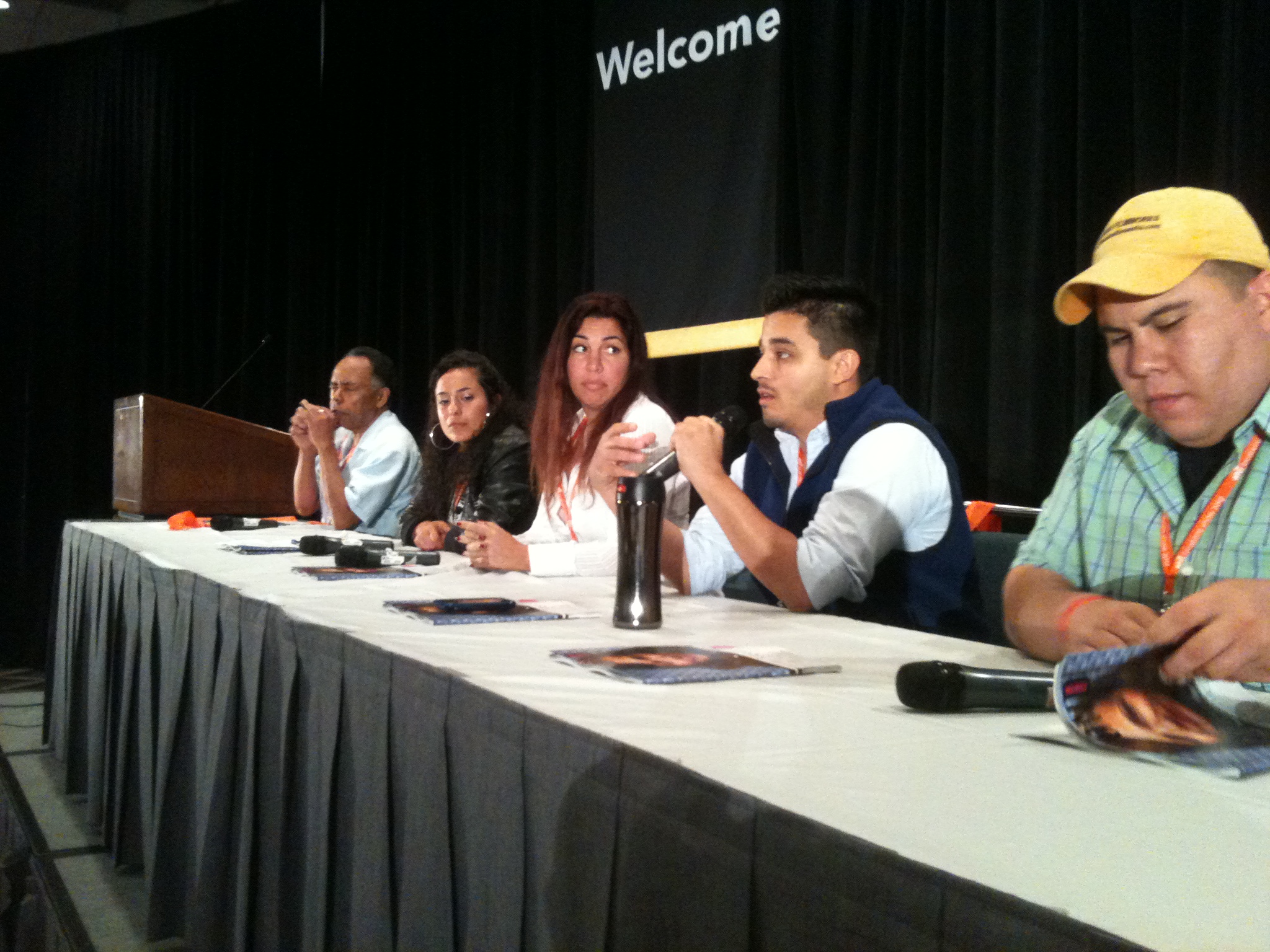
Luis Reyes, Moi, Doug Spain, Gabriela Tagliavini, Ralph Lopez
I had the privilege of participating on this panel which was prefaced by a Univision spot highlighting their new campaign efforts of reaching a bi-lingual audience. In it, an old woman recalls being prevented from speaking her language as a child in school and then we cut to today’s young US Latino man who flips from Spanish to English talking about his liking alternative band, The Strokes as much as Spanish-language pop rock band, Juanes.
What it was about: Our Latino population in the US is now more than ever embracing a bi-lingual, or more importantly, a bi-literate culture. Will films reflect the changing demographic of the US as a bi-literate (a Spanish and English language culture) be commercially successful and be able to find an audience? And perhaps more importantly, will the studio system be able to adapt to the successful strategies many in the independent world are using to create commercially viable content?
Douglas Spain (Star Maps, Walkout, Band of Brothers) is used to wearing multiple hats and so acted as both panelist and moderator. Spain offered up his experience as an actor/producer/director as a gay latino filmmaker who has successfully worked in independent film and studio and television mediums. His quest for staying true to himself with the roles and films he is making rang resonant to all.
Ralph Lopez, San Antonio filmmaker: The producer of Wolf which premiered at this year’s SXSW talked about his aim is to create and tell stories that transcend color. Like his provocative film about the complexities faced by the victim of a bishop’s inappropriate behavior, his collaborations with director black filmmaker Ya Ke Smith comes first and foremost from a place of telling moving stories.
Gabriela Tagliavini, filmmaker (Ladies Night, Without Men, The Mule: Having had big success with Spanish language film Ladies Night in 2006, Gabriela switched languages and directed Eva Longoria in the English language film, Without Men which sold to many international territories given Longoria’s international brand name. With her upcoming film, The Mule she is looking to take advantage of the crime action genre and star Sharon Stone to offer real commentary on immigration and the dangerous toll of the US Mexico border.
Luis Reyes, historian and author of the comprehensive book, Hispanics in Hollywood: The old school gent on our panel made some slightly more conventional suggestions on how to make a successful bi-literate film like “know your audience” and attaching a well known actor to your film so you can market it.
I added my two cents and in retrospect I think my thoughts coincided with Rastegar’s in the proactive vein of here’s what we can-do positive approach of encouraging budding filmmakers to utilize genre (horror and gay US Latino films stand out from the stack and are sought after by festival programs). I also asked my fellow panelists if they found the US Latino filmmaking community as fragmented as I see it. Unlike Black or LGBT film organizations I feel the US Latino community has much more work in becoming inclusive within our distinct bi-lingual backgrounds in order to successfully empower and advocate for our films. Organizations like NALIP and LALIFF were mentioned in answer. But in my opinion and with all respect, I find NALIP a bit cliquesh and lacking a younger pulse and generation of organizers, and LALIFF is too inconsistent to make fundamental cultural change. Although we touched on the question of the challenges our community faces working in Spanish versus English I’m not sure we fully stayed on point in attempting to answer the ambitious subject and interesting talking points raised. But the audience seemed more the type of wanting basic advice on how to break into filmmaking so most questions and conversations was directed to the filmmakers on the panels and in that regard it was a successful exchange.
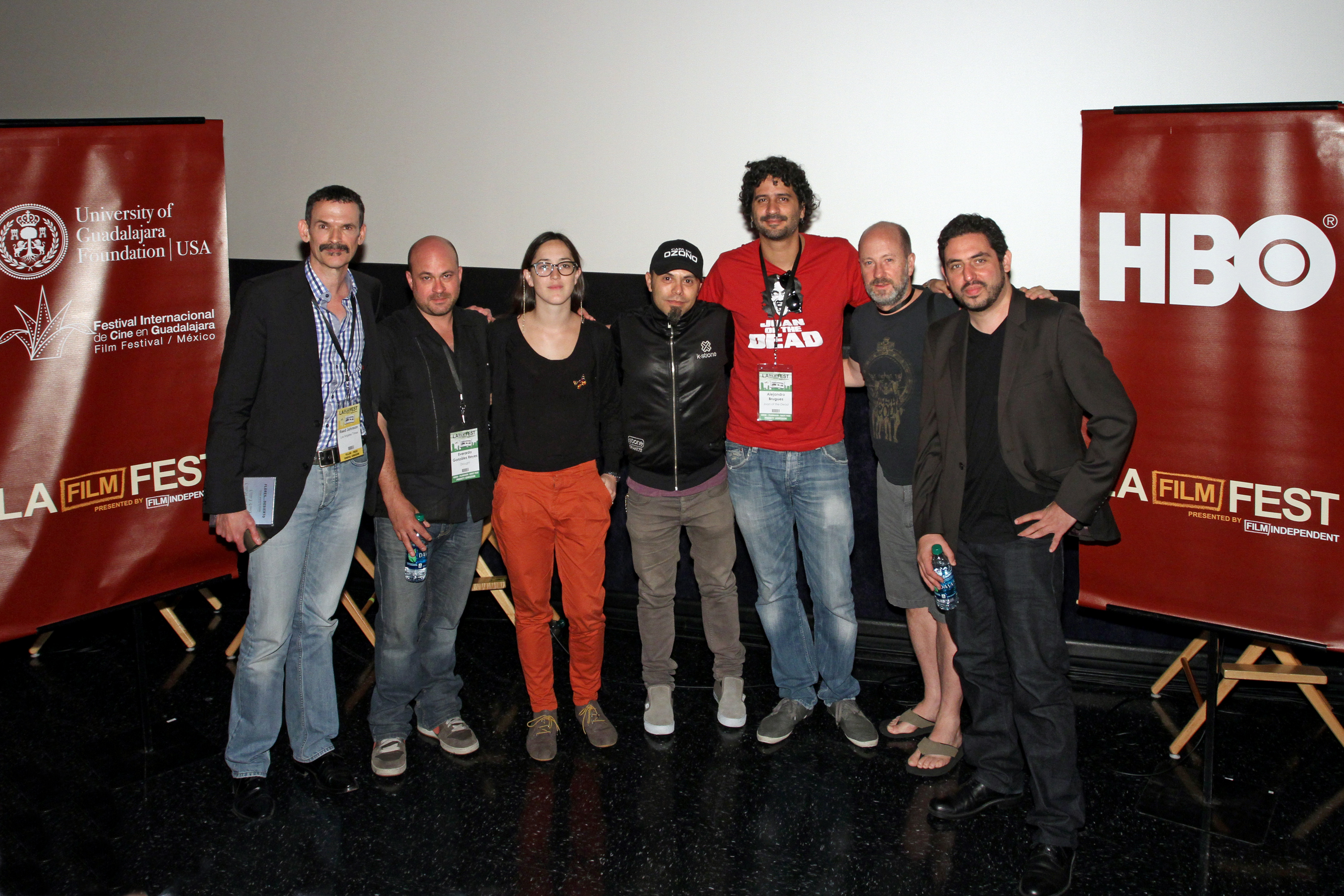
Café Latino presented by HBO and supported by University of Guadalajara Foundation
credit: Juan Tallo
Made evident by the participating film clips that were shown before the panel there is much genre and story diversity in the Latino films at LA Film Fest this year. I’m especially happy the Festival recognizes the growing influence of the Mexican documentary by having selected Reportero by Bernardo Ruiz, Canicula by Jose Alvarez and Drought by Everardo Gonzalez. The panel was ostensibly about the Festival’s Latin American filmmakers and how they explore their roles as storytellers in an increasingly global world. With such a high number of panelists and so many interesting topics broached however, it left one wanting more time to engage with the personable talents onstage.
Alejandro Brugues, director of Juan of the Dead (credit: Juan Tallo)
Reed Johnson encouraged the panelists to chime in at will which Alejandro Brugues, director of Cuban Zombie film, Juan of the Dead took full advantage of to defend big hollywood films like The Avengers, which Gonzalez initially brought up if only to point out the David and Goliath challenge filmmakers in Mexico face having to compete for screens against these big money backed blockbusters. Brugues set himself apart from the group by defending his love for the blockbuster which inspired him to direct films. Unlike his peers’ ‘artful’ films he considers his film strictly for public entertainment (he joked that his film is actually a documentary). Yet at the same time he admits he took advantage of the Zombie genre a la Romero to infuse it with his personal observations of contemporary Cuban society – which he would not have been able to shoot in Cuba otherwise.
Reed Johnson, Everardo Gonzalez, Dominga Sotomayor, Arturo Pons, Alejandro Brugues, Jose Alvarez, Bernardo Ruiz (credit: Juan Tallo)
Meanwhile Arturo Pons who was born in Mexico but has lived and worked in Spain for the past ten years described his conception for his surreal satire, The Compass is Carried by the Dead Man not necessarily about immigration but a visual canvas with which to paint the total disorientation that confronts Mexico. Ruiz talked about seeing himself as a ‘translator’ or vessel to tell stories. Alvarez talked about how he does not think of his audience as he makes his films however he does aspire to showcase Mexico Profundo in showing the vast and vibrant indigenous artistry and folklore and deliberately resisting the the media’s monopolized perpetuation of the drug violence and corruption. Lastly, Dominga Sotomayor, the 27 year old director of Thursday till Sunday whose next film Tarde Para Morir was selected to the first ever Sundance Mahindra Screenwriters Lab, added that like Mexico, in Chile there is a growing number of filmmakers but no real venues to find their audience.
LA Film Festival is going on through Sunday and a bunch of added screenings have been slotted. Check out film guide and buy tickets here.
Despite the financial and organizational struggles that have plagued the Mexican Academy of Film Arts and Sciences the past few years, the 54th ‘Mexican Oscars’ took place last Saturday night in Mexico City’s splendid Palace of Fine Arts, the home of such grand mural masterpieces by David Alfaro Siqueiros, Diego Rivera and José Clemente Orozco.
Most of the wins were divvied up between gritty crime action thriller, Dias de Gracia, written and directed by Everardo Gout, and Pastorela, the hilarious Christmas play comedy written and directed by Emilio Portes. Both films are highly stylized and accomplished first features. Technically, the most wins went to Dias de Gracia which took eight awards, but it was Pastorela that had the most coveted awards bestowed including Best Film and Best Director. Although Gerardo Naranjo’s cinematic tour-de force, Miss Bala was nominated for Best Film and Best Director, and submitted for best foreign language Oscar, it walked away empty handed – a puzzling snub if you ask me.
Another curious upset was documentary Presunto Culpable, a social justice exposé which got a lot of attention for its unprecedented box office success in early 2011. The award for Best Documentary went to a more recently shot documentary, the poignant El Salvador set film, The Tiniest Place, by Tatiana Huezo.
Carlos Carrera (El Crimen de Padre Amaro, Backyard) and current president of the Mexican Film Academy.
In his opening remarks the president of the Mexican Film Academy, Carlos Carrera, filmmaker of the biggest Mexican box office hit ever, El Crimen de Padre Amaro, called to task the presidential candidates to support national cinema, citing the appalling lack of Mexican prints in movie theaters given that 90% of Hollywood films dominate the screens.
At the Cannes Film Festival – MexiCannes!
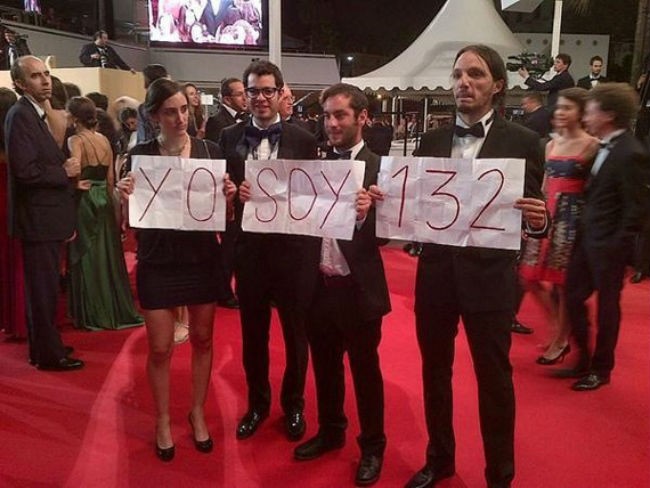
In addition to the appeals directed at the government to support their culture through cinema, a number of actors and filmmakers taking the podium expressed their support to the popular university student movement #YoSoy132 which sprang up a few weeks ago and has mobilized and inspired protests. The vociferous demands are mainly directed toward the candidates and the two media empires that monopolize and dictate the status quo (for the right price as the implication goes), Televisa and TV Azteca. The moniker “I am 132” comes after Peña Nieto’s speech at a university where apparently 131 students “severely” questioned the candidate. He was quick to dash out instead of engaging his vocal audience, and his party later claimed the students were being overly antagonistic. The students quickly countered that there are more than 131 citizens who demand a “True Democracy”. The movement is picking up steam ahead of next month’s Presidential Elections. Oscar nominated Mexican actor Demián Bichir posted on a video on youtube in support, and last week pics from Cannes at Carlos Reygadas’s Post Tenebrus Lux screening showed black tie clad Mexicans holding up signs of the movement.
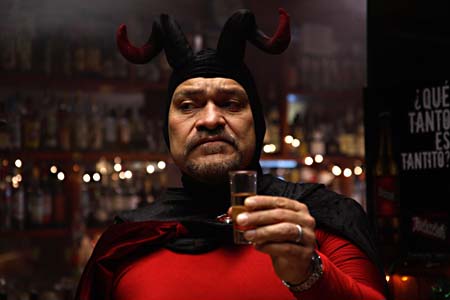
Pastorela starring Joaquín Cosío who was nominated again this year for Acting
Dias de Gracia and Pastorela offer substantial socio/political commentary underneath their furious hybrid genre mashups of action, comedy and horror. They speak a lot to contemporary Mexican culture and traditions, and most importantly are accessible, having proved their commercial appeal at the multiplex.
Dias de Gracia is anchored in three different World Cup circas, 2002, 2006 and 2010 and follows, among other characters, a cop named Lupe who climbs up the ranks to special type of undercover ops at the behest of his comandante. The title, Days of Grace refers to the season in which gangs, distracted by the fervor of their national past time, lower their guard, marking a good time for cops to move in. The film ends on a vicious circle note in which you see how the brutal jungle transforms and hardens even the best of us. A reminder that the longer the war persists, the more havoc and darkness is perpetuated upon on our souls.
Cosio as the Archangel
Pastorela, a wicked morality tale about a cop, Chucho, who gets pissed when his role as Devil in the town’s annual Nativity Play is taken away by the new Father, is similarly very much embedded in a deep Mexican tradition, the ardent Catholic habit of community Nativity Plays. With swearing and fighting priests, a transgressive devil turned angel, and devil costumed people running loose in the streets, the film is an outrageously funny take on good versus evil, rife with metaphors, and subtext about the corruption in every thread of a community’s fabric. It’s got a lot of substance ripe for interpretation, I read an interesting review on this Catholic Movies site for instance. In one memorable scene Cosio’s character calls an ‘associate’ who is in the middle of supervising a torture scene off camera and their easy “How are things” banter and flippant response, points to just how mundane if not, matter-of-fact things are day to day. Like Lupe in Dias de Gracia, Chucho is a likable tough guy in a mid level authority role, and someone who undergoes an inadvertent transmutation in response to his surroundings.
A still from El Infierno by Luis Estrada – a horrifying allusion to the real life “Pozolero” who was arrested and confessed to being a lackey paid by narcos to melt body parts.
Like last year, Mexico’s ongoing violence is reflected in the nominated films. The bleak survivor -esque tagline of Dias de Gracia is “Every day is a gamble in Mexico City… most don’t live to tell it”. Luis Estrada’s black narco satire, El Infierno, swept last year’s Ariels and rocked the box office. Taking a look at the Best Films from 2000-2010, none have been as outright of a social realism commentary, besides perhaps one vignette of the celebrated Amores Perros in 2001.
One thing I happily notice in the three films nominated for Opera Prima, Best First Film; A Tiro de Piedra, a true indie and beautifully shot journey film by Sebastián Hiriart, Tiniest Place, and Dias De Gracia, is that it represents a fresh, diverse slice of genres that demonstrate the story versatility and personal voices of Mexico’s young filmmakers – unlike the previous floodgate trend of Reygadas wannabes.
It’s no surprise that Dias de Gracia swept the score, soundtrack and sound design awards. Below is a video in which Everardo Gout shares the conception and music process of the film (in Spanish). In an effort to give each era its own aesthetic and sound the filmmaker chose a brilliant roster of composers; Atticus Ross (Social Network), Shigeru Umebayashi (Wong Kar-Wei’s films) and Nick Cave and Warren Ellis. The soundtrack gives a lot of flavor and texture, from one of my favorite forgotten Bronco songs, Amigo Bronco, to the different versions of the song, Summertime, the sensual Janis Joplin guitar riff and the recent version by Massive Attack featuring Scarlett Johansson.
Full list of Ariel winners below the clip:
54 Ariel Award Winners:
—Best Film: “Pastorela”
—Best Director: Emilio Portes, “Pastorela”
—Best Actor: Tenoch Huerta, “Días de gracia”
—Best Actress: Magda Vizcaíno, “Martha”
—Best Supporting Actor: Carlos Cobos, “Pastorela”
—Best Supporting Actress: Eileen Yáñez, “Días de gracia”
—Best Original Script: Emilio Portes, “Pastorela”
—Best Cinematography: “Días de gracia”
—Best Editing “Días de gracia”
—Best Original Music: “Días de gracia”
—Best Score “Días de gracia”
—Best Art Design: “Días de gracia”
—Best Costume Design: “Pastorela”.
—Best Makeup: “Pastorela”
—Best Makeup: “Pastorela”
—Best Special Effects: “Salvando al soldado Pérez”
There is no shortage of US Latino stories and filmmaker talent. Trust. I screen a high volume of films throughout the year specializing in submissions that are Hispanic/US Latino. True, not enough of them are technically slick, but there are some out there, and more often than not, they have specific US Latino points of views and permutations, and offer chronicles of unheard of, or unique Caminos de la Vida (walks of life). All of which I find is in direct correlation to their distinct American mestizo identity. Sadly there are not enough slots at film festivals, and there is not a savvy marketplace interested in embracing the fragmented and under-served US Latino community until they figure out how to monetize it. Rather than dwell on this distribution dearth, however, I’d like to take a counter- positive approach by celebrating and getting the word out on US Latino films ready to give birth and ignite with audiences. Oye means listen up! I’ll be profiling brand spanking new US Latino films, in various stages and different genres so our community can promote their trajectory online and by word of mouth, and yes hopefully so distribution outfits and festivals take note! Case in point this week: Love Concord:
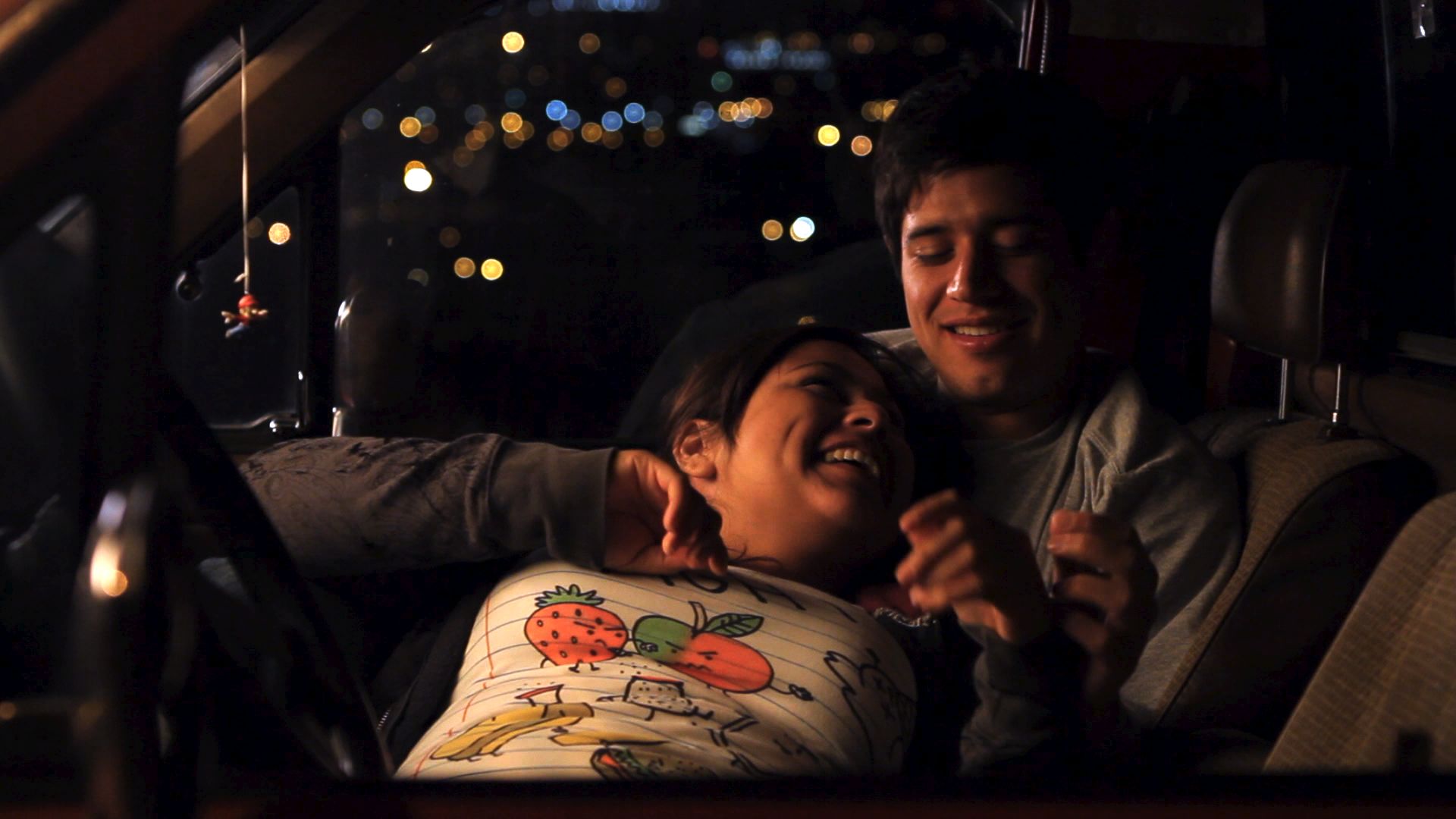
Love, Concord is a buoyant high school comedy about Gerry (Jorge Diaz), a fun loving popular goofball who is all about basketball and has a penchant for 8 bit videogames. One day he notices cute bookworm Melinda (introducing Angelina Leon), a smart, sassy not-girly girl who eventually becomes his first ever girlfriend. As they enter their Senior year, they must sweat the stress of facing where they are going to college and what that means for their relationship. He is not your stereotypical jock nor is she your stereotypical nerd. Did I mention they are Latinos? That’s what’s so refreshing about Love, Concord, the bubbly and earnest feature debut by Gustavo Guardado, Jr., who received his Masters in Film Production at the prevalent Loyola Marymount University; his charming, semi-autobiographical story set in the suburban Bay area of Concord where he grew up avoids stereotypes and doesn’t perpetuate Latinos as they are most commonly represented. It’s likely due that its based on his experience growing up in Concord where he says that race just never felt like an issue. It’s this personal perspective that gives the film an organic sense in how it portrays its US Latino characters.
Gustavo Guardadado, Jr.
With a comic and endearing combination of quintessential John Hughes and a YA sensibility, the film eschews any condescension and pretension in the characterization of teens and it feels pretty right on. Guardado knows that teens just seem to get it these days. They have a better sense of what lies ahead of them. They ARE smart, grounded and realistic. Their expectations are more driven by their sense of self than parents and peers. More important than ever in the rite of passage into a conscious and responsible individual is the mantra ‘Don’t Sell Out”. The notion is becoming redefined to a millenial (or ME) generation to signify that one must not sell out who you really are inside, something that Melinda reminds Gerry when he gives into his popular role as class clown at his own expense and deprecation.
Miguel Angel, Jerry’s older bro
What makes this universal story, Latino? Its conveyed in subtle yet inherent ways. Melinda’s half Mexican and Gerry’s Salvadoran ethnicity is demonstrated intrinsically rather than it being imposed. Again, that’s the beauty of the film. Take for instance the mother and son dynamic that displays the latino male relationship with his ‘jefa’. Gerry’s mother isn’t seen throughout most of the movie save for the notes on the fridge they exchange yet she’s always there. When she does appear, she sits “Gerardo” down and they have a real catch up moment that illustrates the strong relationship between a single, hard working mother and her maturing son.
Like the 8 bit animated story chapters, this coming of age tale has a nostalgia for one’s high school dog days. It also has a very fresh sense of modernity with its portrayal of teens and in particular its portrayal of US Latino teens. It’s a sweet, funny and a refreshingly authentic US Latino coming of ager bound to touch audiences.
Love, Concord is currently being submitted to festivals. Watch trailer here
This sounds like a worthwhile and beautiful screenwriters workshop!
Cine Qua Non Lab – a clever take on the latin phrase, Si·ne qua non which means an essential condition – is currently accepting applications for the intensive 14 day workshop that takes place in Tzintzuntzan, a small town in the state of Michoacán, Mexico amidst the scenic Sierra Madre Mountains and magical Lake Pátzcuaro.
Previous filmmakers who have been supported include Maryam Keshavarz (Circumstance), Bent-Jorgen Perlmutt (Les Vulnerables) and Lucía Carreras (Leap Year). Browsing through their alumni in just the short four years they’ve been around there is a balanced ratio of female and males from all over the world including India, Guatemala, Spain and Puerto Rico. If you are one of the 10 selected you are responsible for travel expenses to and from Mexico but they will feed you and put you up for the entire residency.
This year’s workshop will be facilitated by Christina Lazarid, Academy Award-Oscar® nominated screenwriter (One Day Crossing) and internationally renowned script developer, professor, and mentor. Christina teaches screenwriting at Columbia’s Graduate Film Division and at Princeton University, and is a mentor for European Union’s Mediterranean Film Institute. She holds a BA in Creative Writing from Princeton University and a MFA in Screenwriting from Columbia University.
Application Deadline: May 28th, 2012
Workshop dates: August 12th through 26th, 2012
Looking at yesterday’s announcement of Film Independent’s Los Angeles Film Festival reveals a healthy Latino presence among the 62 features and 48 short films in the program. Here’s how I break down the Latino/Ibero/US Latino of the program.
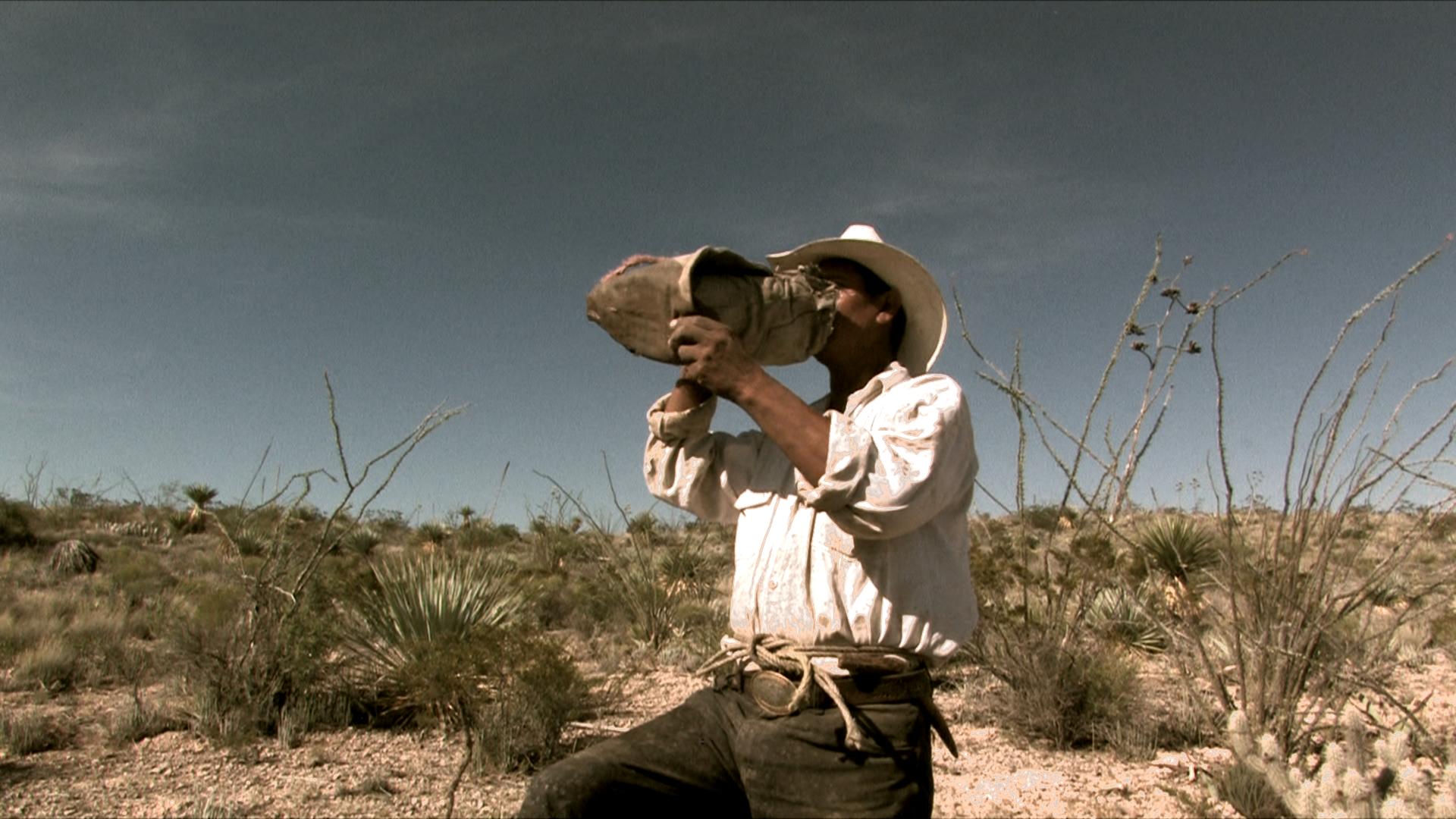
Drought, Cuates De Australia by Everardo Gonzalez
Chile continues to give Argentina a run for its cache of exciting and growing cinematic output from South America with the inclusion of Thursday Til Sunday written and directed by Dominga Sotomayor, in Narrative Competition. Although the traveling Mexican film festival Ambulante is no longer a a program spotlight, Mexican films continue to be a mainstay of the festival; There are four feature-length films and three short films from/about Mexico. In Narrative Competition, The Compass is Carried by the Dead Man written and directed by Arturo Pons, and in Documentary Competition, The Drought by Everado González (recently awarded Best Documentary at FICG27) . Out of competition is the gorgeously shot documentary, Canícula, and although the funding is mainly stateside, Bernardo Ruiz paints a fascinating portrait of the risky journalistic practice and history of the seminal Tijuana weekly, Zeta in Reportero. Also of note in the program is that four short films list Cuba as a co-production/origin of country.
sexy cholo, EJ Bonilla
But what of the US Latino filmmakers and stories? Last year Los Angeles Film Festival was a great launchpad for Mamitas, an authentic chicano portrayal of young love set in Echo Parque written and directed by Nicolas Ozeki (a non-Latino), co-starring fast rising hot talents Veronica Diaz-Carranzo and EJ Bonilla. The film is currently in theaters now. (Big recommend,theater listings here-go support it!)
Fireworks by Victor Hugo Duran
The closest we have to representing US Latino in the features section is Four, the feature debut of Joshua Sanchez who hails from Houston, Texas. Based on a Christopher Shinn play, the July 4th eve set story is a snapshot of two disparate relationships tensely intertwined and their at-odd dynamics of desire. Coincidentally, EJ Bonilla also stars (this guy is blowing up!). I would also include as US Latino, Searching for Sugarman, the documentary by Malik Bendjelloul about singer songwriter Sixto Rodriguez’s fascinating rise and fall into obscurity as a US Latino story. As a matter of fact, the film seems to suggest that perhaps Sixto’s Mexican-American identity might have been a reason he was not embraced by the 60s and 70s mainstream.
As for US Latino shorts, Fireworks written and directed by Victor Hugo Duran, which is also incidentally centered around 4th of July, is an LA set story about boys trying to rap on girls.
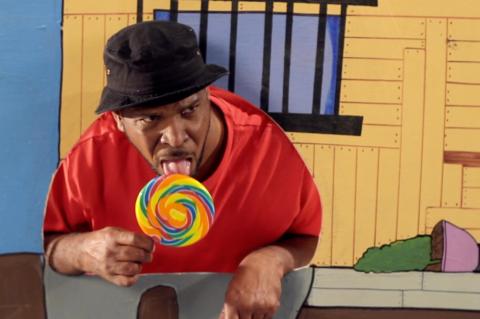
My favorite Miami based hooligans, Jillian Mayer and Lucas Leyva keep representing with their fresh and experimental short film, Life and Freaky Times of Uncle Luke. They are part of a collective of go-there filmmakers, Borscht Corp who had four crazy shorts screen at SXSW (and they were a riot to bootie shake dance with at SXSW Film’s Closing Night Party). You must carve out an hour and look at their work on the site (NSFW!)
And lastly, in front of camera there’s some America Ferrera in Todd Berger’s It’s a Disaster, and rising boriqua actress April Hernandez Castillo, of hit webseries East Willy B, Dexter and other TV, is in The History of Future Folk by J. Anderson Mitchell and Jeremy Kipp Walker, described as a “sweet sci-fi musical comedy”. Below is the rest of the Latino and IBERO-AMERICAN (includes Spain and Portugal). Descriptions provided by LA Film Festival, and bold cap commentary by me.
NARRATIVE COMPETITION:
All Is Well – Portugal (DIRECTOR Pocas Pascoal PRODUCER Luis Correia CAST Cheila Lima, Ciomara Morais) – Strangers in a strange land, two beautiful Angolan sisters fleeing a civil war in their homeland struggle to survive in Lisbon. Pocas Pascoal’s deeply personal saga shows us the face of exile with quietly stunning power. North American Premiere
The Compass is Carried by the Dead Man–Mexico (DIRECTOR/WRITER Arturo Pons PRODUCER Ozcar Ramírez González CAST Gael Sanchez Valle, Pedro Gamez, Ana Ofelia Murguía, Eligio Melendez, Luis Bayardo, Marco Perez) – A young man and a dead man journey north through a subtly surreal desert landscape, picking up a wagonful of odd characters as they go in this darkly humorous satire of contemporary Mexico. North American Premiere
Four – (DIRECTOR/WRITER Joshua Sanchez PRODUCER Christine Giorgio CAST Wendell Pierce, Emory Cohen, Aja Naomi King, EJ Bonilla) – Over the course of a steamy 4th of July night, a father and daughter, each trapped in loneliness, reach out for sexual connection — he with a self-hating teenage boy, she with a smooth-talking wannabe homeboy — in this psychologically complex, beautifully acted drama. World Premiere
Thursday till Sunday – Chile (DIRECTOR/WRITER Dominga Sotomayor PRODUCERS Gregorio González, Benjamin Domenech CAST Santi Ahumada, Emiliano Freifeld, Francisco Pérez-Bannen, Paola Giannini) – With uncommon beauty and style, this Chilean road movie finds a family at a crossroads, as the daughter slowly realizes the divide between the adults in the front seat and the kids in back. North American Premiere
DOCUMENTARY COMPETITION:
Drought – Mexico (DIRECTOR Everado González PRODUCER Martha Orozco) – Contrasting the lives of a cattle-ranching community with the arid northeastern Mexican landscape that surrounds them, this cinema vertité documentary paints a poetic portrait of a community on the verge of extinction. US Premiere
Sun Kissed – (DIRECTORS Maya Stark, Adi Lavy PRODUCERS Jocelyn Glatzer, Maya Stark, Adi Lavy) – With remarkable strength of spirit, a husband and wife examine their lives and why their children and others have been struck with a rare genetic disorder in this powerful portrait of a small Navajo community. World Premiere ~ OKAY NOT LATINO BUT ITS NATIVE AMERICAN SO I’M GIVING IT A SHOUT SINCE THERE IS NOT ENOUGH NATIVE AMERICAN STORIES
INTERNATIONAL SHOWCASE:
Canícula – Mexico (DIRECTOR José Álvarez WRITERS Sebastián Hoffman, José Álvarez PRODUCER Mauricio Fabre CAST Hermelinda Santes, Esteban González, Mario García) – This is a hauntingly beautiful portrait of the rituals and crafts of contemporary Indians in remote Veracruz, who teach their boys to fly. ~ SEE MY INTERVIEW WITH JOSE HERE
The Last Elvis – Argentina (DIRECTOR Armando Bo WRITERS Armando Bo, Nicolás Giacobone PRODUCERSSteve Golin, Hugo Sigman, Patricio Alvarez Casado, Victor Bo, Armando Bo CAST John McInerny, Griselda Siciliani, Margarita Lopez) – John McInerny gives a staggering performance in this poignant tale of a Buenos Aires Elvis impersonator who only comes alive when he dons the King’s clothes to perform. How can he reconcile his dreams of glory with his dead end factory job and an estranged wife and daughter who can’t live inside his fantasies?
Neighboring Sounds –Brazil (DIRECTOR/WRITER Kleber Mendonça Filho PRODUCER Emilie Lesclaux CAST Irandhir Santos, Gustavo Jahn, Maeve Jinkings, W.J. Solha) – Kleber Mendonca Filho’s astonishing, suspenseful debut film focuses on one upscale street in the seaside town of Recife, where a private security team is enlisted to protect the residents from crime. By its startling conclusion, you feel you’ve seen all of Brazilian society exposed.
The Strawberry Tree– Canada/Cuba/Italy (DIRECTOR/PRODUCER Simone Rapisarda Casanova) – Filmed in a small Cuban fishing village mere weeks before a hurricane decimated the entire region, this stunning documentary unknowingly captures the town’s final days even as it reframes the usual filmmaker-film subject relationship.
SUMMER SHOWCASE:
La Camioneta: The Journey of One American School Bus – USA/Guatemala (DIRECTOR Mark Kendall PRODUCERS Mark Kendall, Rafael González, Bernardo Ruiz) – The journey and transformation of a yellow American school bus into a vibrant Central American camioneta sensitively reveals both the beauty and violence of everyday life in Guatemala.
Reportero – (DIRECTOR Bernardo Ruiz PRODUCERS Bernardo Ruiz, Patricia Benabe, Anne Hubbell FEATURING Sergio Haro Cordero, Adela Navarro Bello) – A look at the incredible danger facing journalists in Mexico through the eyes of investigative reporter Sergio Haro and other staff at Zeta, the defiant Tijuana-based newsweekly.~ SEE MY INTERVIEW WITH BERNARDO HERE
Searching for Sugar Man – (DIRECTOR/WRITER Malik Bendjelloul PRODUCERS Simon Chinn, Nicole Stott, George Chignell) – Years after fading into obscurity at home, the music of ’70s U.S. singer/songwriter Rodriguez became an underground sensation in South Africa. Decades after his disappearance, two fans uncover the startling truth behind the legend.
BEYOND:
Juan of the Dead –Cuba (DIRECTOR/WRITER Alejandro Brugués PRODUCERSGervasio Iglesias, Inti Herrera CAST Alexis Días de Villegas, Jorge Molina, Andrea Duro, Andros Perugorría, Jazz Vila, Eliecer Ramírez) – The streets of Havana are alive with the undead in Cuba’s first zombie comedy, a wild and bloody romp that sinks its sharp satirical teeth into the Cuban body politic. Castro may not be amused, but you will be.
SHORT FILM COMPETITION:
Against the Sea (Contra el mar) – Mexico, USA (DIRECTOR) Richard Parkin
Black Doll (Prita Noire) – Mexico (DIRECTOR) Sofia Carrillo
This Sunday, April 29th, 2pm at La Plaza de Cultura y Artes downtown there is a special birthday celebration in honor of Dolores Huerta. The spirited, iconic civil rights leader will be turning 82. I just checked the website and $50 tickets are sold out but the next tier is $200. If you got the cash, this is a pretty good cause and fiesta. All proceeds go to the Dolores Huerta Foundation which does a lot of education work and outreach to low-middle class immigrant workers, giving them the tools and resources to become leaders of their communities and continue to fight la lucha. Ticket link here
From Latino studio, Pantelion Films, Girl in Progress stars Eva Mendes as Grace, an immature and impetuous single working mother who faces off with her equally impetuous but way more mature, scholarly teenaged daughter named Ansiedad. Like a Freaky Friday where adult and child roles are reversed to comedic and lesson-learning effect, but without the body switch, Girl In Progress is an ebullient, if a bit twee, meta-fable set to capitalize on its May 11th, Mother’s Day weekend release.
nada de chemistry between these twoIntroducing Cierra Ramirez from Houston!
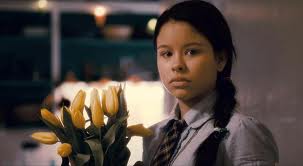
When not scrapping for tips waiting tables at a busy Crab shack to pay the bills, Grace wastes her time hooking up with a bored and married doctor (Matthew Modine) much to the loud disappointment of Ansiedad. Ansiedad (a real Dominican name that means anxiety), a doll face who wears Clueless inspired outfits, does all the chores around the house and despises having to be the responsible one in the house while her mother goes out and flip flops on going to night school. Grace is preoccupied with paying the bills, but also oblivious to her daughter’s needs. Determined to leave her mom behind and start her adult life, Anna, as she anglicizes her name, is inspired in lit class by Ms. Armstrong (Patricia Arquette who phones it in) to fast forward her coming of age. With the help of her best friend Tavita, Anna methodically plots out key pit stops on the way to adulthood taking a page from various coming of age classics like The Catcher In the Rye, and ever thorough, reviews a chrysalis diagram showing the process of cocoon into butterfly transformation. With self imposed urgency, Anna sets up and tackles her own passage of rites, including stealing money for a gothic bad girl makeover, making friends with the Mean Girls, dumping her loyal friend, up to scheduling the de-blossoming of her virginity with Mr. Popularity at an upcoming party to mark the final stage into womanhood. Distracted by her job, her breakup with Mr. Doctor and the fact she’s short money for bills, Grace remains unaware of what her daughter’s antics are trying to tell her.
Girl In Progress is directed by Patricia Riggen, director of the 2007 Sundance breakout film, La Misma Luna. Her short film Lindo y Querido which was in the Revolucion anthology strongly captures the first generation Mexican American experience for me. Riggen imbues emotion and light quirky humor to the script written by Hiram Martinez, a Dominican New Yorker who made the 2005 micro-budget indie comedy, Four Dead Batteries. The dynamic of the reverse mother daughter roles reveals itself in very deliberate dialogue between Grace and Anna, both who struggle to act their age. Anchored in its PG-13 safe level of funny zingers and slight sexual undertones the film is nicely embedded in popcorn movie-land. After all, nuclear families are not any better than single parent families and affairs with married men are no longer taboo. The crux of the story lies in its empathetic rendering of the tenuous and complicated relationships of mothers and daughters. Eva Mendes does what she does best and drips sensuality with her short hemmed waitress uniform and demonstrates more comic than dramatic chops. Oddly enough, there is zero chemistry with Modine, which rejects any credibility to their affair. Nobody can blame a girl for having poor taste in men, but it does show Grace has some juvenile and irresponsible streaks to shed herself.
Played with relish by young newcomer Cierra Ramirez, Anna’s naive insistence that she can induce her transformation seems to belie her intellect, but at the same time reveals her internal desire to be the little girl to her mom. It’s part of the film’s concept that she follows the coming of age formula, a Meta conceit, the proceedings manage to keep an energetic pace. Still, the over-familiarity of each prerequisite High School- nerd-goes-bad sequence begs for something fresh and authentic in this canon.
In thinking about the current Latino identity culture change that says “Hispanics are the Mainstream”, I feel like we are saying that the stories will remain the same (universal) but the characters might look, smell and sound Latino. In Girl In Progress for instance, we have the unique Spanish language Dominican names, Grace’s sideways cursing and swearing to the holy saints (swearing in Spanish is more expressive and fun than in English) and of course the music. As Grace gets ready for her date, she dances to Sabor A Mi by Edie Gorme y los Panchos in her negligee looking super sultry.
Perhaps the only time the film portrays an unequivocal Latino identity is when Grace escapes from the suburban mainstream and accompanies her co-worker played by Eugenio Derbez in a secondary role that is more plot vehicle than anything, to his aunt’s cramped and colorful apartment fiesta. There, Grace lets loose and dances to Mexican band singer Espinoza Paz. The Latino experience is driven home by the reference to the vastly different and crude existence of his immigrant working lifestyle when he points to a couch he calls home.
I can’t help compare Girl in Progress with BABYGIRL, a film by Irish filmmaker Macdallaly Varela that just premiered at the Tribeca Film Festival. Babygirl has the same dynamic except in this raw, Puerto Rican Bronx set world, the teen daughter competes with her mother for the attention of a smooth talking papi chulo. The budding lust and romantic triangle combined with boriqua street vernacular give it much more of a base in reality and credibility. Both films deal with young mamas who have more of a friendship than a traditional mother-daughter relationship. Babygirl really goes there and unravels. Girl In Progress neatly contrives its denouement.
The reason I bring it up is to make the point that the problem with practicing this hispanics are the mainstream trend. I believe there’s more value in creating more distinctly personal Latino stories that are informed by the Latino experience instead of stories with characters that just happen to be Latinos. This goes against the desire and moneymaking business of appealing to the widest scale possible. You can still taste the hint of spice in the mainstream of hispanic culture, but its so carefully measured to ensure that middle america can tolerate it.
All that aside, Girl In Progress is a tender, warm and pleasingly accessible Hollywood film that works on the surface and sufficiently carries out its cute tagline, “A Tale of Acting Up, Acting Out and Acting your Age.”
Directors, Michael D. Olmos and Youssef DeLara with Filly aka Gina Rodriguez at the NALIP screening of Filly Brown
It was pretty rad to talk to co-director, Michael D. Olmos and his lead actress, Gina Rodriguez at NALIP. Check out the interviews by linking on their names, where they talk about their movie Filly Brown (which will be released by Indomina Releasing), and the US Latino film community in general.
Khool-Aid Rios in the hot pink hair - Pocos pero locos!
And if you don’t know about Lisa “Khool-Aid” Rios, who plays herself as the DJ who puts Filly on the spot, and represents her flagship music stylings channel, Pocos Pero Locos, you should. We are all dying to get our hands on the official soundtrack she is producing along with E-Dubb Rios which we can expect sometime in the fall.
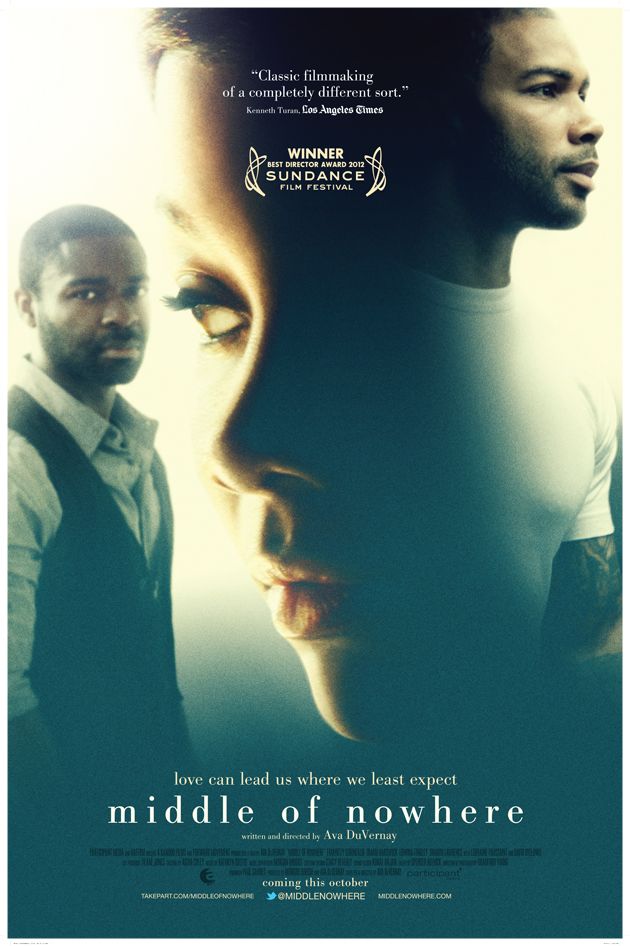 point of view from the female who ‘does time’ on the outside while her significant other is incarcerated. The prison population being disproportionately black and brown it is a film that addresses the effects on such a personal level. Ava has been able to engage the support of likeminded peers in her corner from having worked in the publicity and business side of the game. While the road ahead has a pretty big challenge, she’s got the brights on to help her steer through the unprecedented waters of firsts (again, its got to be successful at the box office).
















 Chicana from Chicago