After celebrating its Quinceanera in 2011, it took a hiatus in 2012
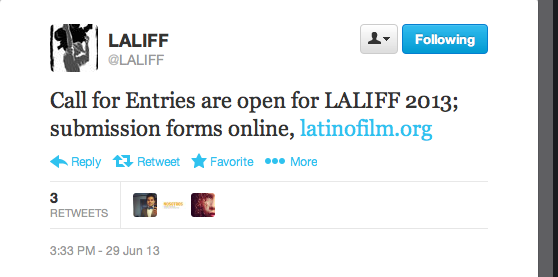
It appears that The Los Angeles Latino International Film Festival is back this year after canceling what would have been last summer’s sixteenth edition. Without much fanfare, no press release or even news item on their website, yesterday @LALIFF tweeted that the call for submissions was open and shared the link to the entry form. Yet there are no festival dates specified, only that it will take place (sometime) in the fall. For anyone who submitted last year, the submission page encourages you to reach out to them directly: programming@latinofilm.org.
Last year I wrote a rather lengthy post about LALIFF’s sudden flatline here. In it I interviewed Moctezuma Esparza, Ben Odell, Douglass Spain, Alex Rivera among many other filmmaker and industry vets and luminaries who have participated over the course of many if not all of LALIFF’s history. Repeated attempts to reach figurehead Edward James Olmos went ignored. A lot of the community was confused at such a quietly suppressed shutter, and shaken that the festival had to hit the brakes so sudden and hard after accepting submissions and in some cases inviting films for the 2012 edition. For fifteen years LALIFF had been the fundamental forum in our great city of Angels for US and Latin American filmmakers. In many cases it was the ONLY place US Latino films had a real shot of screening. I was personally appalled that the mainstream press didn’t bother to lend weight to such a cultural riptide, let alone pick up the story, so I took it upon my amateur self, counting on just my personal experience and contacts to examine it closer. It was the very first film festival I ever worked on. Like many filmmakers and filmgoers, it kind of changed my life. I took that passion for nurturing original Latino films and went forth into the world working at high profile film festivals, mainstream and specialized, to gain a wealth of programming experience, most influentially at Sundance and Morelia. It’s been seven years now, and every year I make sure to reach out to LALIFF with the hopes of capitalizing on my ever growing network, relationships, programming insight and producer skills I’ve accumulated to apply it towards making LALIFF’s infrastructure and programming sustainably stronger. It is only natural, like wanting to give back to your alma mater once you’ve made it because you feel that at long last you can actually make a real impact to something that made such a difference to you. But for either vague reasons given (or sometimes no response at all) my eager interest to help has never been taken up.
This year once again I offer myself up to do what I do best, steering an innovative programming vision and implementing a well executed festival. It’d be easier for me to sit back and critique its’ weaknesses but what is the use, or greater good in that? Instead, I’m saying right here, right now, Eddie, Marlene, I’m here, ready and willing to get my hands dirty and help make this institution reach its full potential and thrive once again.
Are you down for collaborating with the festival? Will you be submitting to LALIFF this year? How do you feel about its return? Cuentame.
Today’s announcement of the Academy of Motion Picture Arts & Science’s whopping and unprecedented 276 invitations to join their exclusive film society ranks indicates a baby-step push to be more diverse following the public spanking they took by last year’s LA Times piece which revealed the membership was 94% white and mostly male and old (average 62). Then there was the furious outcry from the Latino community over the omission of our beloved late actor Lupe Ontiveros in this year’s Oscar telecast RIP memoriam. In an open letter to the Academy, the National Hispanic Media Coalition went so far to assert that Lupe applied and was denied membership, giving rise to further shock and anger that an actor with such a long-spanning career (who played the role of a maid some 150 times) was not given recognition (by a white establishment, mind you).
THE PROBLEM WITH CONTROLLING IMAGE CONTROL
La boricua J-Lo, outspokenly committed to American Latino stories
Lets be real here, by nature, any veritable member organism charged with promoting and recognizing excellence on the popular masses scale, is usually an unwieldy, slow, political agenda-ized machine that struggles to keep step with the changing culture of subcultures and geo/social/cultural demographic shifts. Often times it is a dated lens of the current climate. Almost always, admission to such preeminent establishments is a rigid and puzzling bureaucratic, over-protective process which keeps many guards at the gate. If the AMPAS is the establishment of the center of the industry, minority representation outfits like the National Hispanic Media Coalition and the NAACP are similarly erstwhile establishments of their historically marginalized People of Color domain. The hazard then, is that in their high profile position they become yet another filter towards clearing and edging forward the mainstream path. Their relevance and integrity requires a high level of proactive responsibility. It’s much more productive to the cause (and challenging) to galvanize and mobilize on behalf of “unrecognized’ yet hugely talent artists, rather than to mobilize and forever celebrate someone already well established.
Mosquita y Mari (click on pic for link to watch)
Last week the nominees for the The Imagen Awards were announced, an awards gala known as the Latino Golden Globes, designed to recognize and reward positive portrayals of Latinos in all forms of media. In the feature film section, there was a huge oversight in their unwillingness to nominate two US Latino written and directed films which captivated audiences at hundreds of festivals. Both films couldn’t organically exemplify the positive image more, with their shining and refreshingly authentic depiction of an often times ghettoized world, not to mention accomplished use of the cinematic medium. Why weren’t they considered? Because the films were not officially submitted. I’m talking about Mosquita Y Mari by Aurora Guerrero and Elliot Loves by Gary Terracino. These two first feature films are transcendent coming of age stories that happen to speak directly to the Gay Latino community and offer insightful, multi-cultural and dimensional underrepresented narratives.
Elliot Loves (click on pic for links to watch)
The NAACP’s Image Awards follows similar protocol as does the IDA Awards, I later learned. I find it frustratingly counterintuitive that such entities acting as the preeminent Image authority on behalf of a minority group and whose aim is to cultivate a new culture, whether it is awareness for the extraordinary documentary, black or latino narrative, it is not a priority to do outreach and consider outstanding work that highlights their mission, regardless of whether they paid a submission fee. The non-profit, under-staffed response is not acceptable. Surely there are people in those communities who would assemble an adjunct committee to look out for these films on the organization’s behalf. Film festivals do outreach to films made by people of color and even offer fee waivers because they understand their gatekeeper reputation and existence rests on being the first to discover new visions and perspectives.
Michael Pena, dare we say the next bankable Latino leading hollywood star?
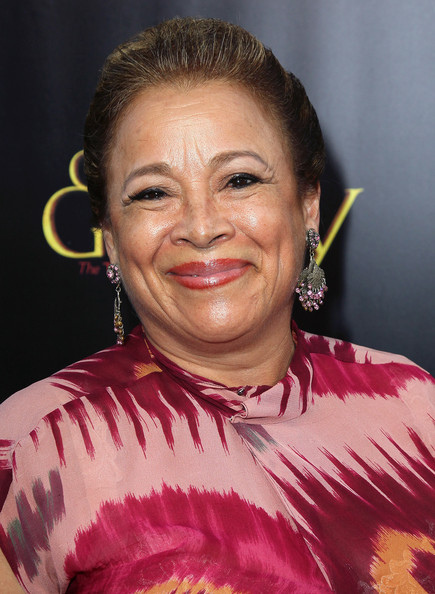
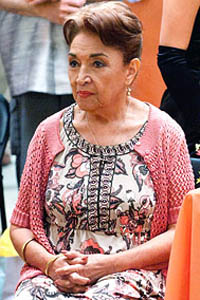
Back to the list of Academy invites out. There are seven US Latinos on the Actor list of 23. Michael Pena (no doubt sponsored by his buddy and co-star of End of Watch, member Jake Gyllenhaal), Danny Trejo and Jennifer Lopez feel very du jour nominations. Miriam Colon and Alma Martinez fall in the should have been nominated ages ago. Both are amazingly still very much active today. The Geno Silva nomination feels kind of random. He was first seen in Zoot Suit in 81,then made a number of television appearances in the 80s and 90s., he was in Spielberg’s Amistad in 1997. His last film credit listed is the Vin Diesel movie, A Man Apart in 2003.
What about content creators? As far as I can tell zero from the branches of writers/directors/producers on this invitee list are US Latino. Given the mostly secretive 6,000+ membership it is somewhat difficult to add context without knowing the complete list of US Latinos who are currently members, those who have been a member before and later resigned, or how many US Latino artists over the years have been invited. The reason the AMPAS gives behind not wanting to publish the full list is fear of lobbying. No kidding. I would guess there would be more pressure on those minority members to crack open the door a tad more. But I wonder if Rodrigo Garcia, Patricia Riggen, Patricia Cardoso, Robert Rodriguez or Gregory Nava to name a few of the few on indeed members? (anybody know??)
Rosario is Puerto Rican/Cuban on her mom’s side. She plays icon Dolores Huerta in the upcoming Chavez pic
In the LA times article from last November, Academy leader Tom Sherak said they are eager for more applications from women and minorities, AND more involvement from those who are already members. He was quoted, “If you are sitting waiting for us to find your name in our make-believe book and we are going to call you, we are not going to do that. Come to us, we’ll get you in. We want you in. That would help us a lot.”
So, if our own organizations run by people vested in our representation, aren’t actively seeking out, championing and pitching talent who have yet to be recognized in the mainstream, why would we expect the longstanding establishment to do so?
Mexicana Alma Martinez will be next seen in FX’s The Bridge
Here’s the Actor list.
Miriam Colon – “City of Hope,” “Scarface”
Rosario Dawson – “Rent,” “Frank Miller’s Sin City”
Jennifer Lopez – “What to Expect When You’re Expecting,” “Selena”
Alma Martinez – “Born in East L.A.,” “Under Fire”
Michael Peña – “End of Watch,” “Crash”
Geno Silva – “Mulholland Drive,” “Amistad”
Danny Trejo – “Machete,” “Heat”
Cinematographers:
Checco Varese – “Girl in Progress,” “The Aura”, and Guillermo Del Toro’s upcoming summer tentpole release, Pacific Rim (Peruvian born married to Patricia Riggen)
Puerto Rican Miriam Colon, most recent credits, Bless Me Ultima, Girl in Progress
Members-at-Large:
Victoria Alonso is Marvel Studios’ Executive Vice President of Visual Effects
Music:
Cliff Martinez (Only God Forgives, Drive, Traffic, Solaris…).
I know that last names are not always a barometer of whether someone has Latino roots or not. If you know of or can identify other Above the Line (w/d/p/actor) who are US Latino, give me a shout.
ADDENDUM,Per Hollywood Reporter, the National Latino Media Council applauds the Academy for the 22/276 Latinos nominated. That’s 8% people. And that measly 8% includes Brazilian filmmaker Jose Padhila, Chilean filmmaker Pablo Larrain and a handful of other international artists mixed in with US Latinos. Nada que ver.
From the cutting and pushing edge Miami wrecking production crew, Borscht Corp. here is SOMOS CHAVALOS, adopted and directed by Julian Yuri Rodriguez. It is a modern urban Latino youth interpretation of the Gwendolyn Brooks’ brief and majorly significant poem, We Be Cool. What’s raw and real here is that this perspective is unapologetic and from the youth direct, made searing by the disconcerting casually tragic POV of their short term life. This aint no outsider looking in told tale as we often are given these stories. If we want to ‘get kids these days’ we gotta dig under the surface and give weight to their reality. Do that by really listening between the lines and implications. The street family and code of honor, for all its criminality and corruption, offers a place of respect, love and pocket money – a badge of status – for lower class kids. The easiness and eagerness with which they pursue this avenue of survival is a critical discussion to engage.
Julian (24) may be young blood but his provocative in your face style has this between the lines intensity and import. He’s my latest add on my TALENTO filmmaker list of emerging filmmakers to watch. Check him out on Piratas, a short he narrates and co-directs. And coming soon online is C#ckfight, watch the cheeky trailer here. Borscht has received considerable funding support from the James L. Knight Foundation, one of the more visionary and bold arts foundation out there, based in Miami. Keep up with Borscht’s crazy cool transmedia storytelling stimulation on their Tumblr where they release their own work as they please and for free.
Here’s We Real Cool 1963 poem by Chicago poet Gwendolyn Brooks:
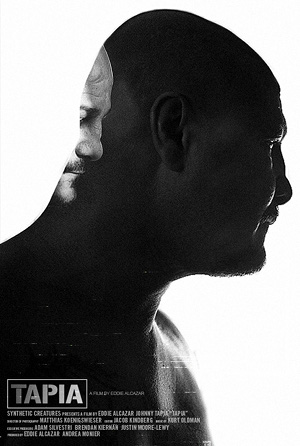
The brief and tumultuous life of prizefighter Johnny Tapia, who passed away last year at the age of 45, elicits overwhelming empathy and incredible awe. The documentary directed by Eddie Alcazar, intimately reveals the immense emotional agony and pain he suffered in his life but also shows that for the series of extreme, rock bottom lows of misfortune, Johnny always jumped back up to reach equally extreme heights of success and triumph, like winning five boxing championships, meeting the love of his life, Teresa Tapia, with whom he has a young son, and becoming a beloved hero to his hometown Albuquerque, as well as around the world. Johnny grew up without a father, and his mother was the world to him. At the tender age of 8, his mother was viciously murdered – a traumatic catalyst for what became the pang of his tortured existence. The documentary, which is world premiering in competition at the Los Angeles Film Festival, is powerfully narrated through Johnny’s own words. Alcazar adds a touch of style and a gorgeous cinematic framework. The film opens with Johnny’s slightly raspy Burqueño slanged voice over young Johnny Jr. punching the air in the New Mexico desert plains and celestial horizon captured in wide panoramic vista at the magic hour, painting a metaphysical element to the legacy he leaves.
Eddie was working on a dramatic feature about Johnny but after he passed, Eddie took the research footage and made it into this documentary film. The dramatic feature, which he is co-writing with Bettina Gilois, (Glory Days, The Hurricane) who co-wrote Johnny’s biography, Mi Vida Loca is readying for a fall shoot in Albuquerque. 50 Cent is an executive producer on the documentary and is also onboard for the dramatic version.
Teresa & Johnny Jr. at the world premiere screening
The documentary is gripping and utterly poignant. Hearing his inner, unwavering fury takes on a dark possession. His voice and soul feel weary but he is unrelenting against the demons he waged battle with every single day of his life. Seeing him from his early days rising up through the boxing world first as the “Baby-faced Assassin” to his later years as the lines of anguish take over his face and his body becomes heavily drawn with symbolic tattoos, his killer instinct clashing with his vulnerability. At the world premiere screening, his wife Teresa and son, Johnny Jr. came out to introduce the film but did not return after the screening, as much as everyone wanted to see them. I wasn’t surprised to learn that it was too overwhelming for them and Eddie declined to do a Q&A out of respect, feeling that what’s important in the doc is Johnny, and Teresa is the only person who could talk about and for him. He told me that a couple days later when I got the opportunity to interview him. I learned the ABQ native has some Bolivian lineage and found out more about both Tapia films. Here’s a redacted transcription of our talk:
How did you know Johnny, how far did you too go back?
I never actually met him until I knew I wanted to do a movie two years ago. Back then it was about creating the narrative version of his life so I sold him on my idea of doing one year of his life in his youth and he was totally up for it. Then I got the rights and we basically just started following him around at that point. As I was following him around I was writing the script. It was all about research and compiling all this archival footage.
Relating to him.
A lot of it is because he embodies the Albuquerque culture, which is a little bit different. Having somebody that stands out from ABQ is always kind of special and he definitely kept it real from his upbringing so I think that’s why everybody in ABQ has that strong connection with him and each other. It’s distinct. The community always looked up to Johnny. There is no professional football or baseball team and he was one of the first professional athletes who came out of that area. More than seven thousand people came out to his funeral.
Kick ass image by Sam Flores.
How did you manage to contrast the darkness of his life with all the other light and positivity he also experienced?
It was tough, which was I never intended to do the documentary. I wanted to concentrate on one year of his life because there is so much to his whole life, and it was a really really hard process confining everything that he’s been through so I was experimenting and discovering it as I went. Bu there are as many highs as there is lows and his life in particular is filled with many from each side of the spectrum. As far as my experience with him I never saw too much of the dark side other than when I interviewed him. I mean personally it was just fun, just me and him playing around. He was always active, jumping on the trampoline, playing ping pong, when we’d go out to eat he’d shake everybody’s hand. He really couldn’t stay in one place for too long.
Doc vs narrative, what do you intend to do with the dramatic feature you weren’t able to do with the documentary
The documentary was about trying to hone in on what he said and having him say it directly to the audience. I didn’t want to interrupt anything too much. We did a little bit of stylistic stuff intertwined to show a little bit of the spiritual side, you know like his connection to his son, and his connection to nature. But I wanted to keep it pretty loose on that, only scratching the surface of what I’m going to do in the feature. The feature is going to definitely be a little dreamy and spiritual. When I say spiritual, there’s this thing that I recognized when I would talk to Johnny, I was always trying to pin point how his mind works – and he feels like his mother is right next to him. So that plays a large role in the actual film; the presence of his mother, always around and also that connection with his youth. In the feature as its written now we pop back and forth in his life from Johnny at 27 years old, and when he was 8 years old when he lost his mother. Its always trying to establish the connection of where he finds all this anger but also power, passion and energy that was super important to have. That drives every action in his life, I think, from that point forward, and I’ve had conversations with people who agree he became stunted at that age. He still felt like an 8 year old when I’d talk to him, he had a child like spirit, insight. He was not that formally educated, he was street smart, he improvised with whatever was around him. He had that excitement, wonder and would be happy to see someone looking to give him love, and made people happy. He was always surprised at any good news.
In a way its hard to imagine him as anything but a boxer, literally pounding and fighting his demons…
He was really hyper, boxing was a natural thing for him, it was a natural release of energy, it was actually perfect, getting into the ring, always training is what kept him alive. It’s hard to think of him as anything else, maybe some other kind of athlete.
Curtis Jackson at the second screening; “It was so interesting to see someone, 3 weeks before they actually passed, reflect on their entire life.”
How did 50 Cent come on board?
It all came through Lou DiBella, (executive producer) the boxing promoter and tv/film producer. When we finished the film we started showing a handful of people to get people’s thoughts on it. Lou was actually head of the HBO sports division who helped put together the infamous Johnny Tapia/Danny Romero fight back in the day so he had that connection. He showed the movie to 50 cent with who he has a partnership… 50 felt all these similar things and really connected with what Johnny went through (they both suffered the loss of their mother around the same age). Also he grew up in similar crazy circumstances. Its weird how you connect the dots….
Tell me about your producer Andrea Monier
Yes, Andrea Monier has been pivotal. We are friends, she’s also an actress but an amazing producer. We worked on an Everlast spot first and she did an amazing job. To do a documentary you have to have a super strong producer because there is a lot of work like archiving footage, etc. I couldn’t have done it without her.
And this amazing artwork by Akira Beard
Describe the driving creative process in writing the narrative
(Losing his mother) that’s the biggest thing. All his issues stem from that; drugs, psychological conditions, we explore a lot of him meeting and falling in love with Teresa. It’s a big part of the film; the love story, but then that also connects to the mother. There’s a lot of similarities between Teresa and his mother as far as the expectations Johnny had, he almost felt like Teresa was his mother, she replaced her in a way.Feeling like a baby with your mother, a lot of the treatment you get from your mother at that age. I come from a single parent as well and it helped me a lot to realize how much Johnny valued his mother. Like, I don’t’ know where I would be without my mother, those thoughts always trickled through my head. Johnny was super proud to have Teresa next to him as his woman. I don’t think he ever constricted her in any way. She was more the person who kept him in place, she was the one who handled the business and dealt with the promoters and he looked up to her in terms of what direction to take. He trusted her opinion above all.
What do you think she saw in him?
She likes to joke that she was young and stupid but I know there’s a lot more to it. She has all the traits that he may have needed help on, and likewise, he showed her the excitement, spontaneity that she was looking for in life, and that quality of never expecting or knowing where the day is going to go was interesting and that’s what she gravitated to.
It must have been hard to watch him fight all the time
Eddie Alcazar
Well, the professional aspect is almost better than the day to day reality in ABQ. There are worse street fights, guns involved. Every time I’d go to a party there were gunshots. I wanted to show this world that is not familiar, Breaking Bad does it a little bit but its not as dark or raw as it really is. (ABQ) is a beautiful place but it’s a weird thing; there’s this subculture, an underbelly. It has a big native American population, Spaniards, Mexicans, I don’t know what leads to so much conflict but maybe the biggest thing I can relate to is there’s not too much to do. So people just …they are bored and act crazy sometimes.
Big thanks to Eddie for the interview. LA folks I urge you to go see Tapia tomorrow night, Saturday at 9:50pm at the Regal at LA Live. Get tickets here. Details on the big ABQ screening forthcoming. Also be sure to queue it up on GoWatchit and like it on Facebook to support it and to get updates on where it lands with its theatrical/television/VOD release.
PBS is doing a really awesome thing for social activist/educational mobilization and awareness for all the arts. It’s called OVEE and it’s a new live, interactive social screening platform where you can choose your own content from the eclectic documentary PBS library. You can invite up to 500 people to join and watch from anywhere, along with the added plus of having a Question & Answer chat with the filmmaker! The possibilities for launching and fundraising a spectrum of educational/grassroots organizations are endless. It doesn’t have to be a social issue. PBS also programs a lot of great music programming, so you can get together and watch Bonnie Rait at the Austin City Limits concert if that’s what you want to do. But it also just might be a game changer in that it offers an optimal tool to connect beyond geography.
The beta version of OVEE is available to public media organizations and their community partners. If you are interested contact ovee@itvs.org. They’ve queued up a range of upcoming public screenings including Ted Talks, culinary arts shows and a number of concerts, listed here. Which leads me to:
This Thursday, June 20 at 4pm PST you can join to watch this extraordinary historical portrait, REBEL by Maria Agui Carter. Co-presented by Latino Public Broadcasting and Women and Girls Lead, an innovative public media campaign designed to celebrate, educate, and activate women, girls, and their allies across the globe.
Rebel is the forgotten story of a woman civil rights soldier. What??? Yes. That’s right. Loreta Velazquez fought as Harry Buford, a Confederate Soldier, then spied for the Union. Born in Cuba and raised in New Orleans, Loreta was unconventional to say the least. Her memoir which was published in 1876, revealed the dark side and ills of the war-time society. She was publicly attacked and discredited over it, and for over a century, critics have dismissed her as a hoax.
The film inhabits an ambitious hybrid form of classic documentary and epic drama, featuring luscious costume and production design, a lively score and a huge cast of actors embodying the reconstruction of Loreta’s infamous practically erased life and times. It plays like a big scale period piece weaving dramatic sequences of Loretta as a woman in those times, with battle action scenes and fascinating recently uncovered archives.
I recently met María Agui Carter at NALIP where she is the Chair of the Board. I admire her character and drive for continuing to raise the bar for herself. Bringing to light this Latina Civil Rights soldier was so important to her that when she realized there was barely any footage she dove in and recreated the feel for the era. She joked that if she had known how much work it was going to be she would not have gone though with it. But that just goes to show she went with her gut, doubled down, and the result is a distinctly novel aesthetic. At one of the keynotes she shared her story of immigrating to the U.S. from Ecuador, growing up as an undocumented “Dreamer” . A Harvard grad, she is passionate about using media storytelling to inspire social change and specializes in visually arresting and complex storytelling. REBEL is a co-production of IGUANA FILMS, L.L.C. and the Independent Television Service (ITVS), in association with WPBT/Miami and Latino Public Broadcasting with funding provided by the Corporation for Public Broadcasting (CPB).
You can also watch Rebel at the Roxie for the Frameline Film Festival in San Francisco June 29
My header above; “People Like Us” comes to mind and becomes a play on words at the same time. At a couple LA Film Festival panels I heard both actor Gina Rodriguez (Filly Brown) and filmmaker Ryan Coogler (Fruitvale), hit on the personal impact of seeing stories embodied by and created by ‘people like us’ as being their driving creative force. Ryan did not personally know Oscar Grant, the Black 22 year old who was ‘accidentally’ killed by an incompetent Oakland police officer on the Eve of 2009, but says that he was ‘like him’. The frightening thought that this incident could have happened to him is what compelled him to make his first film about this tragic and unnecessary death.
The other way I might mean “People like us” is using ‘like’ as the verb. As humans we have the remarkable ability of feeling compassion and human connection to someone’s narrative regardless of whether we share a common culture. There should not be any fear that if you are too specific i.e. too Chicana, too Puerto Rican, other people (audience) won’t like us or our stories. As Ryan points out in the clip, just because a film is about all about a Puerto Rican family in the South Bronx, referring to The House that Jack Built, it doesn’t mean that a non-Latino would not enjoy it, or identify with the pains of a dysfunctional family and a nostalgia for one’s childhood. The clip is from The Blackhouse Foundation series of ” Diversity Speaks panel that took place last Saturday. Joining Ryan Coogler on this “New American” Independent panel were filmmakers Grace Lee, director of American Revolutionary: The Evolution of Grace Lee Boggs (who was quick to point out that the Black community has it so good compared to Asian-Americans in media representation), Henry Barrial (The House that Jack Built), Ava Duvernay (Middle of Nowhere) and the gracious moderator and producer Effie Brown. I’m always trying to take note and learn from the LGBT and Black community with regards to how they address their representation in the media. I find that both communities share a stronger solidarity. Perhaps that’s because for some time now, they’ve moved past dwelling over lack of their lot and instead, collaborating with each other, which in turn, better improves their lot.
The signature LA Film Fest panels, Coffee Talks are general conversations about the craft and opportunity to hear from successful artists in their respective fields. I stepped into the Actors one which consisted of Garcelle Beauvais (White House Down, Flight), Joe Manganiello (True Blood,Magic Mike), Gina Rodriguez (Filly Brown, Snap) and Andre Royo (The Spectacular Now, The Wire). Even without the “diversity’ header, hearing their different trials of pursuing their art, highlighted the disparity for people of color. As members of a ‘minority’, artists must chip away every damn day at the resistance of a media in which white men continue to dominate opportunity. When asked how they choose their roles, Joe Manganiello, the insanely rugged handsome man’s man, said that for him the most important decision factor is the director. Now of course, that sounds like a valid answer for many reasons. It’s in some way a privilege to be afforded that choice. But for the other brown and black folk on the panel they commented it was far less a choice for them because for one, they do not get offered roles as much. And two, when they do, they must grapple with the trying decision of whether to keep accepting the few roles that come their way which perpetuate the same degrading stereotypes. All actors probably struggle with finding work that does not sacrifice their individual integrity, but this is such an added pressure and obstacle. As Andre Royo said, most roles he’s been in are either where he’s in jail, coming out of jail, or going into jail. If his character is not high, he’s happy. Listen to what Gina says:
Watch the amazing Grace at the premiere of her documentary American Revolutionary talking about our responsibility to converse, reflect and self transform so we may continue to evolve as a human race and galvanize the revolution beyond us.
I’ve no doubt that yesterday at the full-house world premiere of American Revolutionary: The Evolution of Grace Lee Boggs, we were in the presence of arguably the greatest living American sage. Yet as much of an impact Grace Lee Boggs’ 80 something years of activist endeavors have made to those directly involved or already familiar with the African American civil rights movement, now thanks to director Grace Lee and producer Caroline Libresco, who gloriously bring onscreen her philosophical voice, her legacy will illuminate and inspire the rest of us who had no idea of this woman’s accomplishments. The documentary serves as a re-introduction to a whole new generation and as such, offers a significant tool of social activism within itself. Like it did in me, I trust it will spark a call to spiritual arms for everyone towards fulfilling the visionary quest Grace Lee Boggs dares to predict for human kind.
To say Grace Lee Boggs is a highly thought provoking and profound human being would be an understatement. I was absolutely floored by her wisdom and transcendent way of thinking. Throughout the screening a low murmur of ‘Mmmhmm’s could be heard.
Grace Lee Boggs received her Ph.D in Philosophy in 1940. While translating the works of Karl Marx she became attracted to the socialism beliefs which subsequently and naturally drew her to Detroit, where the catapulting industrialization of the automobile industry provided the most fitting stage to adopt into practice the socialist workers’ theories. She has stayed in Detroit ever since, becoming a beloved and iconic figure in the community. “This is how giants fall”, Grace says at the beginning of the film as she ambles past the old abandoned factory plants of Detroit with her walking aid. The director, Grace Lee has been documenting her for 12 years, and in that time span she has not only created a close bond with her but has also accrued some fascinating archival moving picture and sound footage. The camera fluidly pans through stills and at one point I wasn’t sure if it was animating a still or it was real film, the images are rendered so lively. There is a playful score and humorous graphic sequences here and there informing us of the scholars and philosophers, Grace Lee Boggs tends to reference quite a bit, i.e. “Hegel in 30 seconds”. When she married Jimmy Boggs, a through and through man from Alabama whose deep country accent belied his innovative revolutionary expression, the two became a force, writing pamphlets, books, holding community meetings and organizing marches. In describing one of their very first encounters Grace noticed Jimmy’s ‘unpleasantness’, a trait that you can tell oddly attracted her in some sense. He asked her to marry her right then and there that same night, crystalizing their soul mate debate dynamic they had throughout their forty years of marriage in which they discussed everything around them in the world except the personal. Although the two tried to keep a low profile, as described by the FBI reports, they were a dangerous anomaly and the file they kept on Grace Lee Boggs grew thicker and thicker.
The film doesn’t shy away from questioning her identity as a non-African American member of the community and then much later in life when she reawakens her consciousness of her ethnicity as a Chinese American. More delicately the question of where she fell between the non-violence approach of Dr. MLK or the extreme aggression Malcolm X preached within the civil rights movement is broached. Her authenticity is also challenged by none other than the director Grace Lee, who expresses her frustration directly. How is it that she is so positive, never shares doubt and deflects any personal questions of making mistakes or regrets especially considering acknowledgement of such is necessary for the transformative growth she frequently talks about to take place. Sure enough, as proof Grace Lee Boggs exercises the beliefs she preaches, she listens to Grace carefully and then tells her that it is something she will reflect on. Adding, “I’m really good at that”.
As much as American Revolutionary is a remarkably engaging U.S. biographical and historical portrait, this is also as big picture of a point of view on the human race and where it is going, I’ve ever seen in a documentary. Somehow, Grace Lee Boggs has become more lucid with age. Time is a funny thing we hear her say, and its almost as if she’s figured out how to contract time itself. Conversation is how she is an activist these days and as you can see above she continues to articulate the questions we should be asking of ourselves and challenging us to expand our imagination. Looking ahead, she reminds us that the question of what a revolution means today is critical to think about and address. The conversation could not be more timely.
The film has a second screening at the LA Film Festival tonight at 7:20. East coast, it will screen at AFI Docs June 21 and 23 in D.C.. For all you Motor City peeps, in celebration of Grace Lee Boggs 98th birthday (!) there will be a screening on June 29 in Detroit at the Detroit Institute of Arts. The film will be broadcast on POV next year. Follow the film and Grace on Twitter and Facebook.
In honor of their very first feature Forty Years From Yesterday debuting at the LA Film Festival this week I want to share this particular mini-doc portrait made by the filmmakers Robert Machoian and Rodrigo Ojeda-Beck. In distinct auteur meets D2F fashion, American Nobodies is an original web series in which they film and introduce us to “Average Americans Doing Extraordinary Things” then upload them online for free for everyone to see. In little over a minute they manage to capture and highlight the startling souls of individuals as the camera unyieldingly gazes directly into their eyes, and follows them in their element. We get to meet Don Antonio in this one, a weary, aging man who recounts his grueling 9 day trek across the US – Mexico border. Even though it must be decades since the terrifying ordeal, we can tell the experience will forever and firmly remain embedded in his memory. Meet Antonio and check out more extraordinary Americans here.
The boys from NoCal have a considerable body of work in multi-media short forms that defies and blurs through genres, demonstrating a love and anthropological eye in its dreamy realist cinema. It’s always awesome to see short filmmakers take their craft into the feature form, especially ones with such original voices and aesthetic. The world premiere of Forty Years from Yesterday is this Sunday at 7:30pm. Get tickets here.
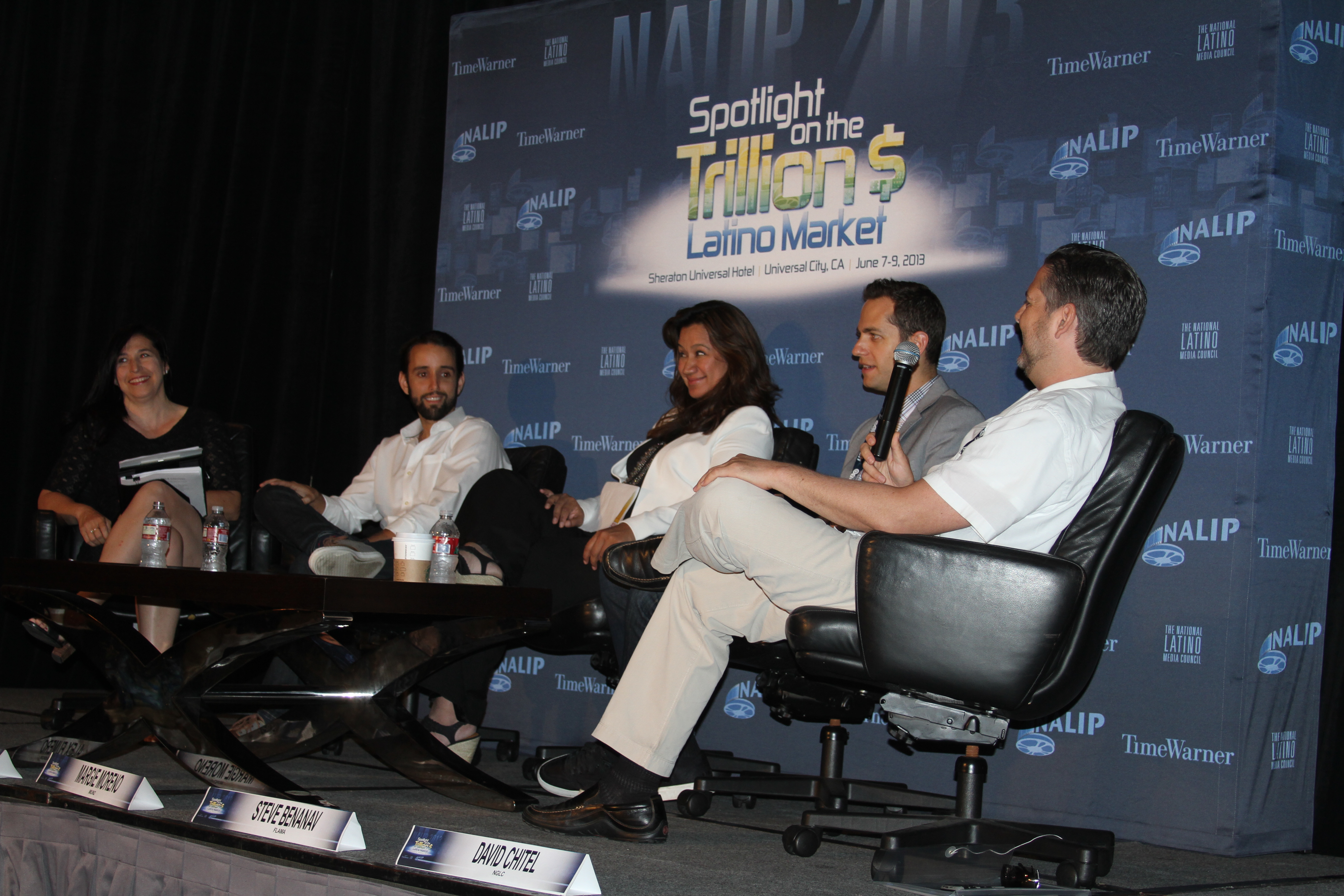
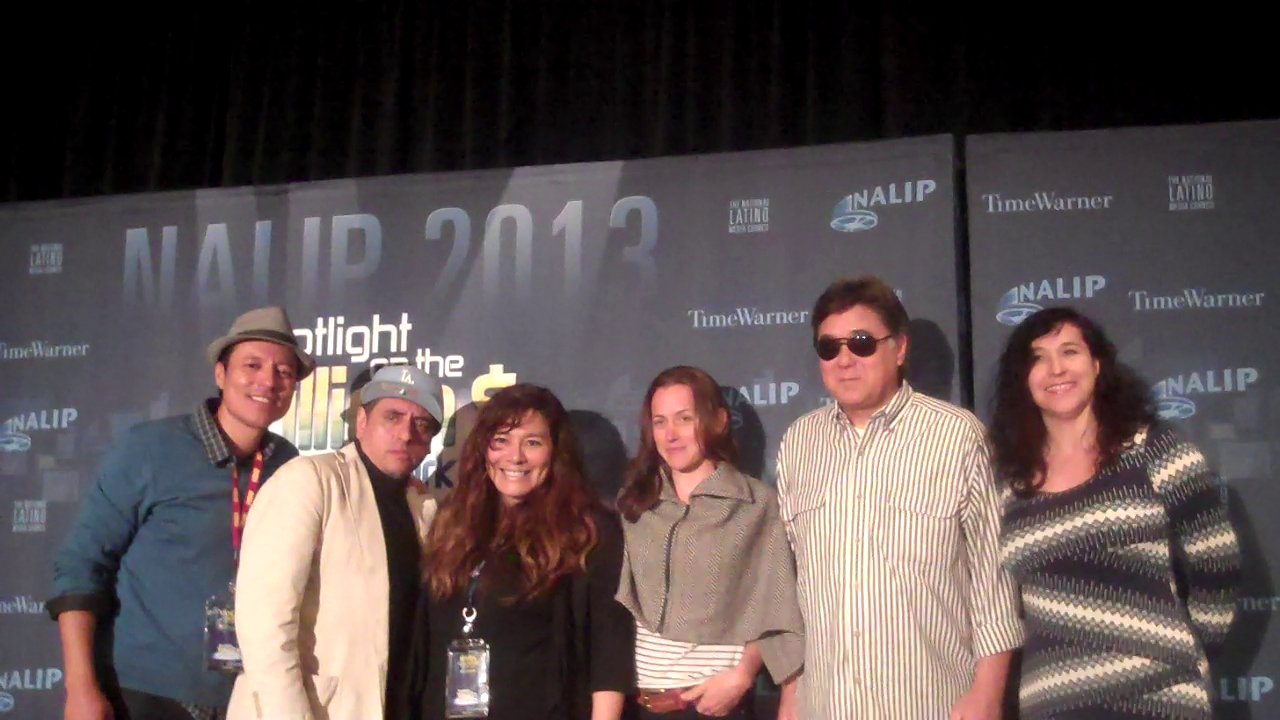
The theme of this year’s NALIP 2013 conference was “Spotlight on the Trillion $ Latino Market”, but it seems the only tangible currency the Latino community shares is the ‘trillion’ perspectives on the subject. Pushed to pierce through the brown and loud cacophony overheard this weekend, I’ve come up with; On one side there is a tedious concern of defining our hybrid identity and segmented Latin descent/US geography, which plays into the subsequent frustration over tackling our representation within the commercial mainstream marketplace. On the other side, there exists a newer generation of transcultural artists asserting a very specific identity that informs their work, and their greater concern is building awareness and access to an audience within and outside the specialized outlets and innovative digital distribution platforms available. Of course there were a lot more thoughts vocalized and an opposing range of game plans and visions for the future put forth, but the following is what I absorbed and takeaway from this weekend. Before I launch into it though, it is necessary to acknowledge and appreciate the herculean efforts of NALIP, the non-profit organization of volunteers, staff, operations, board members, partners and participants who produced this year’s conference. If nothing else, the community is unified by the love and passion of the arts.
OPENING AND CLOSING PLENARY
The Opening and Closing plenaries offered proof the conversation is at least moving forward in spite of the generalized and misleading titles of the sessions. The reason being is the caliber of forward-thinking speakers and artists who question the implications and who tended to offer a different perception and context to the subject.
At the “Overview of Media Trends and the Trillion $ Latino Market”, the panelists were David Chitel, New Generation Latino Consortium; Steven Benanav, Flama; Alex Fumero, ABC / Univision’s Fusion and Margie Moreno, Mun2. The very first thing they all said was that this was an extremely complicated market. Their job is to figure out how to break down what part of this trillion-dollar market can realistically build an audience. “We are using a misconception to our advantage. Especially when it comes to content”, Alex Fumero said. Even though its kind of corny how these targeted outlets wrestle with coining a demo moniker (YLA, BCA, NGL, Urbano, Hispanic Millenial), it is indicative of how desperate they are to reach out to the young Latino (18-34) audience in a fresh way. They are adopting a doors-wide-open, you-dictate-us approach with their programming. Most importantly, they do not pander nor underestimate their audience. Fumero invited anyone with programming pitches to email him for the network that will launch late this year (____). On one condition: He insisted that they must send a trailer, or some kind of video clip that demonstrates the type of content they aim to make. “There’s no reason you can’t go out and shoot something on your phone”, he said. Margie Moreno from Mun2, Telemundo’s younger sister which started 8 years ago, said, “We don’t let language dictate our content”, a sign of how much more embracing they are of a fluid bi-cultural identity than any other traditional outlet. Flama, is a new digital platform from Univision launching this fall. They have an open submissions call for all kinds of content. Submit your web series and projects at FindYourFlama.com Already in the works is a scripted show called Salseras about two childhood best friends who become fierce rivals in their college campus salsa dancing competition. And then there is NGL, which instead of taking up one kind of channel space, is positioning itself as an aggregator and source of all the “New Generation Latino” content out there on the net. You can submit your web series to get featured on their site and gain some of the ad share they generate by integrating and offering categorical content to brands and advertising companies.
When it came time to take questions from the audience – (which inevitably usually come in the form of comments rather than questions), I can’t help feel that Dennis Leoni, NALIP Founding Trustee and television writer (Resurrection Blvd) invalidated these innovative and exciting ventures when he said that while it is great that these specialized outlets exist, “I want to play in the big leagues”. Where is NBC, ABC, CBS, he asked? The panelists addressed his frustration by reminding all of us about the nature of the beast; studios and networks do everything in their power to hit the biggest number possible. Even if they find a voice as exciting as John Leguizamo who most definitely has an established fan-base, (and who apparently had three pilots none of which were picked up this season), if they don’t see it play broad (safe), they see it as a risk.
from left to right Yancey Arias, Richard Montoya, Maria Agui Carter, Natalia Almada, Dennis Leoni and Mandalit del Barco of NPR
The Closing Plenary’s generic topic “Latinos and Media Stereotypes” was likewise immediately called into question by the panelists themselves, starting with Natalia Almada, this year’s NALIP conference Co-Chair and filmmaker. She mentioned that this concern with a type of representation is problematic and baffling to her since as an artist she is drawn to the complexity and difficult… and wants to look at the things that aren’t clear. Richard Montoya echoed the sentiment by saying he is not concerned and is actually unapologetic with whether his characters offer a positive portrayal of Latinos. “I don’t want to have that conversation.. I just want to drag you into the world and to tell stories best I can…Because it has an authenticity to it, a cultural specificity that rings true to the world but seldom gets underneath”. Meanwhile, Yancey Arias, an actor and producer, demonstrated how, by expanding the genre in which you are working with, where it doesn’t matter where a character comes from but the story and world, it is yet another way to subvert and challenge representation. The short film he stars in and produced, The Shooting Star Salesman, is a whimsical tale about a door to door salesman wearing a top hat and three piece suit who sells shooting stars. It will become available on iTunes in August. The filmmaker Kico Velarde is currently adapting it into a feature.
KEYNOTES
Reading from his laptop on stage, Richard Peña delivered a serious and illuminating context on the history of world cinema, festivals, and shared his personal connection to his Spanish/Puerto Rican identity as it informed his programming career. He’s always been attracted to films outside the purview, the margins. He struck the parallel that US Latinos are the new Jews of the United States, enjoying an insider/outsiders status which vantage and unique perspective could make for astonishing and novel discoveries about our world. The dilemma facing you he said, “Will you erase that sense of difference to an absolute minimum to cross over in to an even bigger market?”
While Richard’s discourse was introspective and left the room in thought , the second keynote on Saturday by Glenn Llopis played like a corporate motivational speech designed to pump up the audience full of Hispanic pride. Yes, he used that 70’s term, “Hispanic”. The author of a best-seller book titled, Earning Serendipity, he is the founder of Center for Hispanic Leadership. He’s basically carved himself out the role of the guy who corporations bring in to figure out how to reach the largest unidentifiable profit center. Overly enthusiastic, bright eyed and bouncy on stage, he showed us a flashy reel touting our numbers and potential power. It literally felt like he was holding up a mirror to us and saying,’Look how awesome and American, we Hispanics are!” Repeating phrases as if mantra’s like “Value your brand”, “Embrace your cultural promise”, “End of the niche,” I found the delivery patronizing, lip-service schtick and inappropriate. Now, in no way do I mean to diminish this man’s considerable accomplishments. He was the youngest business executive at Sunkist, he is a best selling author and a successful entrepreneur with a positive message. We can all relate to his Cuban father’s story because all of our parents’ experiences are character-building for the battles they waged as first generation, back in the day. His positive reinforcement of the immigrant mentality is noble, but so what. He speaks in general, self help, 12 step like morale boosting phrases, instead of offering practical strategy. He threw so much out there that something finally did in fact stick with me; “To change the conversation, you must lead the conversation and be consistent.” I can totally get behind that – but isn’t that like totally obvio?
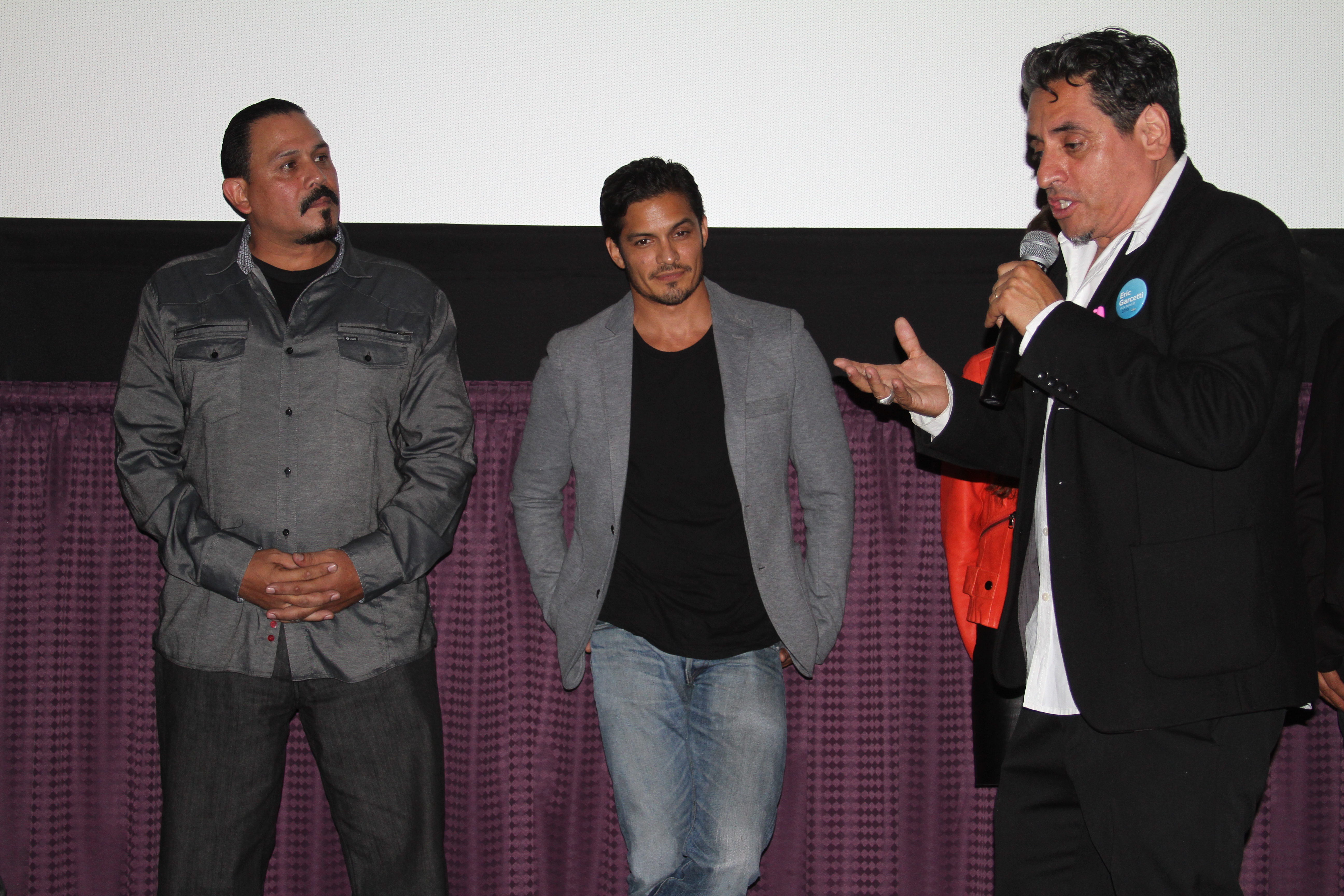
from left to right, Emilio Rivera, Nicholas Gonzalez and Richard Montoya
THE PEN IS MIGHTER THAN THE SWORD
Wordsmith warrior, Richard Montoya is our de-facto leader charged with rescuing Latinos’ non-existent record in El Pueblo de Nuestra Señora de los Angeles (and across this great nation). Last Friday night’s private screening of his film debut, Water & Power was jam-packed inside the 400 seat theater at the AMC Citywalk. Howard Rodman, the screenwriter and one of Montoya’s Sundance lab advisors gifted the audience with a referential prologue of how classic LA noir has traditionally resisted filling in non-white characters, completely disregarding the makeup of this city – until now. Water & Power has a groundbreaking breadth of modern mestizo and mystical essence enhanced by Gingger Shankhar’s score and a soundtrack that includes Zack de la Rocha and Chicano Batman. The film’s transmission is undeniably enriched if one has an understanding of context/consciousness of LA and Chicano history. But even if you are unfamiliar with named identifiers like Pelican Bay, Lords of Dogtown, La Onda, Sureños, Frogtown muscle, there is some classic symbolism and brilliant metaphors to appreciate in this tale about two brothers locked in each other’s foreshadowed cataclysmic fate, all which takes place over the course of one night. In film, what is not shown onscreen is just as important as what is onscreen. Referring to the comments made to him about the lack of female characters in his film, Montoya responds, ‘This is what men behave like when there is not a strong female presence.”
“The ghosts of our colonial past haunt this continent”, Richard likes to say – and this is the prevailing night-time, tribal mood of this piece. He modernizes and personifies the noir genre’s shadows, dreams, underbelly fixes, secrets and implied provisos which precariously keep harmony during the day. The aerial views of the city are seen as if from our native American Eagle keeping watch over LA’s circulatory system; freeway arteries on which carbon-dioxide powered vehicles flow, and the unseen pipelines underground through which gravity powered water flows, barely keeping this land soluble. I have to say I was looking forward to Richard Peña as Q&A moderator to dive into the rich thematic context but curiously he only asked about the panoramic shots and once he gave the microphone over to the two young child actors to talk about their first acting experience, Montoya took over the Q&A.
AMERICAN LATINO WRITING PANEL
Carlos Gutierrez of Cinema Tropical, Bel Hernandez/Latin Heat, Juan Caceres/LatinoBuzz and I enjoyed an engaging panel about the relative lack of people and literature covering US Latino cinema. Bel refered us to the book and 2002 documentary 100 years of The Bronze Screen. A more contemporary look is Mary Beltran’s 2009 book called Latina/o Stars in U.S. Eyes: The Making and Meanings of Film and TV Stardom. Still, I maintain that more recent films such as the groundbreaking epic, genre-defying film Sleepdealer written and directed Alex Rivera have not gotten its due in wider entertainment outlets (although it has become a major reference in the educational circuit). It’s interesting to note that back when LatinHeat was founded, they were among the first to feature La J-Lo circa Selena which broker her out and made her the international superstar status and entertainment empire she holds today. From her perspective many of the emerging performers and artists she covered back then are now mainstream, it’s only natural that her publication has gotten more Hollywood. LatinHeat continues to feature emerging and independent American Latinos like the Chamacas web series and the independent feature Mission Park and its wildly talented cast including Joseph Julian Soriana, Jeremy Ray Valdez and Walter Perez. Both Juan Caceres and I come from the film festival programming world and we talked about our desire to get these films out there regardless of whether they end up at our festivals. But there is a lack of volume and quality missing, and Juan made no apology about covering the exceptional films out there and not just because they are Latino. Although it has not been officially announced, it was hinted that the New York International Latino Film Festival is not happening this year. Rumor has it that the Los Angeles Latino International Film Festival which took a hiatus last summer, is trying to happen in the fall.
THE ACTING TRAILBLAZERS
from left to right, Jeremy Ray Valdez, Gina Rodriguez, Jesse Garcia, Justina Machado and Nicholas Gonzalez
“If you don’t produce and write your own stories you are going to sit there and wait for the phone to ring”, Jeremy Ray Valdez said that Edward James Olmos once told him. Jeremy took this advice to heart and has recently produced and starred in his own film, Dreamer, written and directed by Jesse Salmeron. Nicolas Gonzalez who is a tour de force as “Power” in Montoya’s film mentioned he sold his house to keep his integrity – implying he did not take a lucrative job because he didn’t believe in the representation. Nicolas is in the upcoming one hour fantasy drama, Resurrection, which ABC picked up to series order this season. Justina Machado, who gained notable success on 6 ft Under also had a picked up pilot this season called Welcome to the Family on NBC. She talked about how she has carefully chosen her roles and has been able to do so because she is not the typical bombshell looking Latina (she looked bombshell gorgeous to me!). Gina Rodriguez was very outspoken about them coming together as actors and saying NO to any roles which were reductive and perpetuated stereotypes. Jesse Garcia who actively works in shorts, indies, blockbusters and theater, mobilizes a network of working film professionals on Facebook so they can support one another. This was one of the more livelier panels both on and off the stage. Old school folks in the audience talked about la envidia (jealousy), and cried out these young actors should be even bigger Hollywood stars. I think this mentality is kind of a throwback to the chicano civil rights activist days where we demanded acceptance and respect from the ‘establishment and powers that be’. But times have changed. Everything is more decentralized. Also, why give them that power? What is so productive about talking about the crabs in a bucket syndrome of how we don’t support each other’s projects? You can’t make anyone do something they don’t want to do and that includes begging traditional distribution models that there is an audience out there, and likewise begging audiences to support Latino film – especially when you frame it that way. So there are not any major Latino leading movie stars, so what? Is that the only barometer of success? To me success looks like what these fine actors are doing; focused on improving their craft, working their asses off, and choosing, effecting and sometimes producing their roles.
AWARDS GAH-LAH
The awards show gala on Saturday was entertaining (although why they don’t offer complimentary drinks irks me, and probably reveals the lush in me) thanks to the energy of the host, Joe Hernandez-Kolski who came out like Gangnam Style PSY lifted on a pedestal held up by some sexy brown boys, making it rain fake bills on the audience.
I was so thrilled for Aurora Guerrero being awarded the Estela Award (McDonalds $7,500 cash money) for Mosquita Y Mari. Bird Runningwater, director of the Native program at Sundance Institute broke ground by including this chicana’s screenplay inside the Native Lab, which reflects the out of the box thinking of Sundance’s development programs. Ben DeJesus a well liked, long time Nalipster was the other Estela Awardee for his behind the scenes documentary of John Leguizamo’s one man show Ghetto Klown. Tales of a Ghetto Klown, which premieres on PBS June 29, follows the workaholic performer upping the stakes by taking his one man show to his motherland of Colombia. It’s an admirable and impressive feat watching him immerse himself in the Spanish language, translating and re-writing his comedy.
Gina Rodriguez was absolutely humbled and gave a very emotional speech when she received La Lupe award in post-humous tribute to Latino community godmother and all around wise-cracking fierce spirit Lupe Ontiveros. Holding back tears, Gina said she doesn’t think she deserves the award now but that she would dedicate her whole career towards deserving such an honor. Watching the reel before she came up, where she auditions for Filly Brown by spitting out a rhyme, her magnetism was so clear and evident that she was born that way. As most artists, they have a natural talent that stirs within and an unmistakable calling to fulfill. Finally Ray Liotta was there to give Danny Trejo the lifetime achievement award. Right before, Michelle Rodriguez ran up onstage to add how much she loves her some Danny Trejo.
THE FUTURE OF NALIP AND TAKEAWAYS,
A true artists takes risks and challenges the status quo. What are the new heights we can achieve without sacrificing integrity and voice? What is wrong with working along the margins if the margins are getting bigger and they offer a unique purview? How do we give the public at large access to the exciting work out there? These are the questions I find to be most relevant. Because I don’t see the value or longevity offered in chasing after the big studio films/networks. They are traditional models that are imploding and on the way out. Rather, a more important question that relates to all artists is how can we make the films we want to make without being dictated on what sells? Why can’t we rid ourselves of an Us vs. Them scenario? As artists should we be so concerned why Latinos don’t go to Latino films? We have to remember the scale of our art and work in this decentralized world. Why must we dwell on the question of our cultural identity in such a dated way?
I think there is a slow but seismic progressive shift, and its exciting. It was only my second year so I don’t have comparison but as one of the panelists pointed out, he was surprised there were not more attendees in the room. What does that say? “The conference has shrunk” said Erin Ploss Campoamor, producer of Cristina Ibarra’s amazing documentary, Las Marthas, who has been coming for years. Although I missed his panel, “How to get your film Beyond the Latino market”, Gabriel Reyes, a PR and marketing vet, referred me to one of the more current- thinking marketing firms called Latinworks a company who has literally invented words to describe the current climate of culture. They’ve trademarked words like “Foreculture”, meaning a new generation with a transcultural mindset, and have identified “Transculturation” as the new game in town, in which people deconstruct their initial cultural identity and start forming new connections between elements of cultures. Their identity is multifaceted fluid and situational.
While it’s part of marketing ploy, I have to say I dig it. I especially like the idea that “Ni de Aqui ni de Alla” (not from here nor there), is turning into “De Aqui y Alla” (from here and there). Embracing otherness is the best route towards oneness (Latinworks)
For me the most productive way to keep moving forward is first and foremost the ongoing development of our content creators, and encouraging our peers and next generation to pursue careers as film critics, programmers, media entrepreneurs any kind of cultural gatekeeper. What matters most is that we work tirelessly towards improving our craft, that we empower ourselves by trusting our distinct voices and collaborate with each other. The biggest challenge for NALIP is how to stay relevant and young. Even though they had a social media maven, Lizza Monet Morales reminding us to utilize our social media to get the word out, when I filter out the hashtag #Nalip2013, there is not nearly as much activity as a conference in this day and age should produce. Where are the millenials at this conference??
I met a few new filmmakers and discovered a number of exciting second features coming through the pipeline, as well as one very exciting narrative film project from a master documentary filmmaker – all of which I’m excited to cover right here on my blog. I come away more compelled than ever to bring awareness to the most original and culturally specific talented writer/directors out there by screening their work for film festivals and writing about their projects on this blog. I know I need to arm myself with further academic studies, specifically of the humanities/political kind, in order to draw parallels, articulate, and change the way we are talking about these films as necessary stories that are flipping and re-creating the cultural zeitgeist. Now more than ever I feel like a genuine part of the ecosystem.
Again, these are only my observations. I’d love to hear from you if you went to NALIP, and if you didn’t, por que no? por que si?
Tonight the Brooklyn Film Festival drew to a close and I’m so thrilled to hear the news that Nicole Gomez Fisher was awarded BEST DIRECTOR for her debut feature, Sleeping with the Fishes starring Gina Rodriguez! In case you missed it you can ready the interview I did with Nicole last week here.
Festival wins for indie films often help the visibility and future of their distribution. Make sure to like the film’s FB page to stay tuned for future announcements on where we might see the film next.
Cast: Gina Rodriguez, Ana Ortiz, Steven Strait, Priscilla Lopez, Tibor Feldman, Orfeh, Producer: Courtney Andrialis – Director/Screenwriter: Nicole Gomez Fisher – Cinematographer: Raoul Germain – Editor: Carlos Berrios,












 Chicana from Chicago