“I’m a compulsive filmmaker,” admits Eddie Muñiz the 33 year old California native who has 12 films under his belt.
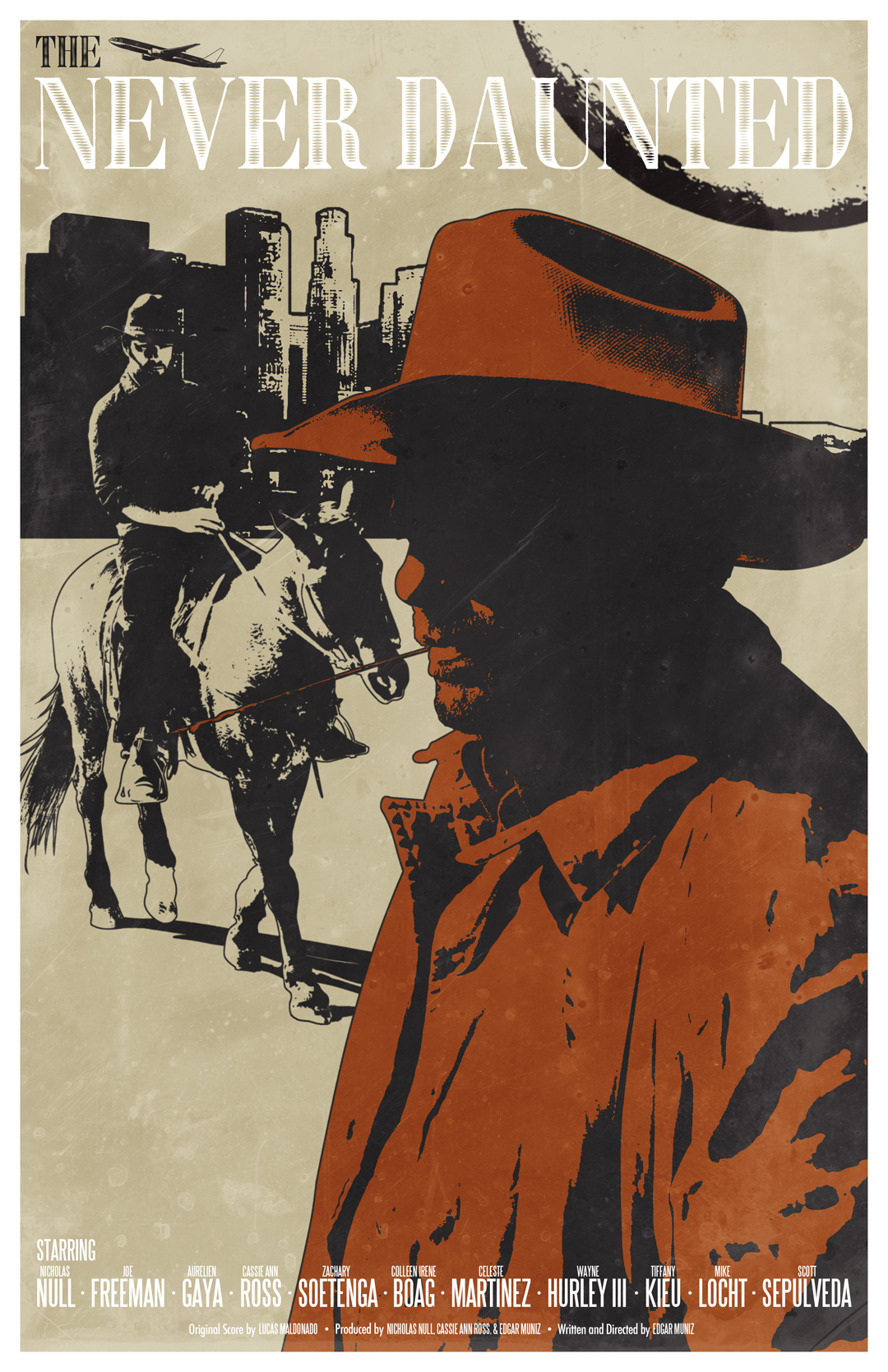
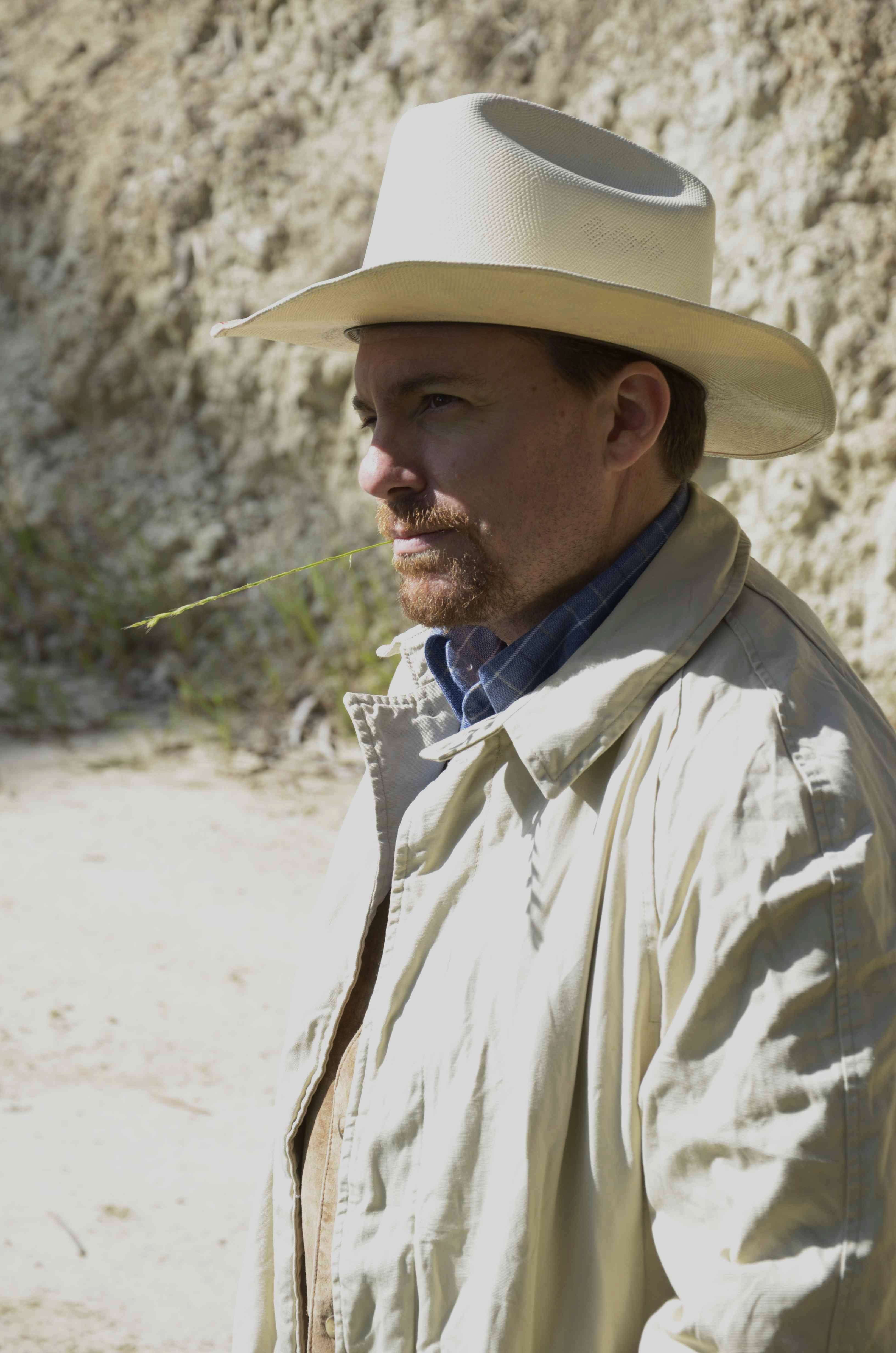
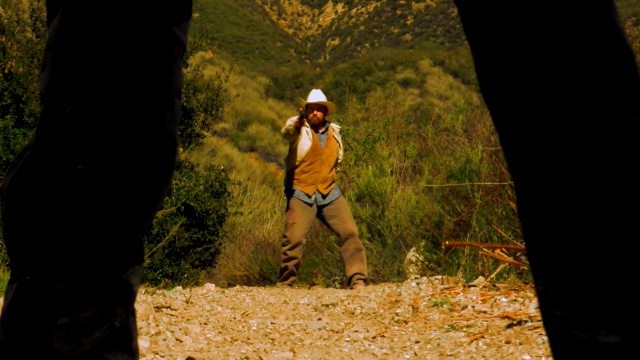
One of them is The Never Daunted, his 10th film. Not too long ago I saw it as a festival screener dvd and I vividly and immediately felt that rare exhilarating rush of discovery amid the dvd stacks of derivative story lines. The film is about a man who, unable to cope with his infertility and the monotony of a dead-end job, becomes withdrawn from his relationship and grows obsessed with a strange Western that comes on television late at night – which only he can see. The film’s captivating sincerity and epic male psyche exploration makes Muñiz not only a writer/director to follow, but one to actively support. He’s one of those creative manic types who are actively pursuing their art of storytelling without frills, on the fly and for the love. On the weekends and perhaps limited by budget but never held back by its raw, transcendent humanity. In talking to him you can tell he is completely immersed in and relishes the craft. So much he hasn’t had the bandwith to fully explore the mine of distribution outlets. Thanks to our brave new world of Direct to Fan online distribution, we can finally check out some of his films, in particular the singular The Never Daunted. Now available to stream on Seed & Spark. Once you get hooked you’ll want to see more of his work, some of which is available on his website. Read on, get to know this cool cat and get a taste of his sensibility and work ethic and tell me if he’s not inspiring.
1. Putting together one film no matter how modest the budget requires a lot of collaboration, an insane amount of tenacity and organization. What is it about your creative process and style that has allowed you to be so prolific?
You’re right. Making a film does require a lot of collaboration, and I think there are either filmmakers who embrace this aspect of filmmaking or they don’t. I completely rely on it, but that’s also because I work with a lot of like-minded people and really talented, smart people. I think that the only real trick I have is that I won’t start with a script. The only reason I’m able to complete so many projects and get them done so quickly is because I’ll take care of the scheduling first, which I think is the hardest part, and then force myself to write something under pressure before the day I have to shoot. I never really start with an idea or theme in mind; I’ll start with a person I think is interesting or that I love being around. I know that sounds weird, but so many of the films I’ve done started from just hanging out with a friend or with new people. After hanging out and getting a sense of their personalities and of their views, I always think it’s interesting to take a version of that person and place him or her in different scenarios that I later come up with. This approach not only opens up several narrative possibilities for me, but it also makes it so that I can make the film and keep discovering new things as I’m going along. The part that I play in this is almost nonexistent. I just have to make sure to listen very carefully, work within my means, prepare for any setbacks or last-minute changes and finally remain objective enough to shape a film out of all of it. It is a compulsion in that filmmaking is a priority for me, and I’m constantly thinking about it. I never stop and it drives a lot of my friends and family crazy. I would always rather film than go to bars or to parties or to lunch or to dinner…unless I can film when I’m there!
2. The dialogue feels so natural in your films.
There’ve only been a few times that I’ll have specific lines I want my actors to hit. Sometimes I’ll be married to these lines because I overheard someone say it a certain way, but all of the credit here should really go to my actors. I’ll know the emotion I want from the scene, I’ll know the tone, and specific expository points, but that’s it, and that’s only the structure or the blueprint. They’ll improvise off my sides, and sometimes this will be a page with four or five lines on it – between two or three people – and what would’ve been a 1-minute scene on the page, they’ll turn into a 3 to 4 min. scene full of twists and turns, with sharp, understated, and insightful subtext, sometimes strange, sometimes bizarre, sometimes hilarious. But always unexpected, and that’s the point.
3. In The Never Daunted, there is such a genuine vulnerability not often found in male driven films. You said you were raised by your mom and aunts, do you think this helped you get in touch with this modern masculinity side? You show such a profound and illuminating notion of the pitfalls of having to live up to a macho masculine, cowboy, protector and provider role, it really expands my perception and elicits my empathy for the male perspective.
That’s really cool of you to say! Because my mom was always working, I’d spend a lot of my days with my aunts and my grandmother…. I have two uncles that I admire very much, but I don’t think I ever measured up to that Mexican macho male thing, nor did I ever really care to. For what it’s worth, I grew up with more of a feminine perspective – because of my aunts and my mothers – and this kind of allowed me to see how proud men can be, how delusional, overbearing, fearful, and how selfish we can be as well. And I do love to look at this in my films, and I’m often guilty of all of this male posturing too. Although I understand the culture of cool cinema and even appreciate some of those films – the cowboys, the gangsters, the hitmen movies- I can’t help but see that same macho bullshit from my childhood being perpetuated over and over again in our culture. It’s also a constant reminder that I’m none of those things and that maybe I should be feeling like I ought to be. I think men are much more interesting than that though, much more complex and multidimensional. But a variation in movies is great – don’t get me wrong. Nevertheless, if there’s a story about a bank robber being chased by the cops, and he’s forced to pull a man and his little boy out of their car, and speeds off, I’d rather see the story about the man having to explain to his boy what just happened.
4. You mentioned you’ve gotten feedback from Guy Maddin and Monte Hellman, have they inspired your approach and aesthetic? Who else contemporary filmmakers do you draw from and connect?
Guy Maddin and Monte Hellman were the only two that took the time to respond, and they were also the two that I was desperately hoping would respond, so I did make more of an effort with them. I do love movies that are very postmodern and abstract and these two guys are still making very interesting and provocative work. Guy Maddin continues to find new ways to tell stories and I can’t passively watch any of his movies. They require my complete attention and that’s what cinema should be, I think. With Monte Hellman’s Road to Nowhere, I had the experience where I had to keep watching the movie over and over again so I can decide whether or not I liked it. And Road to Nowhere was a movie about movies, which is something that still interests me, as indulgent as it might sound, and this meta-fictional element comes up in not only The Never Daunted, but in other movies I’ve completed since then. And I love all types of films and filmmakers, but as far as the ones that make me excited about not only watching their movies but going out and making more of my own, I’d say Hong Sang Soo, Carlos Reygadas, Lynne Ramsay, Agnes Varda, Gus Van Sant, Miranda July, Alfonso Cuaron, Bela Tarr, Tsai Ming-Liang, and Mary Harron are maybe my favorites right now. And obviously, this list is always changing .
5. Does is it get easier with each film you make?
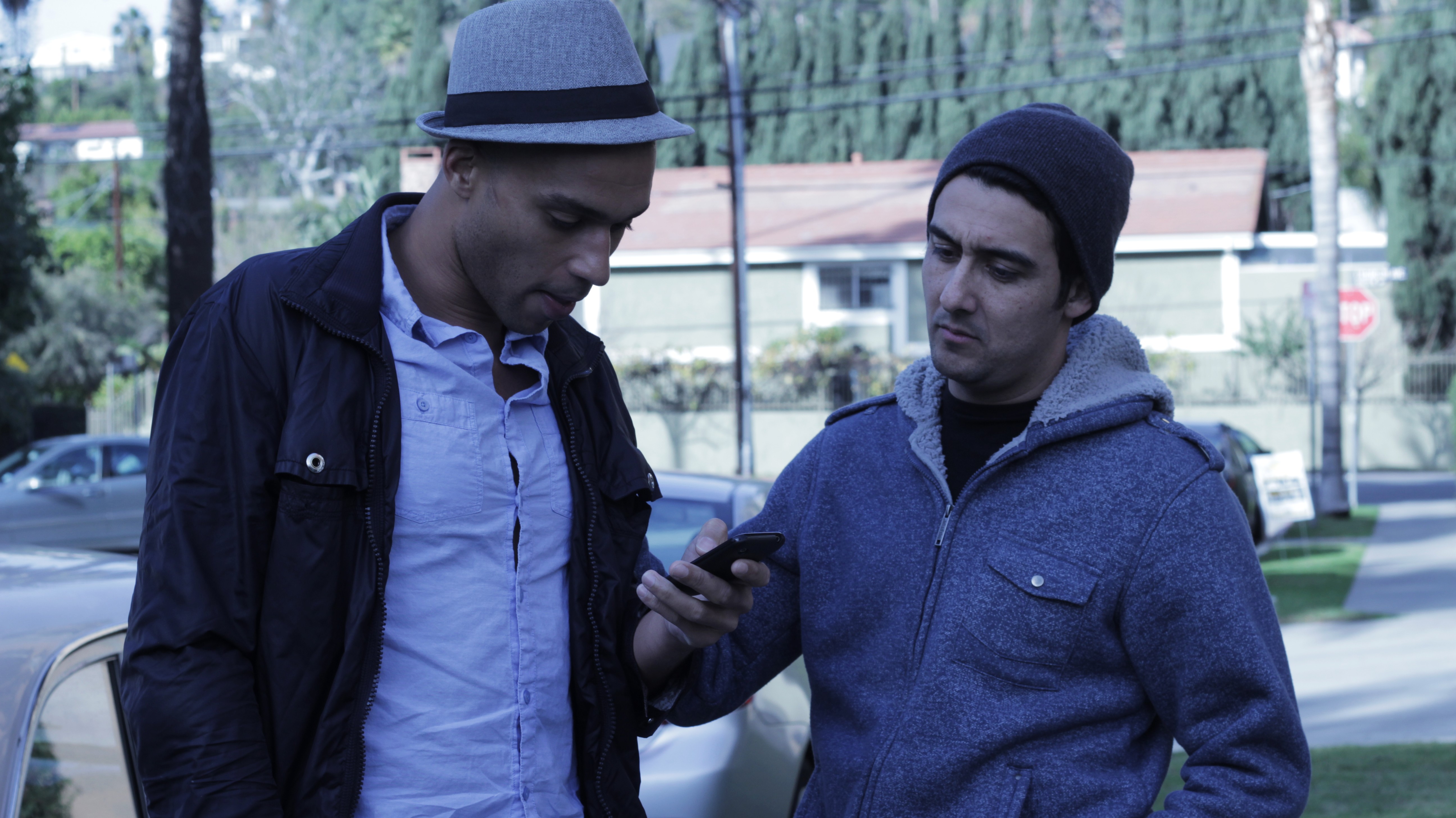
Working with actors and non-actors has gotten easier for me. It’s a different language I use with both, but I’ve learned to appreciate this aspect of filmmaking more than any other. It’s the part where I get to work with them as people, but the discussions aren’t always about choices or behavior or the psychology of a character. A lot of times it’s them telling me personal stories and me sharing personal stories with them as well, which is why I feel that the friendships I’ve made through filmmaking have been so rewarding and amazing to me. There’s no chit-chat or formalities; there’s no time for that. So a person will go from being an acquaintance to a deep personal friend you feel you’ve known for a long time, and this will happen simply because they’re willing to bring their personal experiences and specific views to the table. As cheesy as it sounds, it can feel like the purest expression of the self and art. Learning that a lot of them are willing to do this, or maybe because they trust me, has given me much more confidence when directing a scene, so it feels much easier. All the other technical stuff is a pain in the ass, but I learn it because I have to and because I didn’t go to film school.
6. What do you personally get out of making a film from the creation and observation of the human condition?
I guess it’s the same thing that I get out of teaching, but to be honest, teaching is much more rewarding. Both require a lot of self-reflection and discipline, but in teaching, the results are right there and you can actually see the light bulbs go on in front of you. With filmmaking, it can be very painful and I can think that I’m addressing several questions that are important to me, but once the film is done, I’m sometimes left with even more questions and concerns than before. The greatest pleasure that I derive from making a film is having connected with people in the process. At the end of a film or at the end of a screening, I often feel like a fraud and like I didn’t complete what I set out to do. I start wondering what I even want to gain from all of it, and I’ll just watch other people’s films and wonder, “Who the hell do I think I am, making my own movies, or assuming that people even care?”. But the one constant pleasure is my relationships with my friends. The fact that I built friendships in the process and that they trusted me and that we completed something together. Then, inevitably, I’ll get excited about another project and I’ll bury myself in another opportunity to work with them.
7. In your words, what is Haley, your latest film about?
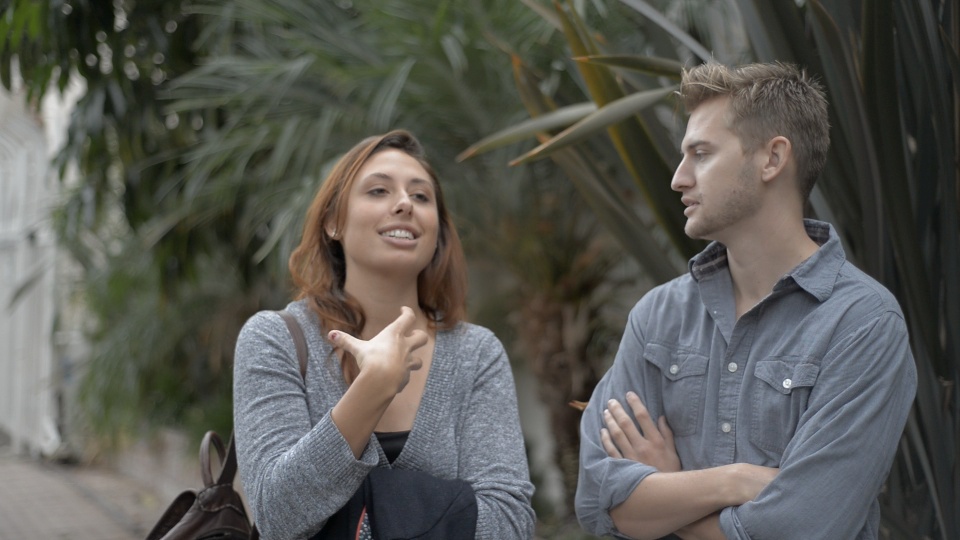
The Haley Project has a couple of stories running parallel throughout, but at the center is the story about a girl named Haley, who we only see in the beginning of the film and in a flashback at the end. It’s loosely based on my friend Laura Benson, who actually plays Haley, but it’s also about other people in my life who I’m always in awe of. I have a few friends who are always telling me stories about these exotic places that they’ve visited and these crazy adventures that they’ve had. My friend Nick Null, who plays Murray in The Never Daunted, has a lot of stories like this too. But I thought it would be interesting to look at this kind of person, but from the perspective of all the supporting characters in each of their stories. How are these supporting characters, who don’t get to float on from place to place, affected by having met someone with a seemingly more interesting life? So I had two guys, played by Seth Johansson and Brian Randles, become competitive and mean with each other over their love for Haley, without Haley even there anymore. And in the same movie I have a romantic Frenchman who arrives in LA, in hopes of finding love. And I love this idea because it’s usually the other way around: the starry-eyed, American Francophile visits Paris in search of love.
Check out the trailer for The Never Daunted below and click here to watch the film on Seed & Spark.
I am so psyched to unveil a conversation and collection of films I’ve curated on the innovative crowdfunding and streaming cross-platform, Seed & Spark. I can’t think of a more conducive and savvy approach to changing the conversation about Latino films, than by actually presenting those films that speak to that fluid and hybrid identity DIRECTLY TO THE AUDIENCE. I’m also going out on a limb here and coining a new term, Mas American. Let’s see if it catches on. Read my post below (which I originally wrote for Seed & Spark’s Bright Ideas blog) and check out the rad films in the program by clicking on the links. Mas Later!
*********
If you hear someone utter, “Kids These Days,” it’s usually in a disapproving tone towards the younger generations’ fresh attitude or their breaking with tradition (or their tendency to speed while driving). When I think about Kids These Days, though, it is in sheer awe. I am so impressed by their confidence and transcultural expression with which they carve out their bold self-individuality. I don’t remember ever being that loud and proud in my teens. I, like most, just wanted to fit in. But the Millennial generation has spoken: Assimilation is out; Non-conformity is in.
As a first generation Mexican-American I’m naturally drawn to bi-cultural narratives because they relate to my own culture dash – American clash. Speaking Spanish at home, making tortillas with abuelita, and my parents’ late night dance and Tequila parties, blasting Sonora Santanera or the passionate cries of Vicente Fernandez, all formed a very specific childhood. There is something really powerful about seeing a reflection of your roots in a contemporary context in the biggest form of entertainment, the movies. You may have read the numbers; There are 55 million+ Latinos in the country, making us the fastest growing and youngest demographic. Brands clumsily chase after this market and miserably try to coin terms to define us like New Generation Latino, Young Latino Americans, Hispanic Millennials. The term Latino attempts to encompass far too many diverse ethnic and social cultures that it is a useless denomination. A limited view failing to recognize the fluidity of our social zeitgeist in the 21st century.
It is critical to adopt with the changing times and engage the new generations of our immigrant nation. It’s time to reframe our notions and classifications on race and identity. Más American is my humble attempt of doing away with outdated and ill-defined terminology like Hispanic or Latino. It is meant to convey the real, inclusive and radical reflection of society’s eclectic fabric found in fiercely independent filmmaker voices. More aptly, it speaks to the transcultural identity and non-conformist spirit of today’s characters and narratives. It’s not necessarily confined to speak about people of “color.” It is about all kinds of shifting identities, from conventional, traditional and sociocultural norms to a more progressive evolution. It is about gender – equality, reversal of roles, gender variant. Filmmakers are out there telling these unique perspectives through independent film. These stories are out there. I can attest to that with some authority because of the volume of screening I do for film festivals year round. Films from underrepresented communities usually have an outsider/insider perspective, which in turn provokes highly original and compelling narratives by its very nature. This emerging class of individualism is what embodies American spirit.
Más American also speaks to the influence Latinos have on non-Latinos. You don’t have to have the blood in order to appreciate or acquire a sensibility of the Latino experience. Many non-Latino filmmakers have made extraordinary films capturing the US Latino experience. It’s only natural considering the countless generations who originate from before the Hidalgo treaty was signed. We are your neighbors, friends, colleagues, lovers, wives, husbands, in-laws, in each of the 50 states. Indeed, a long time ago my mom and I learned to stop talking trash when out in public about non-Latinos in proximity realizing that many people understand some Spanish.
And so it is with much pleasure, and gratitude towards the filmmakers, the Más American Conversation on Seed&Spark is rolling out. These films purely conceive of characters and a world more reflective and authentic of our reality. Perhaps the freshness comes from a subconscious in which they derive and embody a defiant individuality, outside of any identity politics. Más American hopefully is a starting point for a more forward and richer conversation towards genuine, original and underrepresented narratives. I hope to add more titles to the mix in this Conversation, championing filmmakers who get America’s evolving sense of cultural self-identity and who are on the pulse of the rapidly shifting zeitgeist.
In THE CRUMBLES, written and directed by Akira Boch, the acting talent naturally inhabit LA’s Echo Park hipster artist scene in such a sincere and rocking way. The lead happens to be a Latina and her co-lead happens to be Asian. Their color is so not the center of the tragicomic slice-of-life. Yet it does make them who they are: badass rock n roll girlfriends who resist quitting on their dream of hitting it big with their band.
In THE NEVER DAUNTED, writer/director Edgar Muñiz explores the toll and cross a man must bear who can’t conceive, in such a profound, heartbreaking and uniquely creative way. The film explores a modern masculinity more open to vulnerability, clashing with the Western stoic cowboy machismo image imposed on men from boyhood.
GABI – director Zoé Salicrup Junco’s impressive NYU thesis film – centers around its titular business-smart, sexy and confident 30-something woman living an independent and successful life, whose main conflict is the reminder that, in her hometown, her success represents a failure within the context of the marriage, kids and housewife model.
In all of these stories, new definitions of traditional norms are celebrated and scripts are being flipped. I’m thrilled that with Seed&Spark the public at large can discover these rebellious voices.
I want to thank the filmmakers for sharing their inspiring non-conformist narratives on Seed&Spark and for, whether they know it or not, breaking type.
Next weekend, Film Festival favorite Mission Park written and directed by Bryan Ramirez is finally dropping at AMC theatres in select cities across the nation on Sept. 6th. So Fandango it over after your crazy Labor Day plans. Chi-town, head to AMC Cicero in Lawndale. In LA, it’s playing at Universal Citywalk, and in NYC the AMC Empire.
Rounding out the hot emerging cast which includes Joseph Julian Soriana (stud Hector Cruz in tv show Army Wives), Jeremy Ray Valdez (La Mission) Walter Perez (Friday Night Lights, Pop Star) and Will Rothhaar (Battle Los Angeles) is Douglas Spain (Star Maps, Resurrection Blvd) who is also a producer on the film AND none other than Original Gangster Jesse Borrego (Mi Vida Loca). His line “One Day Does Not Define a Man” hits a resonant chord and plays as a resonant theme in the flick. I’ve mentioned the film several times on my blog (official description below) because its played a dozen festivals and has racked up hella Best Director, Audience and Jury Awards. While I’ve used the terms like Latino all-star cast, “street’ crime action thriller, and genre swagger – all an apt way to describe its edge, the biggest reason you should go watch it is that its just a bomb ass classic hood tale of friendship, betrayal and free will, through the eyes of four regular kids from San Antonio. Underneath the slick action, what hits home is the dramatic sense that its all on you to defy your fate (every day) and not be another statistic or stereotype (Latino gangbanger).
Oh and if that’s not enough to get you turned on, the sexy rising actor, Fernanda Romero plays the irresistible love interest. YOW!
LOG: Set in San Antonio, TX, where a drug syndicate has taken control of the region, “Mission Park” follows the lives of four best friends who choose very different paths. Torn apart over time by their ambitions, their choices ultimately bring them back together on different sides of the law. In this urban crime drama, two young F.B.I. agents, Bobby Ramirez (Jeremy Ray Valdez) and Julian Medina (Will Rothhaar), go undercover to infiltrate and take down an illegal drug organization run by the untouchable drug lord Jason Martinez (Walter Perez) and his right-hand man Derek Hernandez (Joseph Julian Soria).
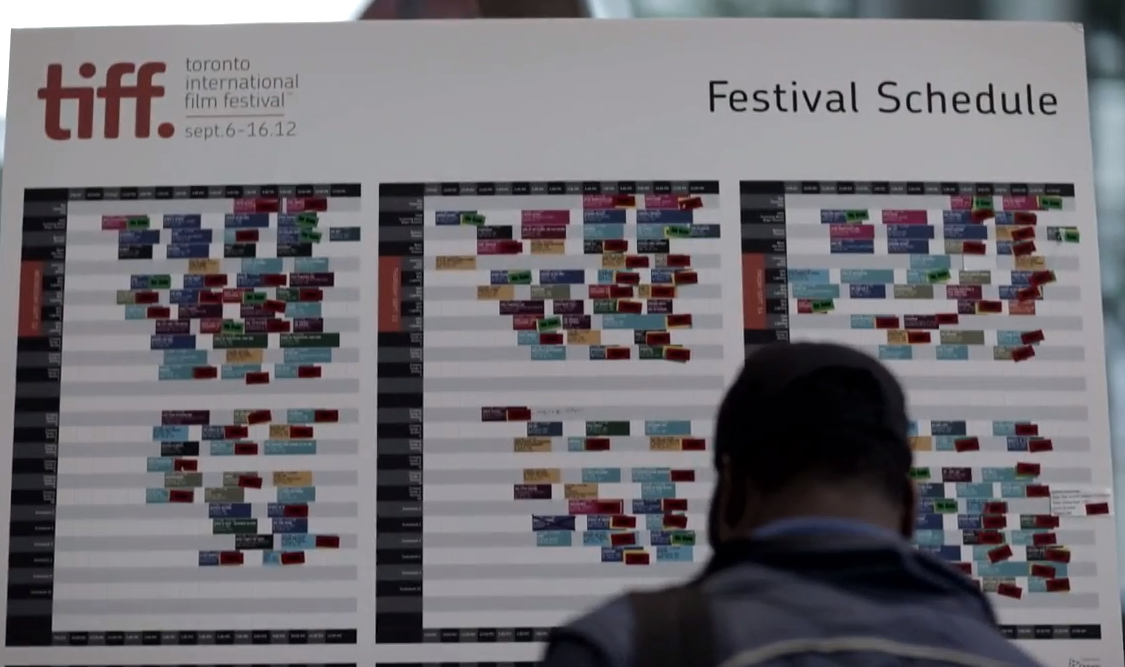
The 288 features that make up the mega-sized and mega-watt Toronto International Film Festival have been announced. It is awesome to see South America in the house and a substantial number of films from Mexico and Spain. Sadly on the US Latino representation front we got next to nada. Is it possible that it’s not since 2006 the festival has screened a US Latino film? Bella by Alejandro Monteverde, about two people in NYC who fall in love, ended up winning the People’s Choice Award. Randomly, in looking up the title to refresh my memory I came across this review by the late, great Roger Ebert who makes an amusing dig on Variety critic Robert Koehler about ‘being late’ in the course of reviewing the film.
Out of the 70 *countries the program represents, 26 of them are from Spain, Mexico (both which lead the pack with 7 films respectively), followed by Portugal, Brazil, Peru, Chile, Venezuela, Uruguay and Costa Rica. Note this figure includes co-productions.
0 , “Ahem” that is, Zero U.S. Latino filmmakers. I have made an inquiry to the festival to confirm, if I hear different I will update.
Before the copied and pasted list of film descriptions and pics courtesy of TIFF – let me also note:
I’m so excited to see films play on this important world cinema stage that hail from Puerto Rico, Costa Rica, Peru and Uruguay, countries who have fledgling film industries but such unique narratives and exciting filmmaker voices to tell them.
Latin/Spanish language genre is hot. Alex de La Iglesia is back with another pulse throbbing spine-tingling, action flick, Witching and BeWitching which he describes as a It’s a Mad Mad Mad Mad World. I can’t wait to see this at Fantastic Fest. Also making a return to Midnight Madness this year is Eli Roth and Chilean filmmaker Nicolas Lopez with The Green Inferno. They previously teamed up on horrifying ‘real life’ scenario thriller, Aftershock.
A few Latino actors are sprinkled across English language films like Mexican Demian Bichir in Dom Hemingway by Richard Shepard, Colombiana Sofia Vergara in John Turturro’s Fading Gigolo and Dominicana Zoe Saldana in french hottie actor/director (Marion Cotillard’s man) Guillaume Canet’s Blood Ties.
My M.O. in this series is to dig through festival films’ log lines and cast to find and highlight actors, stories and filmmakers that might bear some Latino sensibility ahead of the festival’s opening. My overriding goal is to expand on what a Latino story might be, and by monitoring some of the big fests’ track records try to illuminate the context and obstacles that emerging Latino film artists smash up against. Reading through the film descriptions of this year’s TIFF, I find some really rad sounding and innovative twists of classic storytelling, as well as interesting revisiting of American history. Which is why I’m so troubled by the near total exclusion of Latinos in both the cast and filmmaker roles, especially given our hard to ignore populace. There are two stories set in Texas and neither feature one Mexican American role. (Parkland about the 48 hours after the JFK assassination, and Dallas Buyers Club in which Matthew McConaughy travels across the Mexican border for HIV drugs). Then there are a handful of contemporary films that take place in an imagined New York/LA/Midwest and likewise I don’t see any US Latinos in the otherwise homogenized billed cast so its like we don’t register on any plane of representation. Black films, filmmakers and cast are slowly but steadily gaining profile in these big festivals and in the mainstream media but US Latinos are sorely behind. I know its not news-breaking but it is heart breaking and it does not cease to shock me to find such a lack of interest in discovering US Latino talent. As far as I can tell there are not any narratives from the US Latino perspective in TIFF’s international 288 feature film program. In confronting this absence and disregard, I want to A. Call out festival programmers/distributors to consider that part of their curating responsibility is to accurately reflect the spectrum of people who make up our society and movie going public by giving those few films made by people of color and without precedent a shot in front of an audience. B. Create a consciousness of the absentee-frame-of-reference in which Latinos are working from. Finally to encourage all people of color/gender variant and other underrepresented groups to take things into their own hands, creating, producing, casting, exhibiting and distributing our stories because traditional gates have not and will not open their doors until we’ve already made a name of and for ourselves.
I will concede that last names and loglines do not always identify relevant sub-stories or acting roles that might be discovered as having a Latino element, so perhaps there is more Latino in the program than I have been able to pinpoint here. Again the disparity is on the US Latino component. As you can see below there is a rich element of Mexican, Central American, South American, Spanish, and Carribbean at the most important film festival in North America.
Gravity Alfonso Cuarón, USA/United Kingdom North American Premiere
Gravity is a heart-pounding thriller that pulls its audience into the infinite and unforgiving realm of deep space. Sandra Bullock plays Dr. Ryan Stone, a brilliant medical engineer accompanied on her first shuttle mission by veteran astronaut Matt Kowalsky (George Clooney). On a seemingly routine spacewalk, disaster strikes. The shuttle is destroyed, leaving Stone and Kowalsky completely alone — tethered to nothing but each other and spiraling out into the blackness. The deafening silence tells them they have lost any link to Earth… and any chance for rescue. As fear turns to panic, every gulp of air eats away at what little oxygen is left. But their only way home may be to go further out into the terrifying expanse of space. Ahead of its stateside Oct. 4 release from Uno de los Amigos, Del Toro.
The Green Inferno Eli Roth, USA World Premiere
How far would you go for a cause you believe in? In horror master Eli Roth’s terrifying new film, a group of college students take their humanitarian protest from New York to the Amazon jungle, only to get kidnapped by the native tribe they came to save: a tribe that still practices the ancient rite of cannibalism, and has a healthy appetite for intruders. Produced by Chilean Nicolas Lopez (Que Pena Tu Vida, Aftershock)
Jodorowsky’s Dune Frank Pavich, USA North American Premiere The story of legendary cult film director CHILEANAlejandro Jodorowsky’s staggeringly ambitious but ultimately doomed film adaptation of the seminal science-fiction novel Dune.
Little Feet Alexandre Rockwell, USA, World Premiere
Determined to see “the river,” two young children living in Los Angeles leave home to embark on a magical urban odyssey, in the marvelous new film by American indie icon Alexandre Rockwell (In the Soup). Starring Lana Rockwell, Nico Rockwell and Rene Cuante-Bautista. I venture to guess that the third kid, the big pudgy one seen in the trailer is Rene Cuante-Bautista and that he might be Latino. And I hope that since getting to LA’s concrete river usually includes a criss crossing of East and South LA, there will be some Latino community in the foreground. Regardless, the kids, who include Rockwell’s children (with Fresh Prince of Bel Air’s Karyn Parsons) look adorable enough to carry a 60 min movie. The look and feel of the trailer remind me of Corey Mcabee’s Crazy & Thief.
Dom HemingwayRichard Shepard, United Kingdom World Premiere
Dom Hemingway is a larger-than-life safecracker with a loose fuse who is funny, profane, and dangerous. After 12 years in prison, looking to collect what he’s owed for keeping his mouth shut for protecting his rich mobster boss, he finds himself drawn back to the perils and pleasures of his criminal lifestyle — while trying to reconnect with his estranged daughter. Starring Jude Law, Richard E. Grant, Demian Bichir, Emilia Clarke, Kerry Condon, Jumayn Hunter, Madalina Ghenea and Nathan Stewart-Jarrett.
Blood Ties Guillaume Canet, France/USA North American Premiere, New York, 1974. 50-year-old Chris has just been released on good behavior after spending several years in prison. Waiting for him reluctantly outside the prison gates is his younger brother, Frank, a cop with a bright future. Chris and Frank have always been different, yet blood ties are the ones that bind. Starring Clive Owen, Billy Crudup, Marion Cotillard, Mila Kunis, Zoe Saldana, Matthias Schoenaerts and James Caan.
Chris Nunez who was had a small role in A Guide To Recognizing your Saints and handful of small roles as busboys, waiters, tweekers and gangbangers and is a credited as a waiter in David Wain’s upcoming film plays the role of ‘barfly’ in NY set Can A Song Save Your Life by John Carney (Once). NYU Tisch School of the Arts graduate.
Fading Gigolo John Turturro, USA World Premiere
Fioravante, at his friend Murray’s suggestion, enters into the world’s oldest profession, and ends up finding something he didn’t know he was looking for. Starring John Turturro, Woody Allen, Vanessa Paradis, Liev Schreiber, Sharon Stone and Sofia Vergara.
MEXICO
The Mayor Emiliano Altuna Fistolera, Mexico Canadian Premiere
Mauricio Fernandez is the polemical mayor of San Pedro Garza García, the wealthiest and safest municipality in Latin America. He presents himself as an active ruler who is capable of cleaning his municipality of drug cartels without questioning the methods he uses to achieve this. The Mayor describes the wild times of a country that is marked by violence and the complete discredit of the ruling class.
La ultíma película Raya Martin and Mark Peranson, Canada/Denmark/Mexico/Philippines World Premiere
A famous American filmmaker travels to the Yucatán to scout locations for his last movie. The Mayan Apocalypse intercedes. Also described as a “feverish, aesthetically startling re-imagining of Dennis Hopper’s notorious cult classic The Last Movie starring Gabino Rodriguez and Alex Ross Perry.
Paradise (Paraiso) Mariana Chenillo, Mexico World Premiere
Overweight childhood sweethearts Carmen and Alfredo have re-located from the suburbs to the city. Feeling out of her element and subconscious about her body, Carmen joins a weight loss program and asks her husband to join. Ironically, he sheds the pounds and the distance between them grows, putting their relationship to the test. Very excited for Mariana’s sophmore feature after her award winning 5 Days Without Nora in 2008. Will also screen at the Morelia Film Festival.
The Amazing Catfish (Los insólitos peces gato) Claudia Sainte-Luce, Mexico North American Premiere
22-year-old Claudia lives alone in Guadalajara. One night, she ends up in the emergency room with signs of appendicitis. There she meets Martha, lying on the bed next to her. 46-year-old Martha has four children and endless lust for life, in spite of her illness. Moved by the lonely young woman, Martha invites Claudia to come and live with her when she leaves the hospital. At first, Claudia is bewildered by the somewhat chaotic organization of the household, but soon she finds her place in the tribe. And while Martha is getting weaker, Claudia’s bond with each member of the family gets stronger day by day. First feature that will also screen in competition at Morelia
Club Sandwich (Club Sándwich) Fernando Eimbcke, Mexico World Premiere
Paloma and her 15-year-old son Hector have a very strong and special relationship. When on holiday on the seaside, Hector meets Jazmin, a teenage girl with whom he discovers love and sexuality. Trying to keep Hector close to her, Paloma has a hard time accepting that he will eventually grow up.
El Mudo Diego Vega and Daniel Vega, Peru/France/Mexico North American Premiere
After a short investigation, police conclude that the gunshot that nearly killed Judge Constantino Zegarra was nothing more than a stray bullet. But Constantino, who unlike his peers fervently adheres to the letter of the law, is convinced someone tried to take him out. He re-opens the investigation, and soon finds himself breaking some of his own rules to prove himself right. The Vega bros previously made their debut in Cannes with the beautifully formal and curiously repressed character driven film, Octubre which Global Film Initiative supported.
CENTRAL AMERICA
All About the Feathers (Por las Plumas) Neto Villalobos, Costa Rica World Premiere
Chalo is a lone security guard who struggles to get his first gamecock. His job in an abandoned factory is boring and monotonous but it doesn’t seem to bother him that his life is like that as well. Once he finds his prize rooster, which he names Rocky, his life changes. Not having a proper place to raise and train Rocky triggers a series of comical events that will put Chalo’s passion and love for his new (and only) friend to the test. First Feature filmmaker Villalobos raised over his 14,000 post production fund goal to finish his film on Indiegogo.
CARIBBEAN
Old Moon (Luna Vieja) Raisa Bonnet, Puerto Rico World Premiere
Elsa lives in the mountains of the Caribbean Island of Vieques, Puerto Rico. A visit from her teenage granddaughter, Mina, and her son-in-law, Alei, brings a sweet and bitter taste into her life. In order to protect her granddaughter, Elsa makes a decision that will change Mina’s life forever. Starring María Velázquez, Laura Cristina Cardona and Julio Ramos. This is Bonnet’s grad short film from NYU Tisch School of the Arts
SOUTH AMERICA
Gloria Sebastián Lelio, Chile/Spain North American Premiere
Gloria is 58 years old and still feels young. Making a party out of her loneliness, she fills her nights seeking love in ballrooms for singles. This fragile happiness changes the day she meets Rodolfo. Their intense passion — to which Gloria gives everything, as she feels it may well be her last — leaves her dancing between hope and despair. Gloria will have to pull herself together and find a new strength to realize that in the last act of her life, she could burn brighter than ever. Since its discovery at the Berlin film festival, Gloria, played by the effervescent 58 year old Paulina Garcia, has duly charmed festivalgoers and critics. Roadside Attractions picked it up for stateside distribution, the film will next play at the venerable New York Film Festival, and in its Chilean release was the first non-comedy Chilean film in two years that has made top 5 most-seen films for an entire month.
A Wolf at the Door (O Lobo atrás da Porta) Fernando Coimbra, Brazil World Premiere
A child is kidnapped. At the police station, Sylvia and Bernardo, the victim’s parents, and Rosa, the main suspect and Bernardo’s lover, give contradictory evidence which will take audiences to the gloomiest corners of desires, lies, needs and wickedness in the relationship of these three characters. Starring Leandra Leal and Milhem Cortaz.
Bad Hair (Pelo Malo) Mariana Rondón, Venezuela World Premiere
A nine-year-old boy’s preening obsession with straightening his hair elicits a tidal wave of homophobic panic in his hard-working mother, in this tender but clear-eyed coming-of-age tale. Starring Samantha Castillo and Samuel Lange. Third feature from the filmmaker of Postcards from Leningrad. Rondon studied cinema in Paris and Cuba’s renowned EICTV film & TV school in San Antonio Los Baños.
Brazilian Western (Faroeste Caboclo) René Sampaio, Brazil Canadian Premiere
João de Santo Cristo is a young boy, who abandons his poor life in the Brazilian outback to try his luck in the capital, Brasília. A story of love, hate, revenge and violence freely inspired by the Brazilian song Faroeste Caboclo by Renato Russo. Starring Fabrício Boliveira and Isis Valverde.
The Summer of Flying Fish (El verano de los peces voladores) Marcela Said, Chile/France North American Premiere
Manena is a very determined teenager, and the darling daughter of Pancho, a rich Chilean landowner who devotes his vacations to a single obsession: the extermination of carp fish that invade his artificial lagoon. As he resorts to more and more extreme methods, Manena experiences her first love, deception, and discovers a world that silently co-exists alongside her own: that of the Mapuche Indian workers who claim access to these lands… and who stand up to her father.
The Militant (El Lugar Del Hijo) Manolo Nieto, Uruguay World Premiere
A university student involved in militant leftist activism is faced with some difficult decisions when his father suddenly dies, leaving him in charge of their troubled ranch and forcing him to take on the role of a middle class landowner.
SPAIN
Witching & Bitching (Las brujas de Zugarramurdi) Alex de la Iglesia, Spain/France World Premiere
Desperate dad José and his friends run from a coven of witches hell-bent on their souls and on the 25,000 wedding rings the guys stole from a Cash-for-Gold shop in a desperate attempt to escape their lives of wife troubles. Witching & Bitching marks the seventh film by cult-favourite Spanish genre specialist Alex de la Iglesia (The Last Circus) to be screened at TIFF
CANIBAL
Cannibal Manuel Martin Cuenca, Spain / Romania / Russia / France, World Premiere
Carlos is the most prestigious tailor in Granada, but he’s also a murderer in the shadows. He feels no remorse, no guilt, until Nina appears in his life. She will make him realize the true nature of his actions and, for the first time, love awakens. Carlos is evil incarnate. Nina is pure innocence. And Cannibal is a demon’s love story. Yea this looks awesome. Check out trailer here.
Story of My Death Albert Serra, Spain/France North American Premiere
Loosely based on the autobiography of Casanova, the film depicts the journeys of the famous libertine from the joyful, sensual and rationalistic 18th century Europe to his last days where violence, sex and dark romanticism reigned.
The Liberator (Libertador) Alberto Arvelo, Venezuela/Spain World Premiere The film is an epic adventure based on the incredible life of Simón Bolívar, the 19th-century revolutionary who fueled Latin America’s struggle for independence. Bolívar’s quests and military campaigns covered twice the territory of Alexander the Great. Golden Globe nominee Édgar Ramírez brings to life one of the most influential freedom fighters in history. Also starring María Valverde, Danny Huston, Erich Wildpret, Juana Acosta and Imanol Arias.
People In Places (Gente En Sitios) Juan Cavestany, Spain World Premiere
This kaleidoscopic film weaves together approximately 20 fragmented scenarios that offer a view of contemporary Spain, drawing conclusions about the persistence of the human condition, strangeness, and the chaos within relationships. Starring Raul Arevalo, Eduard Fernandez and Santiago Segura.
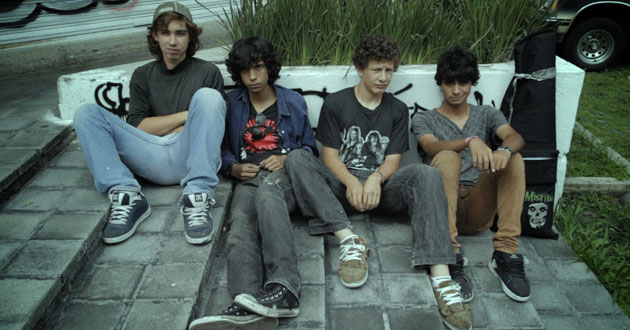
The Kids from the Port (Los Chicos del Puerto) Alberto Morais, Spain North American Premiere
In this charming neorealist gem set on the sleepy outskirts of Valencia, young Miguel and his friends undertake a seemingly simple mission on behalf of Miguel’s grandfather that teaches them all a lesson in real independence.
Ignasi M., a world renowned museologist, is living a dramatic moment, but has the capacity to turn any situation into an edifying one and any discomfort into a hilarious series of facts.
Designed by Rodrigo Toledo based on Michoacana by Jesús de la Helguera
The 11th edition of the Morelia Film Festival (FICM) which will take place in Morelia, Michoacan October 18-27, announced its raison d’être Mexican competition of 88 films consisting of 11 narrative features, 23 documentaries, 43 short films and finally 11 films in their Michoacan section, in which for the first time in its 11 years a feature narrative will compete.
Further proof the festival is at the fore of social media muscle and hipness, (FICM boasts the 2nd most followers on Twitter out of all international film festivals, second only to Sundance), FICM organized a Google Hangout to discuss the lineup announcement, forgoing the boring, stuffy press conferences that typically accompany festivals’ film announcements. You can watch it here. Festival Director Daniela Michel, Producer & Programmer (and film producer) Daniela Alatorre and Festival Advisor/Soulful spirit (and also a filmmaker) Alejandro Lubezki were onhand looking and sounding their ever poised, smart, warm, enthusiastic, professional selves. The team underscored their deep appreciation and privilege of getting to know their beautifully rich and profound country via the images and stories of the filmmakers over the course of the festival’s history. Coining this year’s edition as the “First year of the Second Decade”, Daniela Michel exudes a reinvigorated energy as she and her esteemed partners forge ahead in producing the most renowned, anticipated and beloved film festival in Mexico.
Founding Festival Director, Daniela Michel
Since the program’s inception in 2007 (the festival did not include a narrative feature competition until four years after the festival launched in 2003), the Official Narrative Competition was exclusive to 1st or 2nd time filmmakers. This year FICM opened it up, making room for such international superstars as Fernando Eimbcke and Michel Franco. There are brand spanking new titles yet to premiere anywhere else like Paraiso by Mariana Chenillo, A Los Ojos by Michel Franco, and Manto Acuifero by Michael Rowe. However, it’s hard to say if they will still be world premieres upon their Mexico bow in October since San Sebastian and Toronto are still unrolling their program selections.
Here’s a closer look at each of the 11 narrative features in competition
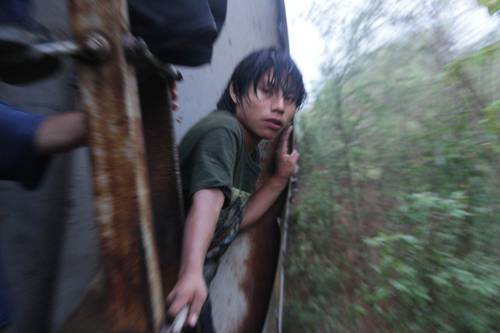
From this year’s Cannes Un Certain Regard, La Jaula de Oro by Diego Quemada-Diez, a startlingly authentic portrait of Guatemalan migrant youths traveling by “La Bestia, or Beast, what they call the dangerous train on which thousands hitch a ride on at their own peril. A first feature by the Barcelona born filmmaker who has accumulated a host of experience with varying camera operator credits on Hollywood films and has notably worked with Ken Loach. The film was called the unglamorous non-Hollywood version of Sin Nombre.
The Empty Hours/Las Horas Muertas is Aaron Fernandez’s second film after 2007’s Partes Usadas. It was in San Sebastian’s treasure trove Works in Progress last year and is world premiering in this year’s New Directors competition. Shot in Veracruz, its about a 17 year old who has to caretake his uncle’s motel on a remote stretch of tropical coast.
Last year’s Cannes Un Certain Regard winner and Mexican entry to the Oscars was Despues Lucia by Michel Franco. Apparently he had been working on A Los Ojos before then and it was actually tipped for this year’s Cannes per IonCinema. Oaxacan actress Monica Del Carmen who gave a fiercely intense and breakthrough performance in Michael Rowe’s Leap Year stars. Michel’s sister Vicky Franco co-directs.
The idiosyncratic titled, Amazing Catfish, Los Insolitos Peces Gatos by Claudia Saint Luce is a first feature and only one of two female directed films (not counting Vicky Franco) out of eleven. A n unexpectedly heart tugging film about a solitary twentysomething who becomes inadavertently folded into a dysfunctional family household run amok by the single mother’s worsening health, she becomes an indispensable honorary family member which ensues with the typical sibling rivalry. The film is world premiering at this year’s Locarno film festival and according to sales agent Pyramide’s website, it will also screen at the upcoming Toronto Film Festival even though it is not announced on TIFF’s website yet. Claudia is for sure a talent to watch!
Somos Mari Pepa which just had its world premiere at the Guanajuato Film Festival is drawn from the short film, Mari Pepa which endeared audiences all over the world and won Morelia in 2010. An unassuming, empathetic, immediate yet nostalgic portrait of youth as they finish their last year of high school, having to grapple with the gravity of what to do for the rest of their lives. Another discovery to look out for as this first feature is certain to launch the talented filmmaker’s career.
La Vida Despues/Life After is from David Pablos, an alumni from the thriving film school CCC, Centro de Capacitación Cinematográfica and he is currently finishing up at Colombia NYC film school. He co-wrote SKIN a mesmerizing short film which premiered at this year’s Sundance Film Festival, directed by Jordana Spiro. The Life After which will have its world premiere at the prestigious Venice Film Festival before its FICM premiere, is about two teenage boys who embark on a road trip in search for thier mother who disappears leaving nothing but a mysterious note. Pablos’ previous film was the 2010 documentary Una Frontera, Todas Las Fronteras which premiered at world’s greatest doc festival IDFA in Amsterdam. His short film, La Cancion de los Ninos Muertos played the Morelia Film Festival in 2008 and went on to win the Ariel Award in 2010. You can watch it here
Workers played the Berlin Film Festival’s Panorama section and was notably in competition at the LA Film Festival by Jose Luis Valle. The film has a tinge of black humor in portraying a maid and a janitor who expect a retirement pension after decades of devoted service, only to take things in their own hands when they get shafted. Like David Pablos, this is Jose Luis Valle’s first dramatic feature having first made a a documentary feature. The Salvador born filmmaker who attended the most famous and oldest film school in Mexico city, UNAM’s Centro de Estudios Cinematográficos (CUEC), caught the attention of several Mexican festivals with El Milagro de Papa, a documentary he made when he read in the newspaper about a Zacatecas boy whose Leukemia was ‘cured’ by a visit from Pope John Paul II.
The addition of feature length film Enero by Adrián González Camargo gives FICM lots of personal pride since for years they’ve made grand efforts to strengthen Michoacan produced films by having a competitive Michoacan film category, resulting in today’s thriving filmmaking scene. Adrian is not only an alumni and collaborator of the festival but he also run a series of indigenous film screenings in the Michocan area. He will be attending CSU Northridge on a Fulbright scholarship this year. The film sounds like a dark, on the run thriller about a man who kills his wife and hits the road with his lover, only to find that their own happiness together might not be their destination after all.
From Camera d’Or winner for 2011’s Leap Year, Michael Rowe, the Australian born Mexico based filmmaker is back with his second feature, Manto Acuifero/The Well. Shot in Puebla. The film is about an 8 year old girl who longs for her father to return even though her mom has moved in with another man. A well in the backyard of their house becomes a secret place that inspires her imagination. The Well is one of two films produced by Canana in this competition. Rowe has already secured funding for his third film, Rest Home which will be his first film in English
Penumbra – Shot on 16 mm this film premiered at the Rotterdam film festival and is currently making the international festival circuit tour including Edinburgh Film Festival. Eduardo Villanueva’s previous film was the trippy, wildly intriguing and strikingly shot German/Mexican film Trip To Tulum.
Fernando Eimbcke is back with his third feature. He made a big splash back in 2004 with his first feature, Duck Season, a jewel discovered in the 2004 Guadalajara Film Festival went on to play Cannes’ Critics Week, won AFI’s grand jury prize and won the Ariel for Best film. His followup was in 2008 Lake Tahoe, a script developed at the Sundance Institute Screenwriters lab and which film premiered at the Berlin Film Festival where it won the Fipresci Prize. Club Sandwich is only described as the growing pains relationship between a mother and her teenaged son. It is set to world premiere in competiton at the San Sebastian Film Festival.
And last but certainly not least, I’m super excited for Mariana Chenillo’s sophmore feature, PARAISO. Chenillo won the Audience Award at FICM 2008 with her beautifully dramatic and humorously pitched film, 5 Days Without Nora. It went on to be a hit at many international festivals and won Best film at the 2010 Ariel Awards (Mexico’s top film honors). The film is about an overweight couple who move to Mexico City where they immediately feel the social pressure of being overweight surrounded by beautiful people. When they decide to jointly go on a diet, their relationship is put to the test when one of them successfully makes progress while the other continues to struggle. Produced by Canana’s Pablo Cruz.
Below is the list recapped with International Sales Agent info.
*Denotes first feature (Opera Prima)
Sección de Largometraje Mexicano
1. A los ojos. Michel y Victoria Franco 2. Club Sándwich. Fernando Eimbcke (Funny Balloons) 3. Las horas muertas. Aarón Fernández (Urban Distribution International) *4. Los insólitos peces gato. Claudia Sainte-Luce (Pyramide) *5. La jaula de oro. Diego Quemada-Diez (Films Boutique) 6. Manto Acuífero. Michael Rowe (Mundial) 7. Paraíso. Mariana Chenillo (Mundial) 8. Penumbra. Eduardo Villanueva *9. Somos Mari Pepa. Samuel Kishi Leopo (Figa Films) 10. La vida después David Pablos 11. Workers José Luis Valle (MPM Film)
Not to ignore the bread and butter of the festival, the docs and shorts – I’ll get to them in a later post. In the meantime, to see the rest of the competition titles click here.
Dang, I really snoozed on this one (and fell behind on a number of other stories while working The Hollywood Brazilian Film Festival!). With only ONE DAY LEFT to their crowdfunding campaign, I want to give a shout out to the documentary project in the works, NO LE DIGAS A NADIE by Mikaela Schwer (Call Me Kuchu). The title means Don’t Tell Anyone in English, and in this case the ‘secret’ is the def poet and dreamer, Angy’s undocumented status. The filmmakers are 65% funded as of now on Seed & Spark, the really cool platform that works like a wedding registry so you can decide where you want your money to go to (lighting, catering, transpo) and really feel like part of the team. Check out the trailer. These personal stories are crucial for filling in the ‘Dreamer” blank profile/status. The Oscar winning short documentary, Inocente is one of hundreds of compelling young ambitious American stories caught in this political ideological (asinine) battle of questioning who belongs in the United States of America.
If you are wondering where to meet and connect with the hip, new Latino generation of film and television right now, the answer is LA’s very own Outfest Film Festival. So get your booty over here. It runs until this Sunday, July 21. If you are not in LA, don’t sweat it, I’m on the beat, finding out about all the crazy Latino talent coming up. On the screen, and in the DGA Atrium where most after-screening receptions are being held, I got the chance this weekend to discover and meet some really fierce brown talent. I was pleased as punch to look around me and see faces and bodies epitomizing the spectrum of LA diversity on so many levels, not just “Hollywood”. Old, young, singles, couples. Sure you got your beefcake WeHo boys with jaw dropping sculpted bodies, fine ass butch and girly lesbians who look like they walked off the set of The L Word (and who I secretly wish would hit on me), and fabulous transgender artists, but what’s more exciting to behold is the plenty of ‘regular’ folks whose unquestionable magnetic air of confidence, smile and style compete for my undivided attention among this colorful crowd.
I’ll be down there all week to meet more folks and hopefully get some video and more intimate conversation regarding the stories being told. For now, lets put these three on the spotlight:
Eloy Mendez on the left, Polo Munoz of LatinoWeeklyReview.com
Outfest’s Opening Night film last Thursday was C.O.G which premiered at this year’s Sundance Film Festival and is directed by Cuban-American Kyle Patrick Alvarez (Easier With Practice). Its the coming out and of age story about a college boy, David (based on David Sedaris’ short story) who goes on a sabbatical like journey to spend a summer picking apples. Naturally the people he encounters on the fields are Latino. Instead of being relegated to background characters, however, Eloy Mendez plays Pedro who embodies him vividly, affecting David’s inner work in progress. I met Eloy and learned that this role has opened new doors from him, after years of working in television and film. BIG SCOOP: He will next be seen in Mike Ott’s upcoming film, Lake Los Angeles, which apparently is mostly told in Espanol! Mike is the visceral director of such festival faves as Little Rock and Pearblossom Highway. I applaud Ott’s efforts in making this film in another language, and for really exploring and mining these stories of unanchored souls caught in the greater desert mountain landscape of Los Angeles. Make sure to check out Lake Los Angeles Facebook page to find out where it will be premiering in early 2014.
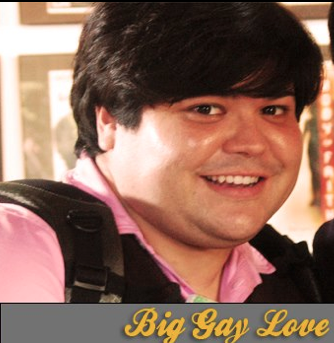
Augie Robles graduated from AFI Film school, made a few short films then landed a gig on CSI which ended up being 14 years during which he sharpened his cutting skills as an editor, and became restless and eager to tell his own stories again. He recently did his editing magic on Aurora Guerero’s film, Mosquita y Mari which y’all know how I feel about. (love). He edited the film, BIG GAY LOVE which just premiered at Outfest, directed by Ringo Le and starring Jonathan Lisecki in a super sweet and tender love story about a hopeless romantic in LA who struggles to fit into LA’s lofty pressure and idealized gay man archetype. Back writing and directing his own work, Robles recently screened his short film, The Rookie and the Runner, set in Elysian Park at a number of film festivals. He also has plenty of other projects in the works, including something a la Twilight Zone ! He has a lot of technical and narrative genre skills to unleash in his own voice, and I find it really sweet that he is sharing his wealth of experience as a mentor for Outfest’s program, Outset, created to empower and educate LGBT youth(16-24) to tell their stories through film.
In a show stealing/stopping cameo in Big Gay Love, Harvey plays a kid who represents the essence of gay youth who try with all their might and ferocity every damn day to battle and defy mainstream society’s twisted dictation of what normal, perfection and beauty should look like. Encapsulating perfectly how important it is to see people like you in order to not feel alone is a bigger theme of the importance of Outfest and for that matter, a diverse representation. Harvey can next be seen in Pantelion’s luchador comedy, Aztec Warrior directed by Scott Sanders (Black Dynamite) starring Luis Guzman and gorgeous Nadine Velasquez. You might know have seen him in The Internship and on 2010 ABC Family television show, Huge. He is absolutely charming, playful and a bon vivant with a deliciously fierce streak.
REFLECTIONS OF: Outfest is truly LA’s most inclusive and community driven festival. Not just for the LGBT community but the organization picks up the slack of other festivals by embracing many underrepresented multi-ethnic voices. The AFI Festival is a wonderful showcase of international film but as an extension of the film school, it has positioned itself as a program driven for cinephile-centric and auteur platform. Meanwhile LA Film Festival certainly offers big broad fare for everyone, but also tries to inch in on AFI’s international showcase turf. Don’t get it twisted, I was really happy to see LA Film Fest screen three U.S. Latino films this year. But just think how much more impactful it would be to tap into the U.S Latino film representing the rich and underplayed walks of life AQUI in Los Angeles. Films like Water & Power, Vincent & Luzy and Pardon are really original and telling narratives with a distinct aesthetic, and all three have yet to have their official premiere even though they’ve been submitted to the festival circuit. While I don’t think its reasonable to rely on the big distributors to be the platforms of discovery for these films, I do believe that festivals on this scale have that cultural responsibility, or at least it should behoove them to do so. An often heard comment that I take issue with is that a film has to be ‘good enough’ to show at these festivals. Every film is imperfect so this does not hold agua with me when we are talking about the discovery and expanding of marginalized voices. I previously reported that The Los Angeles Latino International Film Festival has announced it is currently taking submissions after its sudden shutter last year. There is no doubt there is a sizable hungry audience and community for these films, and filmmakers who want their films to be seen by them, so even though its bewildering to me that LALIFF does’t have their festival dates set yet, I’ve a feeling they will still be looked to as the last beacon and chance for the array of Latino filmmakers and stories in LA trying to emerge through the bottleneck.
I really enjoyed finding out about this local community organization, Payasos LA through the documentary shorts film block, Queerer Than Fiction at yesterday’s Outfest screening. This is the first episode of a series called RAD QUEERS by bright-eyed and charming Graham Kolbeins. The doc short form is a kind of an underrated, underplayed piece of film, so this selection of portraits, personal journeys and confrontations was a special and touching treat. I loved that each film reflected a super specific identity yet their plight couldn’t be more universal, and exploratory of the human condition. It’s especially neat to meet the people you just met on film, in real life right after the screening. The block is playing again tonight at 9:30pm so come on down to the DGA on Sunset & Fairfax to get your tickets and party with the most diverse, real and hip people in LA.
“Smashing taboos and redefining philanthropy, Payasos L.A. is an organization of gay Latino men who wear clown make-up, go-go dance, and try to make the world a better place for future generations. Rad Queers: Payasos L.A. takes a look at the Payasos’ optimistic philosophy as well as their sexy fund-raising parties. “Mr. Los Angeles Leather” 2011 title-holder and Payasos founder Leo Iriarte walks us through the wild world of his happy band of clowns, providing a uniquely personal perspective on this extraordinary group.”
Deadline News reports that Alfonso Cuaron’s sci fi thriller GRAVITY will have an out of competition world premiere screening at the venerable Venice Film Festival in August. The film stars A-list topping movie stars, George Clooney and Sandra Bullock. Cuaron’s precious Y Tu Mama Tambien also premiered in Venice back in 2001. Gravity will be released stateside in October. The teaser hits a striking mood and the terrifying, panicked note of drifting untethered alone in the big black abyss of outer space, regardless of the quiet, tranquil breathtaking view of our blue beautiful planet.
That makes two of the three Amigos directing Hollywood blockbusters put out by Warner Bros this year. Curiously, neither is a Universal Pictures release, the studio with who they have a first look deal with through their production company Cha Cha Cha. Guillermo del Toro’s $180 million dollar explosive giant drone action/sci-fi film Pacific Rim which also unleashed yet another trailer today, will be released next weekend after 4th of July. That leaves Alejandro Gonzalez Innaritu (Amores Perros), the self described black sheep of the three. He’s got a really intriguing film in post called Birdman, which is being described by Indiewire’s Playlist as a meta kind of Kaufman flick about a washed up actor who use to play a superhero. Armando Bo, Argentine director of The Last Elvis co-wrote the script. Oscar nominated cinematographer Emmanuel Lubezki (Tree of Life) – who also shot Gravity is the cinematographer on Birdman. Between Los Amigos and Malick they must be running him haggard! I’d say Alejandro has got the most real human intrigue, not to mention a stellar and unique cast going for him, including Emma Stone, Michael Keaton, Edward Norton, Naomi Watts and Zach Galifanakis. It could hardly be called an indie film, but it is being put out by ‘specialty arm’ Fox Searchlight. The screen roll out on that film will obviously be considerably less than his compadres’ movies.