Directors, Michael D. Olmos and Youssef DeLara with Filly aka Gina Rodriguez at the NALIP screening of Filly Brown
It was pretty rad to talk to co-director, Michael D. Olmos and his lead actress, Gina Rodriguez at NALIP. Check out the interviews by linking on their names, where they talk about their movie Filly Brown (which will be released by Indomina Releasing), and the US Latino film community in general.
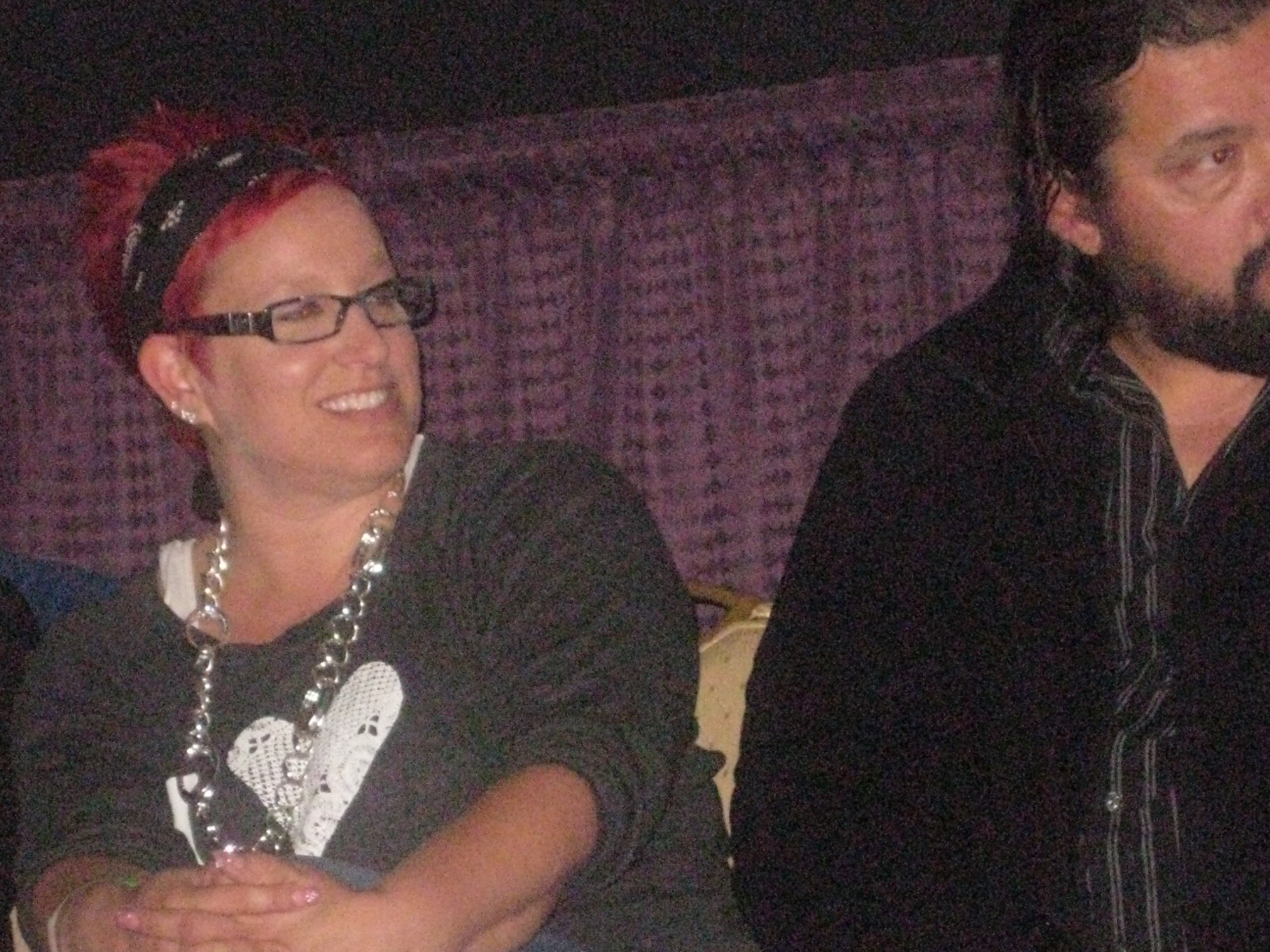
Khool-Aid Rios in the hot pink hair - Pocos pero locos!
And if you don’t know about Lisa “Khool-Aid” Rios, who plays herself as the DJ who puts Filly on the spot, and represents her flagship music stylings channel, Pocos Pero Locos, you should. We are all dying to get our hands on the official soundtrack she is producing along with E-Dubb Rios which we can expect sometime in the fall.
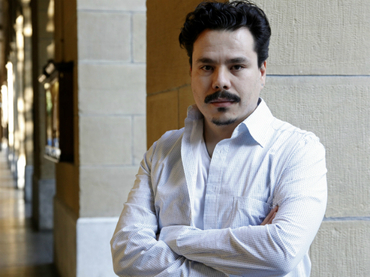
Alejandro Lubezki (right) with Cuauhtémoc Cárdenas Solórzano
Cuauhtémoc Cárdenas Solórzano, or The Engineer as he is reverentially called, is a stalwart modern day politician, whose distinguished family (Think Kennedys) includes his father, Lazaro Cárdenas (President of Mexico, 1934-1940), and son Lázaro Cárdenas Batel, former governor of Michoacan. Cárdenas Solórzano is a three time presidential candidate and beloved PRD (Party of the Democratic Revolution) moral leader who in this electoral year is a big supporter of the party’s candidate, Andrés Manuel López Obrador (Obrador’s second presidential bid following the highly disputed 2006 election in which supposedly a .56% margin marked his defeat against Felipe Calderón ).
In El Ingeniero, filmmaker Alejandro Lubezki shares the unprecedented access granted him and gives us an intimate, fly on the wall doc, shot during Cárdenas infamously last, arduously fought attempt in 1999 to wrangle power from the dominant PRI (Institutional Revolutionary Party) in the 2000 election year. It is well known that in his previous 1988 run, blatant fraud prevented Cárdenas from rightfully taking presidency. We also know how it ended in 2000; According to most sources (with TV Azteca giving the highest, 9 point margin), only a few points separated PANista Vicente Fox Quesada and Cárdenas. Fox emerged the winner, even though in the public perception it seemed he had all but squandered his early gains in the polls.
The idea to follow Cárdenas was instigated in part by Alejandro’s older brother Emmanuel Lubezki (Oscar nominated cinematographer of Tree of Life) who had not lived in Mexico for years. Surprised that nobody was making a film about Cárdenas, Alejandro himself asked for a meeting, proposed the documentary directly with The Engineer, and a handshake and few days later, was authorized the incredible access and began rolling. As heard at the Q&A of the world premiere at Ficg27, Alejandro took approximately 300 hours of footage, which then took him about that much time to edit into the story onscreen – notwithstanding the twelve years from since it was shot.
The camera literally squeezes into the political strategy and image-making sessions that shows Cárdenas’ ardent camp of intense and genuinely, frank political advisors agree and disagree on how to make a president, bearing witness to the sweaty behind the scenes process. Securing the right PR agency, approving photos (“Not that photo Ingeniero, you look like Subcomandante Marcos”), and the exhausting efforts of intervening the media’s powerful influence, forms the first part of the film. Traveling day and night to beautifully Nahuatl named towns hardly heard from, Cárdenas appears to be a man of the people. Although at first Cárdenas seems somewhat rigid if not overly stoic. Soon however, what we learn is his characteristically quick-witted humor emerges. When we finally get to see him mad, we agree with his wife who points it out plainly; he asserts a stronger presence. Indeed it’s not until then we see him verbally swing back against Fox that he appears to gain upward traction. In a memorable sequence that testifies to the most surreal only-in-politics world, we watch the three political candidates debate about when to have a debate. Fox’s asinine ability of not yielding to rationale turns him into a four year old as he throws a public tantrum that the debate must take place that very same day – Cárdenas hitting his stride, chimes in; ”Don’t worry I trust you won’t forget what you prepared for today by Friday”. That’s not to say Fox is ostracized entirely in the film. We also witness his sense of humor (it’s a big Mexican thing), and hear him give credit and thank his worthy opponent more than once. After all both parties sought to defeat el PRI, so the win to a certain extent was shared.
Lubezki’s Director statement says the film’s intent was not to show nor cater to the public’s desire to see the scandal and corruption inherent in the treacherous political machine, but to show the arduous campaign process and the authentic character of Cárdenas. And so, by eschewing the cynicism and distrust surrounding politics that we ourselves tend to perpetuate, he astutely, perhaps subversively infers a positive and encouraging tone, very timely given this election year. As long as there are political leaders like El Ingeniero, it’s crucial to not fall defeatist and avoid the ‘My vote doesn’t count’ stance.
Now I’m not that well informed on Mexico’s political landscape so I imagine there must be content here that goes over my head, and that invested people might get more political juice out of it. I’ll leave that to the pundits and experts to glean. What’s not lost on me however, and what points to the film’s ability to transcend its specific political reference and country, is the damn herculean strength, passion and tenacity required to run for office, the epic scale of mobilizing a presidential campaign, and most interestingly, the ongoing wage of power between today’s grassroots triumphs and losses over big money controlled political interests.
At the end of the film we see “the moment” has arrived. The campaign team which has exausted blood, sweat and tears, watches in agony as the omnipotent media makes its suspect exit polls and projections showing Fox celebrating his win ahead of the official confirmation. It is nothing short of infuriating and profound disappointment. Yet as testament that leadership is in his DNA, Cárdenas eloquently turns the energy around by standing up and shaking everyone’s hands to thank them for their trust and support. As he makes the rounds, a strong applause swells. The clapping does not die down but only gets louder as he continues to work the room, warmly showing his gratitude and promising all of us that “La Lucha is far from over.
A definite highlight of the Mexican Documentary Competition in this year’s Guadalajara Film Festival, I hope El Ingeniero travels far and wide this year. For more information and to read the Director’s statement click here (yes, its in Spanish).
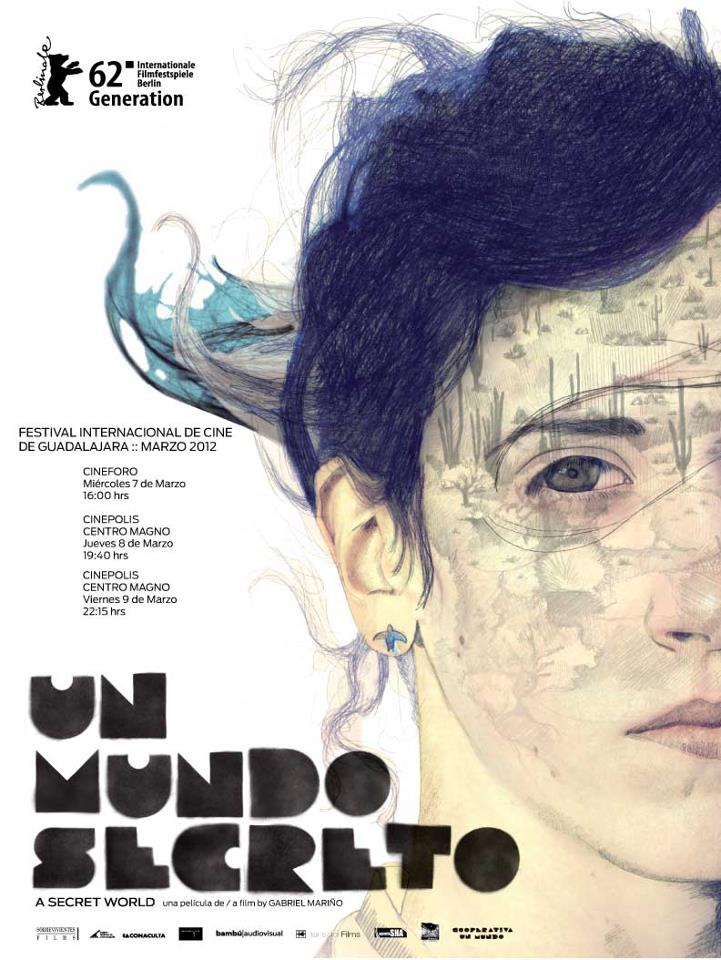
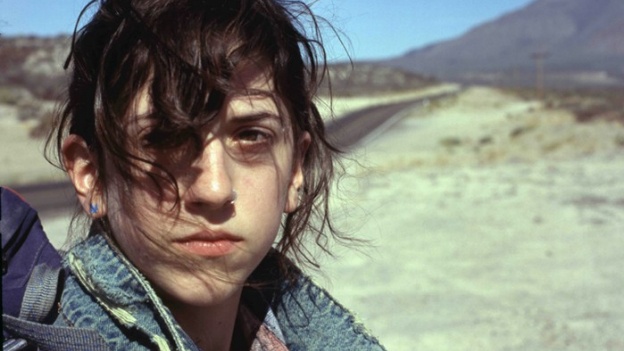
Yet another highlight of this year’s FICG27 Mexican feature competition is Un Mundo Secreto, a quiet but emotionally poignant first feature by Gabriel Mariño. Along with La Demora, it was one of the two films that represented Mexico at last month’s Berlinale – this one in the Generation section. The film is a visceral coming of age tale of an isolated teenage girl who alienated at home and school, flees the city and embarks on a journey of self search. It first garnered attention at last year’s San Sebastian film festival´s Films in Progress, the hotbed of latin america’s next best up and coming projects. What makes the film stand out is a sensitive touch and lyrical tone, and the female lead’s vulnerability transmits the mysterious but unmistakable void and longing she feels, which in turn permeates the fabric of the film. Privy to her secret world, that universal and primal desire for love and connection is beautifully captured and affecting. Big congrats, and thanks to Gabriel for answering my questions below:
CD: Were you always certain your lead was going to be a female protagonist? I ask because in a way her gender informs a lot of the journey. What was it like to write a teenaged girl character? How did you work closely with your actress and producer in shaping the character?
GM: Well, I always knew since day one that my main character it was going to be a girl. Why? All my fiction characters are always women, maybe that gives me more freedom to be sensible and emotional. I think in this way I can make closer contact with my feelings. Why not a boy?, I guess my therapist can answer that more accurate than me. I worked very closely with my actress. I have known her since she was 11. We developed the film for about three years. Actually I wrote the script especially for her, and with my producer Tatiana Graullera, we worked very closely as well, since day one she was there, she was, and still is, my compass.
CD: Finding one self on a road trip tends to be a quintessential and rich story thematic. In your opinion, what do you think it is about Mexico’s urban and rural landscape it provides? How did it feed into that path of self-discovery for your character?
GM: Mexico is a very big and changing country, a generous and a sad land, sometimes we can spend years and years in the city without knowing Mexico, without paying a visit to your home land. Mexico is having a brutal, social and political crisis right now. The social tissue is not strong enough to support Mexican people and specially Mexican youth, but I strongly believe that the answer to that crisis lies inside the Mexicans, not in the government or the politics. It lies in the people and the country itself, so it was important to portray this quest for self discovery in the frame of Mexico´s roads and landscapes.
CD: The cinematography is supremely arresting and such a big part of expressing the insular world of the character – what was your approach in painting the film in such a way?
GM: We spent a lot of time my DP Iván Hernández and me thinking in how to shoot Un Mundo Secreto, and after studying still photos of Nan Goldin and paintings of Edward Hopper we found our answer. We wanted to shoot the film in not so many shots. For me it was to look at this story as if through a window. I told Iván that I wanted to shoot with practical light, without any lightning. He agreed and we did not have any light equipment with us during the shooting.
CD: So now you just made your first feature film in Mexico. To some extent you had the backing and support of your alma mater, the film school, CCC. How challenging did you find it to make the film? On what level and how crucial do government funded entities like IMCINE continue to support first time filmmakers?
GM: Well, the project was supported by Sobrevivientes films since the beginning, and we applied for IMCINE funds several times in different stages of the project but we did not have luck there, so we decided to make the movie independent, the CCC supported with some postproduction process, and other production companies (Bambú Audiovisual, Transistor Films, Al fondo del Callejón) supported with camera equipment, sound and so on. In 2010 we won the Swiss Fund for production Visions Sud Est and then the film was a reality. After San Sebastián Films in Progress IMCINE decided to support the project with post production.
FICG27 screenings:
Wednesday Cineforo UdeG 4pm
Thursday at Cinépolis Centro Magno 7:40pm
Friday at Cinépolis Centro Magno 10:15pm
Like it on FB here and to stay tuned to hear where it will have its US Festival premiere!
Wow. Everyone is talking about La Demora down here in FICG27. Fresh off its Berlin world premiere and jury win, the third film by Rodrigo Plá (Desierto Adentro, La Zona) is a masterful and moving piece about a struggling, single mother burdened by having to care for her aging Alzheimers-prone father, and who out of desperation attempts to find a way out. The character-driven film is remarkable for its indelible performances and understated, moody and immersive atmosphere. Rodrigo and his writer and partner Laura Santullo were so kind to respond to my questions, and in reading the responses below, it gives you an idea of the very thoughtful and deliberate approach in which the film was conceived, down to the very last detail. I’m thrilled to share with you the exclusive interview below. I translated and edited Rodrigo’s answers into English as best I could. Read the interview in full and in Spanish here.
CD: Congratulations on your world premiere in Berlin. The Forum section in Berlin is supposedly where you find the most ‘daring films’. Why do you think your film was selected in this section?
RP: I guess La Demora, although it’s a simple story, is relatively risky in its structure and form. The plot is not shaped by the actions of one person who wishes something and makes a journey in search of that desire. It’s more like the narrative shows an irrational stall that interrupts and transforms a common and ordinary life. Maybe that’s why the film is a two act story. The idea was to avoid constructing a plot from the aspect of analyzing what happens. This effort is demonstrated from the script to the entire process in the creation of the film, and as a result there is a sobering, subtle way to guide the viewers’ emotions towards an unequivocal direction. We preferred to leave the character motivavtions much more subtle. The construction does not emphasize the causes or consequences, because actually the act that is most important emerges from the character’s will. For us La Demora is something of an experiment and perhaps that’s how the Forum programmers recognized it.
CD: The theme of taking care of our elderly is more and more relevant ( I also have a grandma in the same situation as Agustin), is this primarily what motivated you to tell this story?
RP: If there is anything sure in life its change. In film we try to reflect with honesty what concerns us at every stage. And nearing your 40s, your own mortality and that of your parents is naturally a big concern. More specifically, with the film I wanted to capture two moments, that ‘impulsive’ act of the daughter, and second, the stubborn man who insists in waiting hours and hours, as if holding on to one last hope.
CD: The atmosphere is quite immersive, tell us about collaborating with your D.P. Maria Secco and your film score:
I try not to use concrete examples when going over process with my collaborators. Eventually after talking it through there might be a reference, but the more abstract, the better. My tools are the words and emotions, then whatever is is generated between what I think and what comes out of the script and the reinterpretation of what someone hears, given their cultural baggage and experience relative to it, that’s the creative act that forms the film. This process has some risks because none of us have the exact science or formula. You work with a lot of uncertainness, in constant doubt and regularly questioning yourself. Maria Secco was key to the film. She was there for location scouting to get to know the natural lighting of the sets and to shoot angles. She used her imagination and made suggestions. With such an inherently emotional story we wanted to avoid being melodramatic so we chose to use a camera approach that created some distance, that was a bit cold, which would contrast and result in some equilibrium. We also chose to tell the whole story exclusively via the two characters, who would always be centered in the frame, leaving secondary characters in the margins. It was decided that characters that only appeared once would even be only shown from their backs, or just a reflection or partly, or outright out of frame. For the score we felt that we needed to balance out the camera’s approach and inversely, recoup that emotion from the script but again without overdoing it. And for this approach Alejandro de Icaza was instrumental. He practically subconsciously introduced sounds, a car alarm when she became agitated, the infuriating noise of construction work, the ambulance siren from a distance that comes with the arrival of caretakers who come to the rescue, and the signature music which reminds us over and over about the moment of abandonment.
CD: Your actors, Carlos Vallarino and Roxana Blanco, are impressive and deliver such weight and naturalism to their roles, how did you find them and what kind of direction did you give them?
Roxana Blanco is an amazing actress well known in Uruguay and I was already familiar with her work. Carlos Vallarino on the other hand is a retired architect and this is his first acting role. I found him through a long casting process. His ability to penetrate, to imagine and hold scenes, made him a fantastic and unexpected gift. Both of them brought an immense sensibility to the roles. Roxana’s precise methodology collided against the imperfect and lax approach of Carlos, all of which generated an energy and chemistry to the character’s internal crisis. She would tense up against his dialogue or gestures and appear to be obligated to stay lucid and ready to adapt to any unexpected changes he might deliver. And Carlos would take on a sense of blame or fault, which in turn, to a certain extent, affected his confidence and made him feel he was indeed a burden. Oddly enough this created a relationship which was expected between father and daughter. There was improvisation which wasn’t laid out in the script, and lots of on -ocation set rehearsals. The actors would adapt to the space and learn how to relate to one another, and simultaneously we had the opportunity to recreate said space according to any needs that would arise. .
CD: The title, La Demora is translated as The Delay, do you think there is anything lost in translation? I feel that the title’s meaning transforms itself organically over the course of the film – the delay can be taken as her hesitation to run away from her problem (her dad) but it also in the end works very casually as if is was some traffic jam that prevented her from going back to him.
RP: It was in the moment that I came to the decision to use title towards the end, by placing it in the end, the story comes full circle and serves something like an epilogue. In a way it synthesizes and breathes air into the drama and journey of the characters. What happened was only a delay, a momentary detour on the way to her natural and final destination. It is a bit like a game as if to say that it’s not a big deal when in reality a lot has happened – she’s transformed and has had an arc, she’s not only a daughter but a daughter and mother to her father.
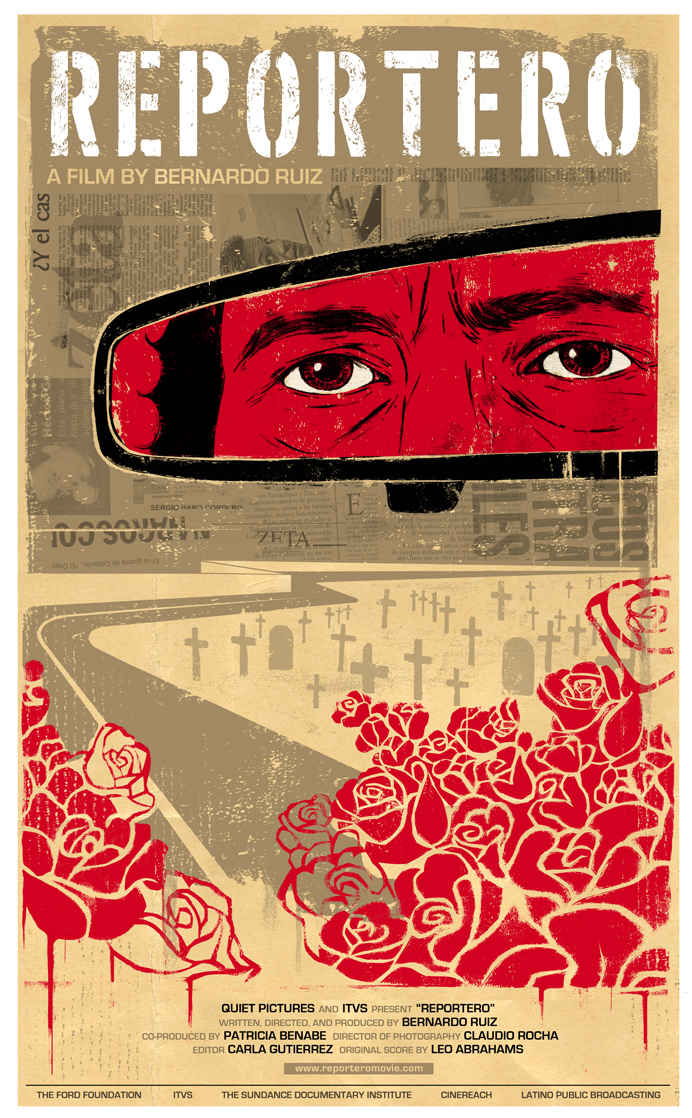
During the height of media repression in 1980, Jesus Blancornelas, a defiant journalist who was fired from a number of media outlets for refusing to be stifled, independently founded the Tijuana based newsweekly, Zeta – which to this day boldly stands by its mission of exposing Mexico’s wrongdoings and reporting what they see no matter the cost. Sadly, such fastening to ideals has meant the loss of members in their tight-knit family of reporters who have been killed in retaliation by criminal gangs. The paper, whose tagline is “Libre Como El Viento (free like the wind), is at the center of a brand new documentary, Reportero, which begs serious attention to the persecution of journalists in conflict ridden zones, like Mexico, where investigative reporting is critical. As director Bernardo Ruiz, who previously made the PBS Roberto Clemente story, follows true blue, ace journalist, Sergio Haro tackling and breaking risky news stories, we witness the personal drive and psychological toll that such a high stakes pursuit begets. The film sheds light on the fascinating history of the paper and elicits a powerful respect for the courageous reporters committed to carrying on Blancornelas’s hard investigative legacy.
Last week Reportero had its world bow at Ambulante in Mexico City where it was followed by lively discussions about the safety of journalists. Five years in the making, Bernardo Ruiz deserves big props for undertaking this urgent, issue -oriented documentary, and for connecting us with the real heroes and their day to day quest for journalistic integrity. All of which underlines the sore need of protecting the freedom of the press in Mexico for papers like Zeta who actually and fiercely practice their right, at their own risk.
Below Bernardo talks to me about how he found the story and more:
CD: Briefly what motivated you to make this project, and what made you decide to focus on Zeta magazine ( as opposed to other print media in the country like say, El Diario de Juarez which in 2010 after suffering the loss of two journalists made an audacious move by publishing a public appeal to the ‘de facto’ authorities (read: narcos) regarding what they should and not cover in order to prevent any more colleagues’ deaths).
BR: I actually didn’t set out to make a film about Mexican journalists. I was researching stories in the Mexicali-Calexico border region. Starting in 2007, I began thinking about creating a multi-character portrait of the region — to look at how interconnected lives are across this slice of the border which generally doesn’t get a lot of attention. During one of my research trips, I met the director of a youth shelter who suggested I talk to a local journalist from Mexicali. About 6 months later I met Sergio Haro at a Starbucks on the Mexican side of the border. What was supposed to be a short meeting turned into a 3-hour discussion. I left the meeting thinking that Sergio’s story was much more urgent than the regional portrait I had originally envisioned. In that meeting, Sergio told me that he worked for Semanario Zeta, the Tijuana-based muckraking weekly, and I dove right in. At a certain point, telling Sergio’s story, telling Zeta’s story felt almost inevitable.
CD: How did Sundance Institute help your project? The Sundance Documentary Feature Program supported me with a research and development grant very early in the process, when the film was still a portrait of the Mexicali-Calexico border region. R&D support is always the hardest support to get (at least in my experience) and the support allowed me to push forward with the research at a time when the story was evolving. Much later, when I had an assembly of the film, I participated in the Composer’s and Story Lab. My editor, the ultra-talented Carla Gutierrez, and I had reached a plateau with the story. The lab was a chance for me to step back from the film and evaluate it with fresh eyes. The timing worked out perfectly — we took a break from editing and I had a week of thinking about score and story with the Sundance advisors.
CD: Sergio Haro is such a great character, intelligent, tenacious and all around straight shooter. But I’m also really happy your documentary features the woman behind the operation, Adela Navarro, who was recently awarded with International Women’s Media Foundation’s, Journalism in Courage Award. What was it like working with her on the documentary?
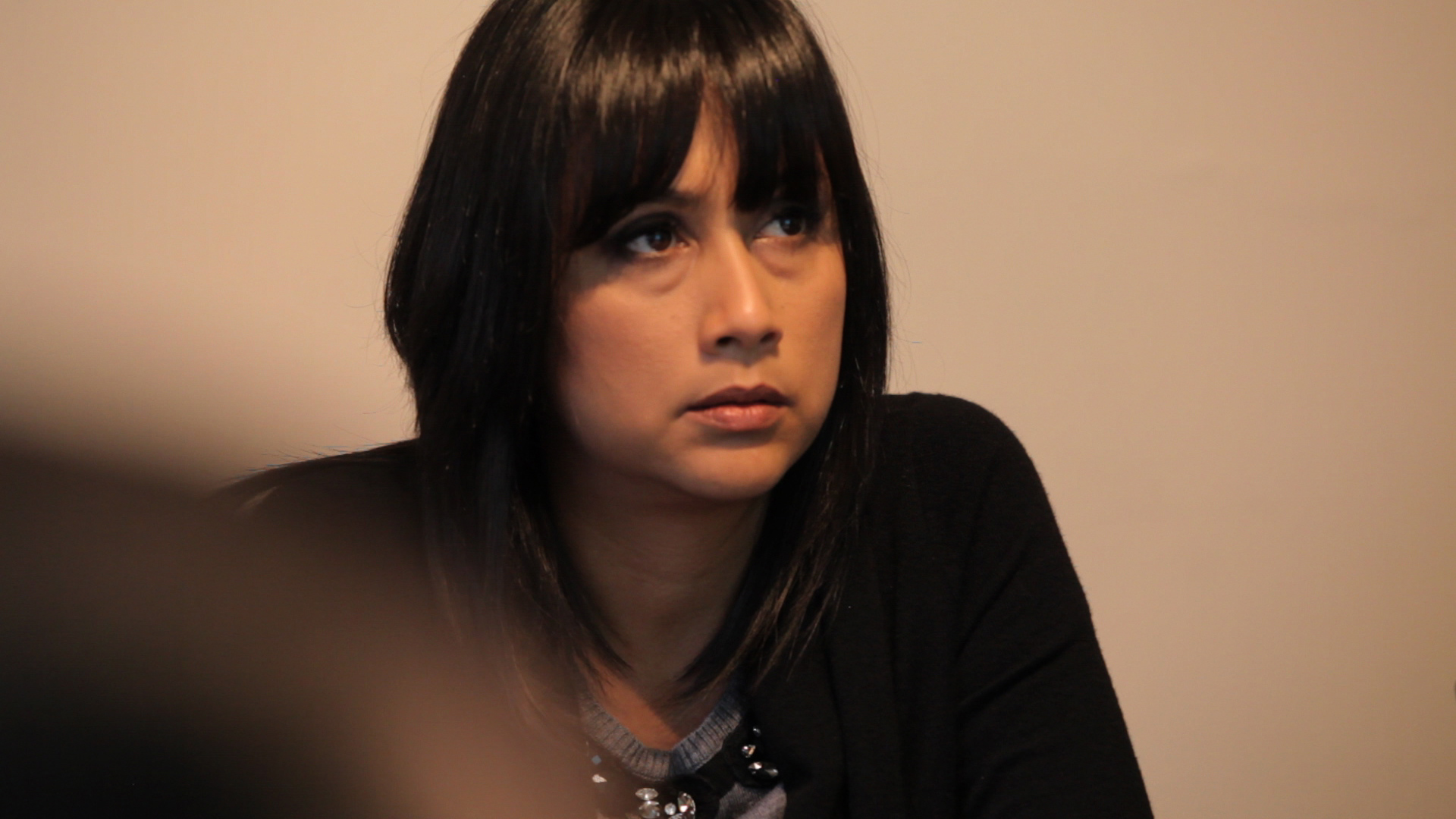
BR: The film is as much Adela Navarro’s as it is Sergio’s. She came to the paper straight out of college. She and two other female editors came up under Jesus Blancornelas, the paper’s founder, in a very tough, sink-or-swim atmosphere. After the murder of a Zeta editor, Francisco Ortiz in June of 2004, who was gunned down on a Tijuana street in front of his children, two male editors left Zeta. “They left a day after the assassination,” Adela explained to me recently. The women are the ones who stayed to run the paper. As Sergio’s boss (one of a small number of female editors in Mexico) Adela has strengthened the newspaper’s brand of aggressive investigative journalism since 2006, when Blancornelas died. For me, she is an undeniably compelling and dynamic presence in the film. She was understandably protective of her staff and her paper at first. Over time, she opened up. I think her strength, intelligence and absolute commitment to her work come through in the film.
Adela Navarro - recipient of Medal of Courage Journalism
CD: The magazine’s complicated relationship with the local government of Tijuana is heavy. The film talks about the controversial, high profile politician and sports betting magnate, Jorge Hank Rhon, the town’s mayor from 2004-2007, whose influence runs deep, and more and more wide. Did you try getting an interview with him for this film? Did you ever feel you had to also take certain safety precautions in the making of the film, simply by aligning yourself with the magazine’s open policy? BR: Every week, since 1988, Zeta has been publishing a “black page” with Hector Felix Miranda “El Gato’s” image pointing at the reader. The memorial page asks Jorge Hank Rhon, in bold type, “Why did your bodyguard Antonio Vera Palestina kill me?” It accuses the sitting governor of Baja California, and his predecessors, of doing nothing to pursue those who ordered Félix Miranda’s murder. U.S. papers would probably balk at doing something like this – then again, most U.S. papers haven’t buried as many of their reporters as Zeta has. I didn’t pursue an interview with Hank, because I don’t see REPORTERO as a work of traditional journalism where the default approach is to get “both sides”. Instead, I felt like the facts of what happened in “El Gato’s” murder as well as the archival interviews with Hank tell enough of a story. The information is there, and the viewer can decide what to believe.
CD: The documentary serves as a great forum for critical discussion regarding freedom of the press and safety concerns for journalists worldwide – what in your opinion and insight gleaned from your research, is needed from a social activist POV by the public who see it and want to support and protect journalists in Mexico? BR: According to the Committee to Protect Journalists (CPJ), more than 40 journalists have been killed or disappeared in Mexico since President Felipe Calderón Hinojosa launched a massive military offensive against drug cartels in 2006. News outlets have been attacked with grenades and their websites hacked. Drug violence and corruption have devastated the news media and stripped citizens of their right to vital information. The culprits of crimes against journalists are rarely if ever, found or brought to justice. This is an election year in Mexico. President Calderón, who promised to protect journalists and bring justice in their killings, is leaving office in 2012. We are working with CPJ to promote their work, specifically a petition that is circulating. People who are interested in the film and the campaign can join us on our FB page: http://www.facebook.com/reporteromovie
CC: Where can we see the film?
BR: The film premiered in Mexico City last week through Ambulante, which is an amazing itinerant festival. We packed our two Mexico City screenings to overflow. Reportero tours with the festival, screening in 12 Mexican cities. Later this year, we air on POV (PBS) in September 2012. We are right in the middle of determining where our US premiere will be.
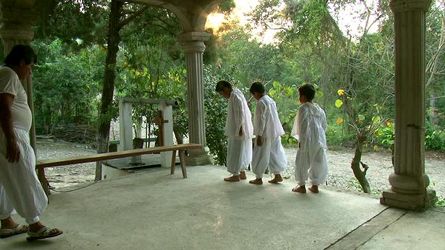
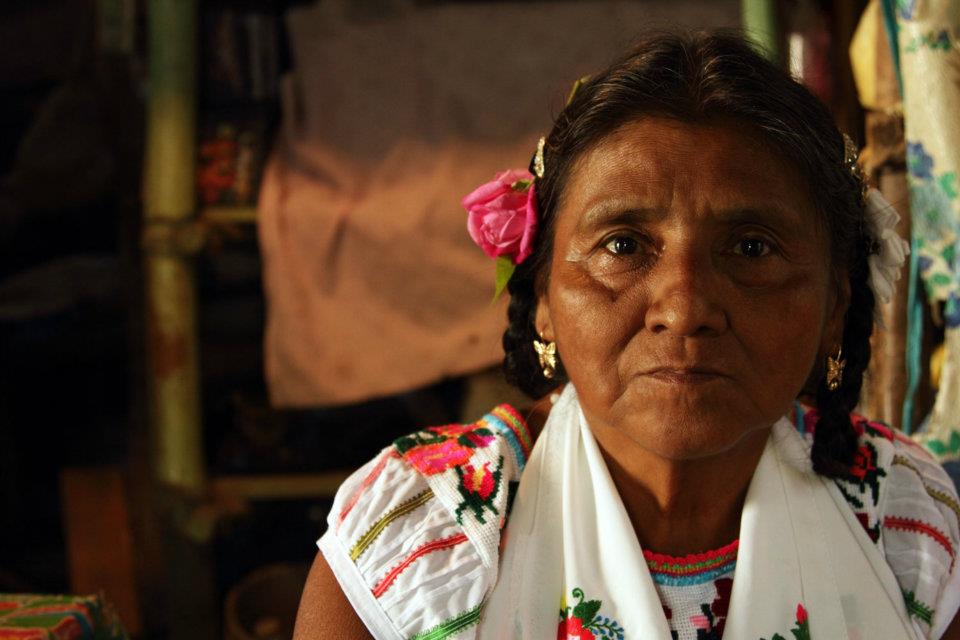
Nothing beats the physical thrill of absorbing a high sensory image on the big screen, and in this past year’s Morelia Film Festival I had one of those unforgettable moments watching Canícula, a remarkably cinematic and revelatory documentary by Jose Álvarez about the Totonac people in Veracruz, Mexico. My visual senses were so intensely activated by the rich photography its as if spillover stimulation tickled my sense of smell during a scene in which pristine vanilla bean trees are dazzlingly captured; I could almost smell the vanilla! This fine mexican documentary is screening in next month’s Guadalajara Film Festival and mini-major doc fest True/False. Check out the interview with the endearingly soulful filmmaker below. Note: Yours truly translated, but I’m also including Jose’s unedited answers in Español because it sounds so much prettier!
CD: Tell us about the special meaning and significance of the word, Canícula
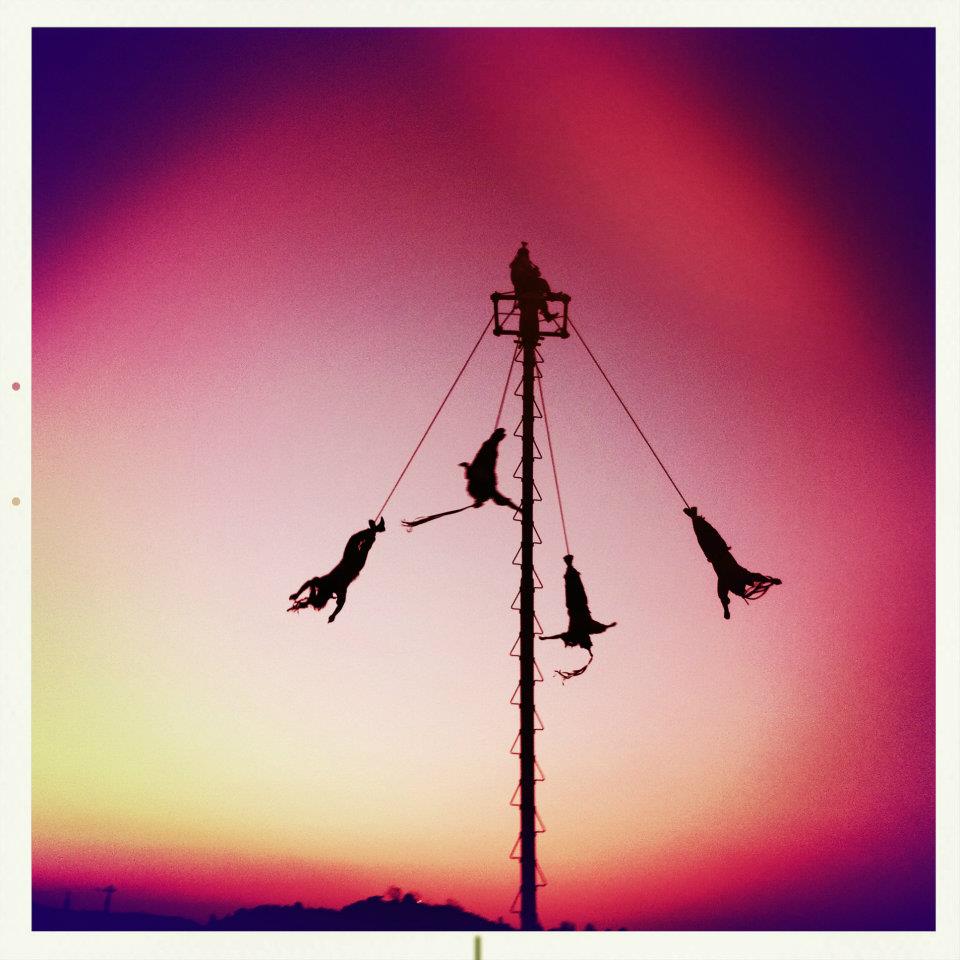
The name of the documentary Canícula (Dog Days), has to do with the hottest 40 days that occurs in many parts of the world, in particular this zone in Ciudad Sagrada de El Tajín, Veracruz. It coincides with a special season for the “Voladores” (or “Bird Men”), because it represents the time in which their fellow dead Voladores come down from the heavens. For this reason they wear red Volador pants which symbolizes the blood and sacrifice, and ceremonially they ask the gods for rain, a bountiful harvest and health for their children and families. As they spin and lower from the top of the pole circling around, they disperse prayers and blessings they’ve acquired from the heavens. It may also represent the fire that comes from the sun, necessary to bake the mud and shape the clay of the beautiful ceramics the tribal women make.
~El nombre del documental Canícula (días de perros) tiene que ver con la época de los 40 días mas caluroso que se viven en muchos lugares del mundo y en especial en esta zona de México, Ciudad Sagrada de El Tajín, Veracruz, esta época para los voladores representa el momento en el que bajan del cielo los voladores muertos, es la época del sol sangrante, por esa razón usan los voladores pantalones rojos haciendo referencia a este símbolo de sangre y sacrificio, a las peticiones que hacen a los dioses para que haya lluvia y fertilidad para sus cultivos, salud para sus hijos y bienestar para sus familias.
Bajan desde la cima del palo volando y girando dispersando todas las bendiciones y favores a su pueblo que obtuvieron del cielo. En algún lugar también representa al fuego que viene del sol que necesitan las alfareras para cristalizar el barro de sus piezas.
CD: Your documentaries spotlight the rich diversity of indigenous communities of Mexico (Flores En el Desierto). On what social activist/awareness levels do you feel your films being out in the world, operate and give back to those communities. And what expectations, if any, do these communities and people who agree to be in your films hold you to?
The people who see my films can easily engage with what they see as long as their hearts are open, they are willing to experience other human realities, and as long as they don’t reject different ways of life. It’s the respect as well as the admiration of being able to witness original cultures like the Wixárikas or Totonacos maintaining their way of life, their faith, community, work, love, family and death. Audiences can make a trip to lands far away yet be as close as we the filmmakers and be able to marvel at their millennial wisdom, a striking counter example for the otherwise chaotic times we are living.
The Flores En El Desierto documentary has proven to be of great help for the Wixárikas (Huicholes) in regards to bringing awareness to their ongoing struggle they wage against the Canadian mining companies that come in and exploit their land, their center of sacrificial ceremony, and threaten ecological destruction as well as impose their imperial culture. In my opinion, Los Totonacos like the Wixarikas have made these films. We merely provide the instrument. There are great producers and photogenic personalities in front of the camera. I’ve always made the effort of making films as least intrusive as possible since I’m most interested in working FOR and WITH them.
~Las personas que ven mis películas se involucran de manera fácil con lo que ven en ellas si es que tienen abierto el corazón, si quieren ver estas realidades humanas, si no rechazan la existencia de otras formas de llevar la vida, el respeto, incluso la admiración por ver a culturas originales como la Wixárka (Flores en el desierto) o los Totonacos (Canícula) desenvolviéndose en sus vidas cotidianas, en su fe, en su comunidad, en el trabajo, en el amor, la familia o la muerte, los espectadores podrán hacer un viaje a tierras y formas muy lejanas para estar tan cerca de ellas como nosotros que las filmamos y maravillares con su sabiduría milenaria, ejemplo para nuestros tiempos de caos.
Por ejemplo, Flores en el desierto ha sido un documento de gran ayuda para los Wixárikas (huicholes) en esta lucha que mantienen contra las intensiones de explotación de mineras canadienses dentro de las tierras donde están sus centros ceremoniales sagrados que generarían destrucción ecológica y cultural absoluta. Tanto Los Totonacos como los Wixárikas han hecho estas películas, nosotros hemos sido meros instrumentos para que se realicen, son grandes productores, grandes y fotogénicos personajes frente a la cámara, siempre me he dispuesto a hacer películas poco intrusivas, me interesa trabajara para ellos y con ellos.
CD: Clearly the viewfinder has so much to do with not only the context but the experience of what you are showing us, the angles, the focus, closeups, etc. In a way your films demonstrate a unique transportive quality. How much do you think about where to place the camera – as it relates to the ‘outsider looking in’ to a world unfamiliar with the audience ?
The film’s cinematographers, Pedro González Rubio (Alamar), Fernanda Romandia (Flores en El Desierto) and Sebastian Hofmann(Viaje Redondo) were totally free to photograph this colorful and intense reality in order to relate the gaze of a young child as well as say an elderly woman, in essence, encompassing the spectrum of our human existence.
When it appears that the camera knocks and pries open the door into the soul, its simply because there is something there to share. In the context of making films, not only does it provide an opportunity for the world to see them, but also an opportunity for their eyes to meet the world as well.
~Los fotógrafos Pedro González Rubio, Fernanda Romandía y Sebastian Hofmann han sido libres para retratar esta realidad tan colorida, tan intensa, para adivinar en esas miradas desde la de un pequeño niño hasta la de una mujer anciana, los rincones de la existencia humana.
Cuando parece que la cámara toca la puerta del alma y esta se abre, es simplemente porque algo quiere decir, porque en el contexto en el que hacemos estas películas les abre a ellos una oportunidad también no solo de que el mundo los vea a ellos si no de que ellos miren al mundo.
CD: Your films are not only impressive in the ethnographic/anthropological sense but the divine cinematography that allows one to be captivated by the mesmerizing beauty of nature, and the unwavering spirituality of the indigenous who persevere a sacred connection with it. Is this conscious on your part as far as making the films cinematic form so elevated and visceral?
I’ve had a lot of luck finding these amazing cinematographers who bring a keen understanding and who have embraced an approach that seems to pinpoint this language, but also the paradises these cultures inhabit are so beautiful that it could possibly be enough to take a camera and shoot or photograph. What I always aim to express is the language of their land, people, music, art, ceremony, history and faithful existence. I believe that what I’m in awe of, is also what will awe the audience. It has much to do with the manner in how we ingratiate ourselves, become close to, and how we enter into this Mexico so wonderful and rich.
~He tenido mucha suerte en encontrar a estos extraordinarios fotógrafos, sin duda, que han entendido y han propuesto de forma muy atinada este lenguaje, pero también los paraísos que habitan estas culturas son tan bellos que bastaría poner la cámara y grabar o filmar.
Lo que quiero plasmar siempre es el lenguaje de sus tierras, gente, música, arte, ceremonias, historias, su fe vivencial y pienso que lo que a mi me asombra de este acercamiento será también lo que asombre a los espectadores, tiene mucho que ver con la manera en la que nos acercamos y como entramos en este México rich maravilloso.
I’m swelling with pride over home girl, Aurora Guerrero, whose years-in-the making, crowd funded, first feature Mosquita y Mari which premiered at this year’s Sundance Film Festival 2012 has been acquired by Wolfe Releasing which means it will become available on Video On Demand and DVD next year! In the meantime non-profit, filmmaker user-friendly Film Collaborative will be releasing theatrically. MyM will next screen at San Antonio’s Cinefestival (of which I’m on the advisory board) and will surely have a healthy festival run so follow it on the Facebook page to keep up with future screenings.
Neta (bottom line): Not only does the film boast an authentic and transcendent portrayal of two young Chicanas battling out their coming of age in the vibrant South LA community of Huntington Park (trumping the usual and tired ghetto stereotypes we are spoonfed as ‘hispanic,’ ), but also the intense butterfly-in-your stomach jubilation and inevitable heartbreak that it evokes is testament to the passion of the filmmaker’s voice.
Guerrero was kind enough to answer a few questions exclusively for mi blog so check it:
Me: That Los Angeles Negros song, Murio La Flor, which is featured in your opening is such a moody, gut wrenching love ballad and sets the nostalgic tone so well for the film. Tell us about the rest of the soundtrack, and the music that inspired you during the making of the film.
AG: I probably would have had more songs from my parent’s era if it hadn’t been for costs. Most of those groups, like Los Angeles Negros, were bought out by big American music companies back then because they were so popular among Latinos. Good news for those groups but bad news for the filmmakers who want to use them! Bueno, on the other hand I knew that I also wanted to bring in some new sounds that most people don’t often hear when they watch a Latino themed film. I think for the most part audiences are used to the Spanish bolero, Hip Hop or the hard core Norteño so I wanted to challenge these notions with contemporary music that Latinos are producing that really move away from these stereotypes. When I heard Carla Morrison for the first time I knew I wanted her music. She felt like that contemporary musician with a melody and voice that really captures what’s painfully good or painfully bad about love. Her music is just as haunting as Los Angeles Negros. I was also inspired by the music scene in Huntington Park. The youth are drawing from familiar sounds from their immigrant upbringing, like Mariachi, Banda, Norteno, and Cumbia and blending them with Reggae, American pop and so forth. The sounds in turn are unique and infectious! The relationship I was able to build with the youth belonging to the local community organization, Communities for a Better Environment led me to discover local SKA bands like La Pobreska, Viernes 13, and Raiz Organica. They’re singing in Spanish, English and Spanglish and addressing issues in their community through their music. I was excited to bring these sounds to my MyM knowing well that this element would provide it with a strong sense of place and authenticity. Ska and other genres of music I chose for MyM ultimately reflect who our young people are today – a unique blend of identities that mark their special place in American society.
ME: I read you have a strong education and community based roll out strategy with the film. I use to mentor a young ambitious teen myself and it was so incredibly inspiring to meet such young Chicanas so sure of themselves and their goals. Do you share this impression that this next generation is indeed more assertive, more academically and politically inclined and goal oriented than ever, and to what do you think owes this shift?
AG: I do think that there is a higher number of more vocal Chicana youth today then maybe in my time though I don’t think it’s the majority. The incessant violence against poor, women of color and LGBT youth continues to have its negative impact on our young people’s lives. But for those young Chicanitas that are being more conscious I think it’s because they are being exposed to conscious Chicanas at a younger age. I wasn’t exposed to politically conscious women of color until I went to college. Now I think there are more politicized Chicanas going back into their communities either as teachers or community organizers and they are impacting the lives of our young people very early on.
ME: What do you think it is about love and crushes that make us act so crazy time and again? One moment we are in ‘Las Nubes’ as they say and the next we are screaming our hearts out as your film so poignantly captures.
AG: I think love is one of the few emotions that bring us back into our bodies. Most of us are so consumed with material stability that we forget what makes us human. I think love reminds us of our humanity – our capacity to feel deeply for someone. So when love hits us, at whatever age, it always hits us hard, you know, making us all crazy inside. But that love often times does change us in some way – usually for the better I think, or so I hope.
ME: Lastly, what in your opinion do the big studio/corporate companies’ persistent and varying number of appeals and ads to exploit the “Hispanic” market get wrong every time?
AG: These companies think they know Latinos but they don’t. General audiences (or white people) are always marketed in unique often, original ways, which makes me believe that these companies think these audiences have the capacity to respond to that sort of material. So in my opinion, I think these companies need to let go of their narrow-minded notions of Latino audiences and they need to build smarter more original campaigns to EQUALLY engage Latinos. Punto.
Check out the trailer and find out more about the talented cast and crew on the film’s website.
AFI graduate, previous films include Drama/Mex and Voy A Explotar
Meet one of most fiercest and passionate voices in current Mexican cinema. His fiery spirit dominates and fuels his storytelling which centers on unheard or marginalized voices, and his fresh filmmaking style is unlike any of his contemporaries. Here I ask him about his latest film, Miss Bala which debuted in Cannes and will be showing at the Toronto Film Festival. The film is currently rolling out in Mexico’s urban multi-plexes, and its U.S. release by Fox International here in the states is highly anticipated; exact release date unknown.
CC: What was the reaction at Cannes (both yours and theirs)?
GN: I try to distrust as much as I can the reaction of the people after the first screening. I feel the ambience of excitement is only one part of the film touching the audience. I think many of my favorite films left me numb after I saw them. So I take the applause with great joy, but I know the real test in the pass of time. I hope the film has a lasting impression in the audience.
CD: Your previous films, exemplified tremendously in your short in Revolucion share a certain counter, anti, or rebellious theme told in a ferocious voice. You’ve said before you make films out of frustration, is this what drives you creatively day to day? Can you imagine ever losing that edge and still make films?
GN: I am not very sure what it is that pushes people to do things in a certain way. I guess everybody has a personality even if we don’t use it. I would like to think a movie is an act of honesty, a way to say something around the bullshit. To be straight. I am sure that goes even for any kind of filmmaking the brainless blockbusters where the film shows a lack of spirit or the ones that do have a soul behind even if the director is shooting just an apple.
CD: The setting in the film is the vicious drug violence engulfing Mexico via a ‘civilian, a beauty pageant – to show that everyone is affected by the drug war in Mexico. How are you affected? Do you feel like you are an outsider looking in?
GN: The film is about fear that I breath around, and I know I share that feeling. That entitled me to shoot the film. The only and main rule was never get into the criminals brain. I was not interested in documenting the way a killer justifies his crimes. That can be interesting exercise. But it wasn’t the case. The idea was to make a film about how criminal activities start transforming the daily life of a normal person.
CC:. What kind of research did you do for the film? What gave you the confidence to creatively mine the sketchy innerworkings of crime and corrupt organizations?
We did a lot of research with bad guys and that process was disgusting. I don’t think I learn anything of real value in that time. Beyond that I saw the way this guys talk and dress. After that the real process was to digest all that ugliness and choose what to show, but I don’t think films should be an art of specificity I believe film should suggest not show.
CD: You’ve worked with non-professionals/actors with little experience and direct them quite well. Tigrillo in Drama Mex immediately comes to mind. Sigman was also a relatively neophyte – why did you choose not to cast a recognized name? What kind of authenticity did Sigman bring? Do you feel you get something different out of nonpros you don’t get out of professionals?
GN: I am not sure about the way I work, I try to find people who are hungry and ready to sacrifice. At times professional actors are lazy and they think they know one or two things when in fact they have no idea. So I prefer to keep the ego levels low on set.
CC:.You mentioned in Cannes you feel the seriousness of this film’s subject matter has helped you evolve how you approach film – you also stylistically explore new ground….what is that growth attributed to? Besides awareness, what role do narco films have in the ongoing real life drug war?
GN: I felt I wan’t challenging myself by working and improvising everything. So i decided to do something ultra-planned.Well I hope my film doesn’t fit the mold of narc film. Even if I know we will be labeled like that anyway. The film doesn’t have a single image of drugs, nor the film has any mention to drugs. Mexican melodrama is a disease that contaminates everything. Most of the things I see in Mexico are rotten by the bad use of tone. Films can not change society, at best films can help build an identity, thats why I think mexicans are crazy. If you see one hour of of bad soap opera your brain suffers. I know a lot of mexicans that see three soap operas everyday. We are doomed. Ignorance wins terrain everyday.
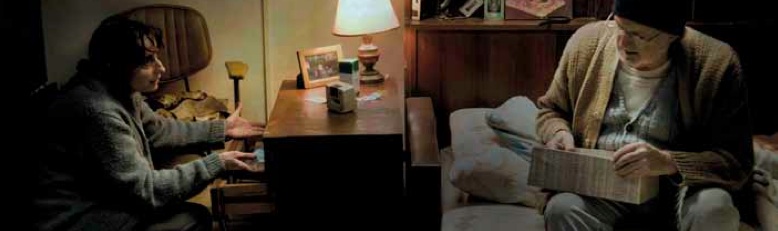
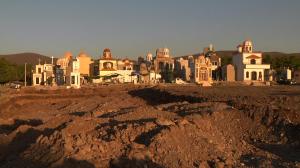
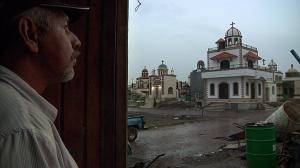
Ethereal, contemplative, and intuitively perceptive…this is one way to describe Natalia Almada’s documentaries, which not coincidentally, can also describe her passionate nature. To kick off my first of Meet Mexican Filmmakers interview series, I recently emailed the director of previous films, Al Otro Lado (05) and El General (Sundance 08) to talk about her most recent film, El Velador, a meditative, supremely shot, lyrical film about a Night Watchman who guards over a growing metropolis of a special graveyard, where bodies of drug-lords rest in extravagant mausoleums. The serenity of the piece clashes with the violence it represents, delivering a piercing poignancy. El Velador premiered in Cannes’ Directors Fortnight and is currently making the festival rounds. Look for it on POV in 2012
CC: Those pimped out mausoleums look like mini-condos! It makes for a striking visual. There’s a long shot, quite arresting, in which I can’t believe its not a little pueblo we are looking at but a village of dead people. Burying the dead is a big cultural tradition in Mexico. I’ve heard and read that drug-lords frequently give their victims’ widows’ some pesos to bury the body….
NA: Yes is it a kind of city of the dead. I think it is a mistake to conflate the mausoleums at this cemetery with Mexico’s traditions around death. Something different is happening at the cemetery which isn’t a reflection of Octavio Paz’ idea that Mexicans love death. To me it has to do with the reality that the dead are so young. It almost feels like death is a right of passage and the young people who visit their friends at the cemetery I am quite certain visit them in part as a way to embrace their own future. I would never say they are pimped out but I understand what you are getting it. At first they are pimped out and kitch, but over time I think they become much more than that. To me they are really expressions of desire. How does someone want to be remembered? And not only that, but we see how strong the desire to be remembered is, to not be forgotten. In that, to me, lies the humanity of this tragic violence which we are living.
CC: Your filmmaking decisions and your long-take shooting reflect an easy confidence. You edit and produced this film as well. With whom, if anyone, do you bounce off these types of creative decisions? How do you trust yourself?
NA: The beauty of making documentaries is that you have to improvise with reality. You have to be aware and attentive to respond to the sounds, the light, the place. The cemetery called for those long slow shots (either hand held or on a tripod). It was a place where you couldn’t really demand things to happen quickly, you just had to wait and be ready. I feel like the long shots capture that quality about the cemetery and the strange sense of time that exists there. There is a code of silence when it comes to violence and to drug trafficking. A talkative film would have gone against the grain of the place and all it represents. Of course I have my insecurities like everyone but in the end I do trust myself. With this project I would show early rushes to Rafael Ortega who is a very good cinematographer here in Mexico City. In the editing process I worked with Julien Devaux for about 6 weeks once I had the film at a rough cut phase and then I also relied on the feedback of Sam Pollard, Shannon Kennedy and Francis Alys. All three of them have such different sensibilities and backgrounds that their feedback was quite different and that pushed me to define my own ideas of how the film should be. I would also say that probably my closest collaborator is Alejandro de Icaza, my sound designer. Alejandro watches my rushes and rough cuts so that by the time we are ready to work on sound he completely understand what I’m trying to do and say with the film. We worked for about six or eight weeks to build a soundscape that would immerse the viewer in that place and evoke certain feelings.
CC: Once you start shooting how much room do you tend to allow for any unexpected incident that might reshape your initial vision?
NA: A lot. In fact it is all about the unexpected incident and reshaping ones vision. If you aren’t open to those things then how can you be watching the unpredictable world in which we live? And why make documentaries? It is different to have a very clear sense of direction and ideas – that’s very important otherwise you don’t know where to point the camera or how to frame much less do you know how to structure the footage into a film. But that does not mean being closed of to the unexpected or rigid about how you imagined something would be.
CC: Background: You recently moved back to Mexico. Why did you choose now to do so? Anything to do with creative inspiration or reason? Do you feel you ever left?
NA: I think some of us are just nomadic creatures. I was recently talking with a filmmaker friend exactly about that, do we ever really land? Perhaps we use film as a way to land. A kind of geography. I don’t know. But I came back to Mexico because I wanted to live in the country where I film. I love New York and have a wonderful community of filmmaker friends who I am still very close to but I felt it was really important to be here, to talk to the taxi drivers and feel the smells and sounds of life here as part of my everyday. That said I sometimes feel like I live in some strange place in between. There is a passage from Serge Daney’s Postcards from the Cinema which I really like which I think somehow describes this nomadic person’s relationship to film: “And then I clearly see why I have adopted cinema, so it could adopt me in return and could teach me to ceaselessly touch with the gaze that distance between myself and the place where the other begins”.
















 Chicana from Chicago
