Last weekend I was in Mexico City for the official launch of the 2014 Ambulante documentary tour. The roving film festival has an insanely impressive 35 venues through out most of the burroughs in El Districto Federal. It wanders around in Mexico City one more week until the 13th when the tour hits the road to its next stop in Guerrero. The tour will conclude May 4 in the magical land of Oaxaca and by then it will have traveled to 12 different states throughout Mexico presenting its diverse, international lineup of the latest documentary cinema.
Ambulante has 12 different programming sections including the popular music section, Sonidero, Dictator’s cut, devoted to human rights & freedom of speech, and Injerto, the art & cinema experimental section. Ambulante’s viscus however is Pulsos, where you’ll find the most recent, most original voices of the robust Mexican non fiction narrative. It is here that the world premiere of Death in Arizona, a futuristic documentary, as described by the director, Tin Dirdamal is being presented.
I first met Tin at the Los Angeles Latino International Film Festival with his opera prima, DeNadie which won the Audience Award at the 2006 Sundance Film Festival. He is by far one of the most curious, unpretentious, inspired minds I’ve ever met. We took a jaunt up to Coyoacan plaza, an ancient mecca of artisan vendors and merchants, for coffee at my favorite El Jarocho, tamales, and found a relatively quiet garden to have a conversation.
The story is quite personal, about a love lost and a self found, to say it broadly. Without giving away too much, the love in the film is also the producer and co-director Christina Haglund. I asked Tin about his creative process, his favorite Jodorowsky film, his experience at Sundance, and his philosophy on filmmaking and well, life. Check out our conversation and then the trailer to his film. He is truly a one-of-a-kind, thought-provoking, and perhaps the most brilliantly unassuming human being I’m happy to know. Now you meet him.
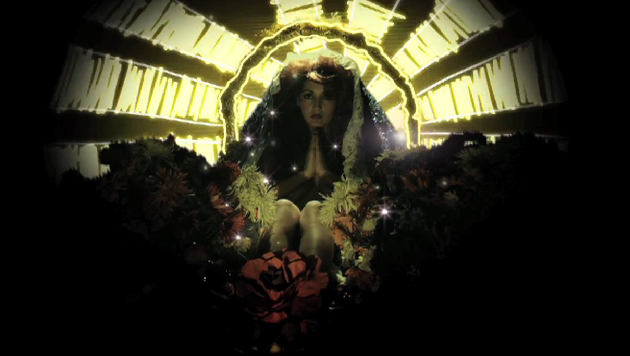
Here is a trailer of the film – that for me resonates as a journey culminating towards a flickering light and illumination at the end of a tunnel of heartbreaking solitude. The intimate, moody, futuristic and transcendent film, Death in Arizona.
REZETA written and directed by Mexican born but trans-nationally influenced Fernando Frias, was recognized with a Special Jury Award Prize at the 2014 Slamdance Film Festival which celebrated its 20th anniversary last week. It was the U.S. premiere of the film after its world premiere at the Morelia International Film Festival in 2012. The story is about an Albanian model named Rezeta (played by the naturally charming Rezeta Veliu) who flies in to Mexico City for a work stint and develops an unlikely relationship with a down to earth, blue collar guy who works construction on set and who doesn’t fall all over her like most men do. It’s an unexpectedly genuine, credible and revealing take on the opposites attract friendship romance, and one enjoyably surprising in its sympathetic and dimensional portrayal of a jet set beautiful model, who in many ways, her world savvy independent experience and maturity becomes much more of a threat to the men in her life than her looks. Here’s the trailer. Read on for my post Park City interview with Fernando – a talented up and coming voice to watch out for.
1. How was your Slamdance experience? What is something that people might not know about Slamdance?
Slamdance is fucking fantastic. It’s all about filmmaking at its purest form. Slamdance has a very unique stamp. They dare to program great work that defies convention and they help create communities around genuine filmmaking. They have kept loyal to their famous phrase: “For filmmakers by filmmakers” for 20 years now. There’s a lot going on during the festival and still all the staff are extremely friendly and have such great attitudes. People might not know that the festival has been around for that long and that they have discovered people like Christopher Nolan and Lena Dunham, among many other big names.
Film Still of Rezeta
2. What’s the next script you are working on?
It’s a story about a very particular Mexican kid around Queens. I had one earlier draft that I wrote for a class at school but when I came back to it, I found that it went in a very different direction that what I originally had in mind. The good thing is that after realizing that, I wrote the story in prose as a short story in the voice of my character and I had the great luck to be selected winner of the Bengala-UANL award (Nuevo León University). It’s a first edition contest open to all writers, journalist and filmmakers from Mexico and the objective of such a great contest is to find good ideas for scripts and help them throughout their developing stage. After I found out that I won, I got so excited that I completed a new draft in 2 weeks. I am currently revising it in 2 different workshops.
5. What kind of culture do you belong to?
I’d say I belong to the DIY culture but I don’t know how much will that do for an answer. I can tell you that I’m Mexican born and raised in DF with parents who came from opposites sides of town. I grew up traveling to unknown places because my mother worked for more than 25 years in Airlines, so we had standby tickets and we would go to the airport not really knowing where we were going too. It was cool because we could only fly on low season so I missed school and I wouldn’t know where we were heading until the very last minute… I guess this made an impact on me because all my work ends taking place around cultural differences…
6. What was the most inspiring thing you did or saw in Park City?
I have to say that winning the Jury award for best narrative film at Slamdance was a huge surprise and really exciting but I also had a blast snowboarding, something that is kind of new to me.
7. What other US Latino filmmaker have you recently discovered or follow?
I discovered Alejandro Fernandez from Chile. I really love his film To Kill A Man which played at Sundance and won a big award. At Slamdance I think I was the only Latino but I might be wrong. As for names, I have to say that this last year I saw two amazing movies from Chile and Brasil: Gloria by Sebastian Leilo and and Neighboring Sounds by Kleber Mendoça.
Fernando is pretty modest. He’s a Fulbright scholar in NY at Columbia, and his experimental documentary, Calentamiento Local (which means “Local Warming) won the Digital Prize at the Mexico City International Contemporary Film Festival known as FICCO in 2009, the penultimate year of the once IT festival. A highly lyrical, romantic capturing of the symbiotic, magnetic relationship of ethereal beaches and the sensual bodies who traipse and fall in love on them in Mexico. You can see the full film here. Fernando has also made some really cool artist portrait commercials for Converse.
Check out more of Fernando’s work on his vimeo channel
“I’m a compulsive filmmaker,” admits Eddie Muñiz the 33 year old California native who has 12 films under his belt.
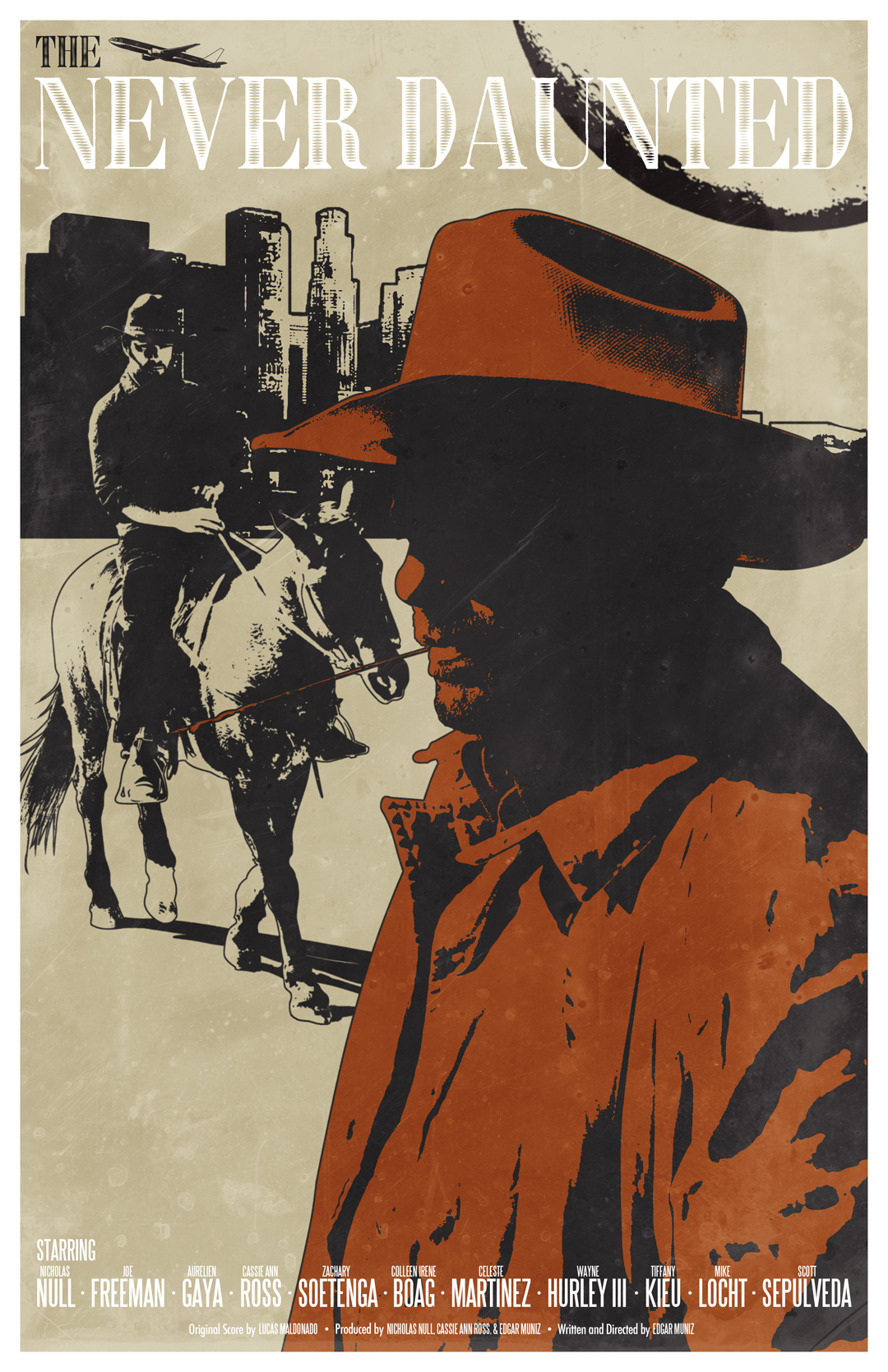
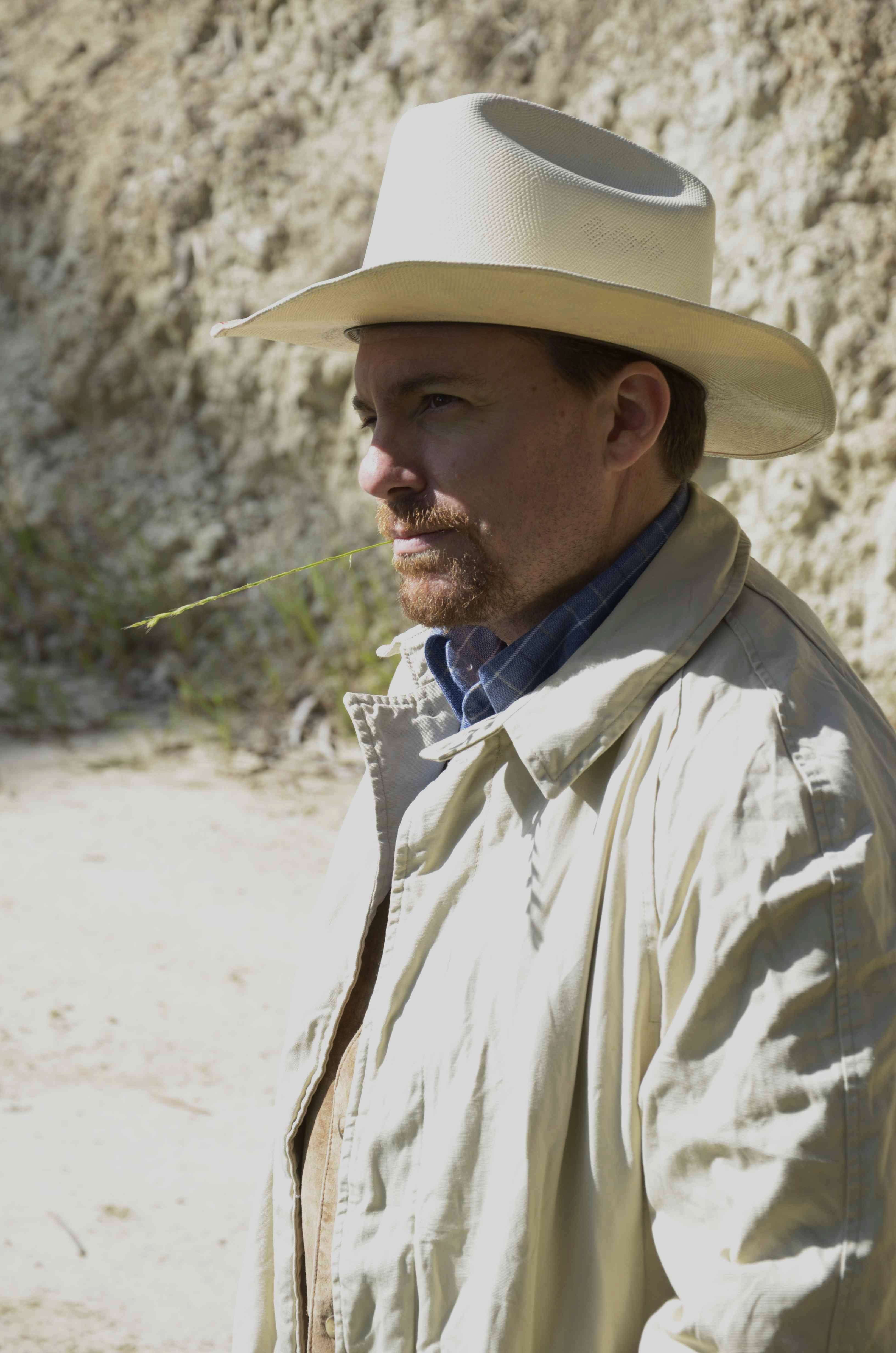
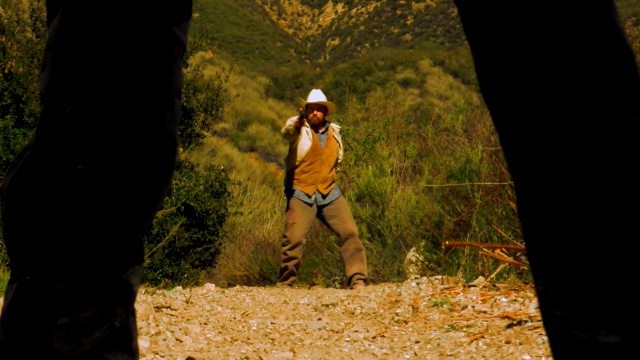
One of them is The Never Daunted, his 10th film. Not too long ago I saw it as a festival screener dvd and I vividly and immediately felt that rare exhilarating rush of discovery amid the dvd stacks of derivative story lines. The film is about a man who, unable to cope with his infertility and the monotony of a dead-end job, becomes withdrawn from his relationship and grows obsessed with a strange Western that comes on television late at night – which only he can see. The film’s captivating sincerity and epic male psyche exploration makes Muñiz not only a writer/director to follow, but one to actively support. He’s one of those creative manic types who are actively pursuing their art of storytelling without frills, on the fly and for the love. On the weekends and perhaps limited by budget but never held back by its raw, transcendent humanity. In talking to him you can tell he is completely immersed in and relishes the craft. So much he hasn’t had the bandwith to fully explore the mine of distribution outlets. Thanks to our brave new world of Direct to Fan online distribution, we can finally check out some of his films, in particular the singular The Never Daunted. Now available to stream on Seed & Spark. Once you get hooked you’ll want to see more of his work, some of which is available on his website. Read on, get to know this cool cat and get a taste of his sensibility and work ethic and tell me if he’s not inspiring.
1. Putting together one film no matter how modest the budget requires a lot of collaboration, an insane amount of tenacity and organization. What is it about your creative process and style that has allowed you to be so prolific?
You’re right. Making a film does require a lot of collaboration, and I think there are either filmmakers who embrace this aspect of filmmaking or they don’t. I completely rely on it, but that’s also because I work with a lot of like-minded people and really talented, smart people. I think that the only real trick I have is that I won’t start with a script. The only reason I’m able to complete so many projects and get them done so quickly is because I’ll take care of the scheduling first, which I think is the hardest part, and then force myself to write something under pressure before the day I have to shoot. I never really start with an idea or theme in mind; I’ll start with a person I think is interesting or that I love being around. I know that sounds weird, but so many of the films I’ve done started from just hanging out with a friend or with new people. After hanging out and getting a sense of their personalities and of their views, I always think it’s interesting to take a version of that person and place him or her in different scenarios that I later come up with. This approach not only opens up several narrative possibilities for me, but it also makes it so that I can make the film and keep discovering new things as I’m going along. The part that I play in this is almost nonexistent. I just have to make sure to listen very carefully, work within my means, prepare for any setbacks or last-minute changes and finally remain objective enough to shape a film out of all of it. It is a compulsion in that filmmaking is a priority for me, and I’m constantly thinking about it. I never stop and it drives a lot of my friends and family crazy. I would always rather film than go to bars or to parties or to lunch or to dinner…unless I can film when I’m there!
2. The dialogue feels so natural in your films.
There’ve only been a few times that I’ll have specific lines I want my actors to hit. Sometimes I’ll be married to these lines because I overheard someone say it a certain way, but all of the credit here should really go to my actors. I’ll know the emotion I want from the scene, I’ll know the tone, and specific expository points, but that’s it, and that’s only the structure or the blueprint. They’ll improvise off my sides, and sometimes this will be a page with four or five lines on it – between two or three people – and what would’ve been a 1-minute scene on the page, they’ll turn into a 3 to 4 min. scene full of twists and turns, with sharp, understated, and insightful subtext, sometimes strange, sometimes bizarre, sometimes hilarious. But always unexpected, and that’s the point.
3. In The Never Daunted, there is such a genuine vulnerability not often found in male driven films. You said you were raised by your mom and aunts, do you think this helped you get in touch with this modern masculinity side? You show such a profound and illuminating notion of the pitfalls of having to live up to a macho masculine, cowboy, protector and provider role, it really expands my perception and elicits my empathy for the male perspective.
That’s really cool of you to say! Because my mom was always working, I’d spend a lot of my days with my aunts and my grandmother…. I have two uncles that I admire very much, but I don’t think I ever measured up to that Mexican macho male thing, nor did I ever really care to. For what it’s worth, I grew up with more of a feminine perspective – because of my aunts and my mothers – and this kind of allowed me to see how proud men can be, how delusional, overbearing, fearful, and how selfish we can be as well. And I do love to look at this in my films, and I’m often guilty of all of this male posturing too. Although I understand the culture of cool cinema and even appreciate some of those films – the cowboys, the gangsters, the hitmen movies- I can’t help but see that same macho bullshit from my childhood being perpetuated over and over again in our culture. It’s also a constant reminder that I’m none of those things and that maybe I should be feeling like I ought to be. I think men are much more interesting than that though, much more complex and multidimensional. But a variation in movies is great – don’t get me wrong. Nevertheless, if there’s a story about a bank robber being chased by the cops, and he’s forced to pull a man and his little boy out of their car, and speeds off, I’d rather see the story about the man having to explain to his boy what just happened.
4. You mentioned you’ve gotten feedback from Guy Maddin and Monte Hellman, have they inspired your approach and aesthetic? Who else contemporary filmmakers do you draw from and connect?
Guy Maddin and Monte Hellman were the only two that took the time to respond, and they were also the two that I was desperately hoping would respond, so I did make more of an effort with them. I do love movies that are very postmodern and abstract and these two guys are still making very interesting and provocative work. Guy Maddin continues to find new ways to tell stories and I can’t passively watch any of his movies. They require my complete attention and that’s what cinema should be, I think. With Monte Hellman’s Road to Nowhere, I had the experience where I had to keep watching the movie over and over again so I can decide whether or not I liked it. And Road to Nowhere was a movie about movies, which is something that still interests me, as indulgent as it might sound, and this meta-fictional element comes up in not only The Never Daunted, but in other movies I’ve completed since then. And I love all types of films and filmmakers, but as far as the ones that make me excited about not only watching their movies but going out and making more of my own, I’d say Hong Sang Soo, Carlos Reygadas, Lynne Ramsay, Agnes Varda, Gus Van Sant, Miranda July, Alfonso Cuaron, Bela Tarr, Tsai Ming-Liang, and Mary Harron are maybe my favorites right now. And obviously, this list is always changing .
5. Does is it get easier with each film you make?
Working with actors and non-actors has gotten easier for me. It’s a different language I use with both, but I’ve learned to appreciate this aspect of filmmaking more than any other. It’s the part where I get to work with them as people, but the discussions aren’t always about choices or behavior or the psychology of a character. A lot of times it’s them telling me personal stories and me sharing personal stories with them as well, which is why I feel that the friendships I’ve made through filmmaking have been so rewarding and amazing to me. There’s no chit-chat or formalities; there’s no time for that. So a person will go from being an acquaintance to a deep personal friend you feel you’ve known for a long time, and this will happen simply because they’re willing to bring their personal experiences and specific views to the table. As cheesy as it sounds, it can feel like the purest expression of the self and art. Learning that a lot of them are willing to do this, or maybe because they trust me, has given me much more confidence when directing a scene, so it feels much easier. All the other technical stuff is a pain in the ass, but I learn it because I have to and because I didn’t go to film school.
6. What do you personally get out of making a film from the creation and observation of the human condition?
I guess it’s the same thing that I get out of teaching, but to be honest, teaching is much more rewarding. Both require a lot of self-reflection and discipline, but in teaching, the results are right there and you can actually see the light bulbs go on in front of you. With filmmaking, it can be very painful and I can think that I’m addressing several questions that are important to me, but once the film is done, I’m sometimes left with even more questions and concerns than before. The greatest pleasure that I derive from making a film is having connected with people in the process. At the end of a film or at the end of a screening, I often feel like a fraud and like I didn’t complete what I set out to do. I start wondering what I even want to gain from all of it, and I’ll just watch other people’s films and wonder, “Who the hell do I think I am, making my own movies, or assuming that people even care?”. But the one constant pleasure is my relationships with my friends. The fact that I built friendships in the process and that they trusted me and that we completed something together. Then, inevitably, I’ll get excited about another project and I’ll bury myself in another opportunity to work with them.
7. In your words, what is Haley, your latest film about?
The Haley Project has a couple of stories running parallel throughout, but at the center is the story about a girl named Haley, who we only see in the beginning of the film and in a flashback at the end. It’s loosely based on my friend Laura Benson, who actually plays Haley, but it’s also about other people in my life who I’m always in awe of. I have a few friends who are always telling me stories about these exotic places that they’ve visited and these crazy adventures that they’ve had. My friend Nick Null, who plays Murray in The Never Daunted, has a lot of stories like this too. But I thought it would be interesting to look at this kind of person, but from the perspective of all the supporting characters in each of their stories. How are these supporting characters, who don’t get to float on from place to place, affected by having met someone with a seemingly more interesting life? So I had two guys, played by Seth Johansson and Brian Randles, become competitive and mean with each other over their love for Haley, without Haley even there anymore. And in the same movie I have a romantic Frenchman who arrives in LA, in hopes of finding love. And I love this idea because it’s usually the other way around: the starry-eyed, American Francophile visits Paris in search of love.
Check out the trailer for The Never Daunted below and click here to watch the film on Seed & Spark.
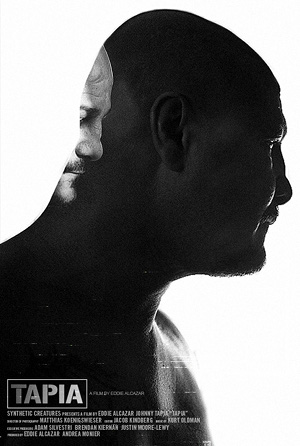
The brief and tumultuous life of prizefighter Johnny Tapia, who passed away last year at the age of 45, elicits overwhelming empathy and incredible awe. The documentary directed by Eddie Alcazar, intimately reveals the immense emotional agony and pain he suffered in his life but also shows that for the series of extreme, rock bottom lows of misfortune, Johnny always jumped back up to reach equally extreme heights of success and triumph, like winning five boxing championships, meeting the love of his life, Teresa Tapia, with whom he has a young son, and becoming a beloved hero to his hometown Albuquerque, as well as around the world. Johnny grew up without a father, and his mother was the world to him. At the tender age of 8, his mother was viciously murdered – a traumatic catalyst for what became the pang of his tortured existence. The documentary, which is world premiering in competition at the Los Angeles Film Festival, is powerfully narrated through Johnny’s own words. Alcazar adds a touch of style and a gorgeous cinematic framework. The film opens with Johnny’s slightly raspy Burqueño slanged voice over young Johnny Jr. punching the air in the New Mexico desert plains and celestial horizon captured in wide panoramic vista at the magic hour, painting a metaphysical element to the legacy he leaves.
Eddie was working on a dramatic feature about Johnny but after he passed, Eddie took the research footage and made it into this documentary film. The dramatic feature, which he is co-writing with Bettina Gilois, (Glory Days, The Hurricane) who co-wrote Johnny’s biography, Mi Vida Loca is readying for a fall shoot in Albuquerque. 50 Cent is an executive producer on the documentary and is also onboard for the dramatic version.
Teresa & Johnny Jr. at the world premiere screening
The documentary is gripping and utterly poignant. Hearing his inner, unwavering fury takes on a dark possession. His voice and soul feel weary but he is unrelenting against the demons he waged battle with every single day of his life. Seeing him from his early days rising up through the boxing world first as the “Baby-faced Assassin” to his later years as the lines of anguish take over his face and his body becomes heavily drawn with symbolic tattoos, his killer instinct clashing with his vulnerability. At the world premiere screening, his wife Teresa and son, Johnny Jr. came out to introduce the film but did not return after the screening, as much as everyone wanted to see them. I wasn’t surprised to learn that it was too overwhelming for them and Eddie declined to do a Q&A out of respect, feeling that what’s important in the doc is Johnny, and Teresa is the only person who could talk about and for him. He told me that a couple days later when I got the opportunity to interview him. I learned the ABQ native has some Bolivian lineage and found out more about both Tapia films. Here’s a redacted transcription of our talk:
How did you know Johnny, how far did you too go back?
I never actually met him until I knew I wanted to do a movie two years ago. Back then it was about creating the narrative version of his life so I sold him on my idea of doing one year of his life in his youth and he was totally up for it. Then I got the rights and we basically just started following him around at that point. As I was following him around I was writing the script. It was all about research and compiling all this archival footage.
Relating to him.
A lot of it is because he embodies the Albuquerque culture, which is a little bit different. Having somebody that stands out from ABQ is always kind of special and he definitely kept it real from his upbringing so I think that’s why everybody in ABQ has that strong connection with him and each other. It’s distinct. The community always looked up to Johnny. There is no professional football or baseball team and he was one of the first professional athletes who came out of that area. More than seven thousand people came out to his funeral.
Kick ass image by Sam Flores.
How did you manage to contrast the darkness of his life with all the other light and positivity he also experienced?
It was tough, which was I never intended to do the documentary. I wanted to concentrate on one year of his life because there is so much to his whole life, and it was a really really hard process confining everything that he’s been through so I was experimenting and discovering it as I went. Bu there are as many highs as there is lows and his life in particular is filled with many from each side of the spectrum. As far as my experience with him I never saw too much of the dark side other than when I interviewed him. I mean personally it was just fun, just me and him playing around. He was always active, jumping on the trampoline, playing ping pong, when we’d go out to eat he’d shake everybody’s hand. He really couldn’t stay in one place for too long.
Doc vs narrative, what do you intend to do with the dramatic feature you weren’t able to do with the documentary
The documentary was about trying to hone in on what he said and having him say it directly to the audience. I didn’t want to interrupt anything too much. We did a little bit of stylistic stuff intertwined to show a little bit of the spiritual side, you know like his connection to his son, and his connection to nature. But I wanted to keep it pretty loose on that, only scratching the surface of what I’m going to do in the feature. The feature is going to definitely be a little dreamy and spiritual. When I say spiritual, there’s this thing that I recognized when I would talk to Johnny, I was always trying to pin point how his mind works – and he feels like his mother is right next to him. So that plays a large role in the actual film; the presence of his mother, always around and also that connection with his youth. In the feature as its written now we pop back and forth in his life from Johnny at 27 years old, and when he was 8 years old when he lost his mother. Its always trying to establish the connection of where he finds all this anger but also power, passion and energy that was super important to have. That drives every action in his life, I think, from that point forward, and I’ve had conversations with people who agree he became stunted at that age. He still felt like an 8 year old when I’d talk to him, he had a child like spirit, insight. He was not that formally educated, he was street smart, he improvised with whatever was around him. He had that excitement, wonder and would be happy to see someone looking to give him love, and made people happy. He was always surprised at any good news.
In a way its hard to imagine him as anything but a boxer, literally pounding and fighting his demons…
He was really hyper, boxing was a natural thing for him, it was a natural release of energy, it was actually perfect, getting into the ring, always training is what kept him alive. It’s hard to think of him as anything else, maybe some other kind of athlete.
Curtis Jackson at the second screening; “It was so interesting to see someone, 3 weeks before they actually passed, reflect on their entire life.”
How did 50 Cent come on board?
It all came through Lou DiBella, (executive producer) the boxing promoter and tv/film producer. When we finished the film we started showing a handful of people to get people’s thoughts on it. Lou was actually head of the HBO sports division who helped put together the infamous Johnny Tapia/Danny Romero fight back in the day so he had that connection. He showed the movie to 50 cent with who he has a partnership… 50 felt all these similar things and really connected with what Johnny went through (they both suffered the loss of their mother around the same age). Also he grew up in similar crazy circumstances. Its weird how you connect the dots….
Tell me about your producer Andrea Monier
Yes, Andrea Monier has been pivotal. We are friends, she’s also an actress but an amazing producer. We worked on an Everlast spot first and she did an amazing job. To do a documentary you have to have a super strong producer because there is a lot of work like archiving footage, etc. I couldn’t have done it without her.
And this amazing artwork by Akira Beard
Describe the driving creative process in writing the narrative
(Losing his mother) that’s the biggest thing. All his issues stem from that; drugs, psychological conditions, we explore a lot of him meeting and falling in love with Teresa. It’s a big part of the film; the love story, but then that also connects to the mother. There’s a lot of similarities between Teresa and his mother as far as the expectations Johnny had, he almost felt like Teresa was his mother, she replaced her in a way.Feeling like a baby with your mother, a lot of the treatment you get from your mother at that age. I come from a single parent as well and it helped me a lot to realize how much Johnny valued his mother. Like, I don’t’ know where I would be without my mother, those thoughts always trickled through my head. Johnny was super proud to have Teresa next to him as his woman. I don’t think he ever constricted her in any way. She was more the person who kept him in place, she was the one who handled the business and dealt with the promoters and he looked up to her in terms of what direction to take. He trusted her opinion above all.
What do you think she saw in him?
She likes to joke that she was young and stupid but I know there’s a lot more to it. She has all the traits that he may have needed help on, and likewise, he showed her the excitement, spontaneity that she was looking for in life, and that quality of never expecting or knowing where the day is going to go was interesting and that’s what she gravitated to.
It must have been hard to watch him fight all the time
Eddie Alcazar
Well, the professional aspect is almost better than the day to day reality in ABQ. There are worse street fights, guns involved. Every time I’d go to a party there were gunshots. I wanted to show this world that is not familiar, Breaking Bad does it a little bit but its not as dark or raw as it really is. (ABQ) is a beautiful place but it’s a weird thing; there’s this subculture, an underbelly. It has a big native American population, Spaniards, Mexicans, I don’t know what leads to so much conflict but maybe the biggest thing I can relate to is there’s not too much to do. So people just …they are bored and act crazy sometimes.
Big thanks to Eddie for the interview. LA folks I urge you to go see Tapia tomorrow night, Saturday at 9:50pm at the Regal at LA Live. Get tickets here. Details on the big ABQ screening forthcoming. Also be sure to queue it up on GoWatchit and like it on Facebook to support it and to get updates on where it lands with its theatrical/television/VOD release.
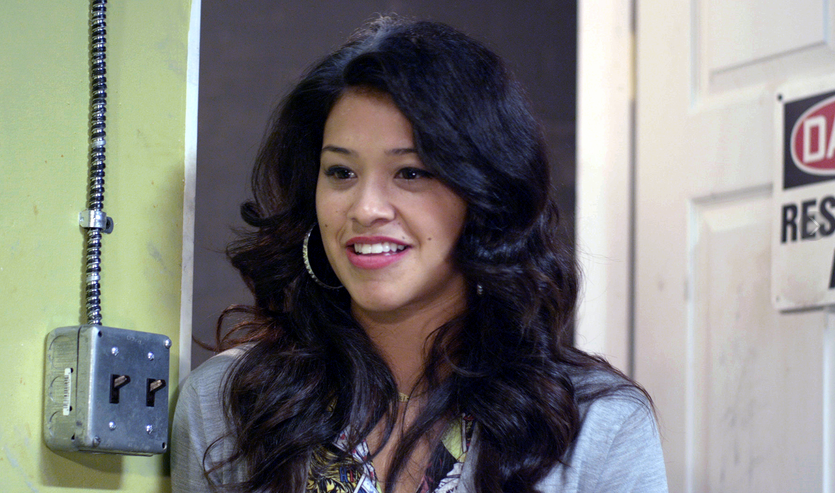
Unveiling at the Brooklyn Film Festival this weekend is the world premiere of SLEEPING WITH THE FISHES, the directorial debut of former stand up comic and actor, Nicole Gomez Fisher. Gina Rodriguez plays the hilariously real and spirited star of the movie, Alexis Fish, a role she booked right as Filly Brown started making waves at film festivals last year. A great cast of women join her including Tony Award winning stage and film actor, Priscilla Lopez who plays her mother, and Ana Ortiz (Ugly Betty) who is enjoyably pert, as Gina’s sister. Sleeping with the Fishes is also the first feature produced independently by Courtney Andrialis, a rising producer with many more exciting projects in development (she started her career as assistant to Bingham Ray in 2003). I gotta say, I just love the female power of this film! Check out the just- released trailer of the film, and read the interview I did where I check in with Nicole, a week before she releases her first baby (film) into the world.
How did your Latino/Jewish background and childhood inform your creative expression as you started conceiving of your first feature?
I was born and raised in Brooklyn…a true Brooklynite at heart. My mother is Puerto Rican and my father is of Jewish descent, an interesting mix that has clearly influenced my life and my writing. I don’t necessarily identify with one over the other…both sides make up who I am. I knew when starting SLEEPING WITH THE FISHES that my background and my point of view wasn’t a filmmaker’s voice heard too often. I wanted to express myself and tell a story about a young woman trying to find herself in a world that she felt excluded from…not only from the outside world, but from her immediate as well.
What’s your connection with Gina? How was it to work with her in comedy? She’s got great timing and tons of energy.
I did not know Gina Rodriguez before making SLEEPING WITH THE FISHES. We met through our casting directors Sig DeMiguel and Steve Vincent. Her agent read the script and loved it, passed it on to her and BOOM! A meeting was set. We actually met in the bathroom of Rosa Mexicana and it was love at first sight! Gina was incredibly energetic, bright, enthusiastic and funny! I was excited to work with someone “fresh”. I knew before we even ordered that we would work well together. She was just coming off the Sundance premiere for “Filly Brown”. It was an exciting time for her and it showed. She’s a natural when it comes to comedy, so she made directing incredibly easy. Gina’s choices were spot on and she just understood the timing of comedy. It takes a real pro to know when to “go there” and when to pull back and she did. I would say try this and within seconds she would make a slight adjustment and go. If she thought something didn’t work or wanted to try another shot, we went with it. Collaborating with her was such fun. She made directing my first feature a pleasure.
The tale of a 30something whose life has not gone as expected and must deal with the pressure of returning to a childhood like dynamic at home with the parents, is so relatable and universal, but it can also be quite personal and individual, how personal is this screen variation to you? What did you want to convey that you had not typically seen in this popular canon?
It’s personal. The story itself is loosely based on my family, but there are many aspects to it that are a mix of truth and fiction. For my lead, Alexis Fish (played by Gina Rodriguez), her coming back home after years of living a lie all in the name of “saving face” is paralyzing for her. As you mentioned, her resilience to stay true to herself has been an exhausting journey. Having to deal with the loss of a loved one while trying to pick up the pieces of your life only makes it that much harder to overcome. I wanted to take a classic story and make it new. Yes, she is returning home to the pressures of family, but in Alexis’ case, returning home to her mother is what is so daunting. You have two strong women who don’t see eye-to-eye: one whose pride identifies her, the other whose pride is crushed as she struggles to find her identity.
I love that you chose to do your first film a comedy. There doesn’t seem to be as many first films as comedies tackled in the indie world, and even less from a female written and directed perspective. What are your influences in this vein? Also, what is it about our passionate Latino culture in particular you think that makes family dysfunction so melodramatic and ripe for comedy?
I was a stand up comic for years and I love writing comedy. I’m a huge fan of films that blend comedy and drama. It’s what life is made of—the ying and the yang. Some of the funniest moments in life are also the saddest. When you can stop and laugh at a time when hope seems dim, that is life changing. Laughter has pulled me through some really hard times. …Where there is passion, there is drama. From my experience, Latinos are very strong-minded, very passionate and very vocal about what we believe. The combination makes for some terrific melodrama. It’s who we are—they go hand in hand.
Who were some key collaborators and mentors for you during the launching of your first feature? Tells us about Courtney as producer – she’s from HD net films, how did you two bond about the making of this film?
Some of the key collaborators were my husband Joe, my friend and fellow screenwriter A.J. Meyers, my casting directors, my father and of course, my producer Courtney Andrialis. Courtney and I have built a solid relationship around SLEEPING WITH THE FISHES. I met her via our casting directors. She’s young, eager and has a ton of knowledge. She was an integral part of the making the film. She brought on an amazing team that held me up throughout the entire process, which for a first time director is so integral. There were a lot of learning curves for me. Courtney did a great job of keeping me together and supporting me throughout the entire process.
As you navigate the wild west of distribution, how are you feeling and where are your expectations with getting the film out there? Are you going to be exploring the newly paved roads of direct distribution models or pursuing the traditional theatrical and window route?
It’s great that now filmmakers have so many ways to reach their audience. We are excited for our world premiere at the Brooklyn Film Festival on June 1st. After that, we’ll keep our fingers crossed and see!
Best of luck with the film and have a blast at your premiere, Nik!
Iris Almaraz is the writer/director of the delirious, incandescent and quirky film, Delusions of Grandeur, about a naive, grunge-y chicana, Lucy who moves out of her dad’s place in Oakland, and out of her medicated dazed and confused mess, to seize her independence across the bridge when she moves in with a hopeless romantic tranny named Ilusion in the tenderloin of San Francisco. Pining for a mother who ditched her as a kid, Lucy launches into the stratosphere of self-discovery in a search for any kind of true love. The performances of the diverse cast are so well inhabited and played with relish, the SF 90’s vibe is perfectly nostalgic and channels the city’s storied free love and psychedelia. In essence, the theme is of womanhood tackled in a uniquely expansive manner, as seen through such a kaleidoscopic lens touching on the lights of sexuality, motherhood, wifey, gender variant roles, Madonna, all in the centrifuge of romance. Terribly sweet without the sugary sap coating, the film premiered at last summer’s NY Latino International Film Festival and is charming the independent film festival circuit across the nation. The film is next screening at Seattle True Independent Film Festival Thursday, May 9 at 8pm and will screen here in LA, Saturday, May 18 at 8pm at the Casa 010 in Boyle Heights as part of the Reel Rasquache Film Festival. I was already smitten with the film but now that I’ve had a chance to talk with the filmmaker, I’m an even bigger fan and appreciator of her easy yet bold candor which is felt in her work. Check the trailer then read on for the realz scoop
Familia and barrio experience totally shape who we become and how we relate our stories. Me, I was born in Chicago’s mexican barrio and then my parents ‘moved us on up’ so to speak, to the neat, white suburbs where I was suddenly the only brown girl and my life became a back and forth between embracing and resisting my ethnicity. How did your own coming of age inform part of Delusions of Grandeur? Also what’s your relationship/experience with San Francisco? I love what a great sense of place the film has with its location as character.
Funny thing is that I had the hood to ‘burbs experience too, only mine was from stints in juvenile hall to Christian summer camp, so by the time I found myself in San Francisco I had a double dose of Catholic guilt and Protestant repression. But when I got to that city the dark cloud that surrounded me EXPLODED!!! I was a 22 yr. old virgin with a job as a phone sex operator. My imagination ran amuck and everyday was like a post adolescent children’s book of “Dick & Jane”. Anyway, you can imagine me trying to explain my college S&M films to my parents – “So how do you know those girls Iris…?” – “oh just from around…”
Woody Allen’s “Manhattan” played a big influence on establishing a city as a character itself. San Francisco has so much personality that has not been captured cinematically that it is a shame. I felt I owed SF a big Thank You.
I really appreciate the multi-perspectives in the film on the fluidity of what defines a woman. Why and what other recurring themes/narratives do you find yourself consistently exploring and attracted to as a result of your background and experiences?
I’m very fascinated with the traditionally Mexican “Virgin/Whore” dichotomy. My own woman hood is in constant motion . Even now as a mother of two I find the realities of a monogamous relationship that now has “Dora the Explorer” as the sound track, to be humorous, adventurous and worth discussion. I think I may just be an emotional exhibitionist. That’s usually too much for people to handle but for some reason when I put it on film it seems to resonate with people who are still stuck in a shell. They find hope in knowing that they are not the only freaks out there.
How did you go about getting this from script to production? Did you try to go the traditional route as the system would dictate? Or did you always know it was going to be the hard DIY way? What kind of support from orgs/friends/grants were you able to garner and recommend?
Intitially, I had a feature script that would have required a much larger budget. There was interest in the script but not with me attached as the director. I knew I couldn’t continue with creating dead end shorts and a feature was the only way this chubby chicana from the East Side was gonna get anyone to pay attention. The first thing I did was sit down at the kitchen table with my dad and ask “Hey Dad you know that Quinceañera I never had, and the wedding I never asked for… well I need that money now.” After that, other key members of the cast and crew pulled their family and friend resources together . We also used online crowd funding to complete post-production . Our saving grace, however, was having amazingly talented friends who committed their souls to the project. As a young film maker you have to get used to asking for more even when you have been told “no” a million times before and make sure you keep good company. People will rally behind you if you believe in you.
I see your work as totally distinct and a truly original American Latino walk of life. For me it is so encouraging to see there is now more than ever, a steady incoming wave of amazing diverse storytelling from our multi-culti pockets. Who are some emerging narrative Latino filmmakers/peers you are excited about, that we should all track?
The hopeless romantic, Illusion, played by the talented Salvador Benavides
This is such a tough question to answer for all the right reasons. I am continuously blown away by all the diverse work right now. It will be unjust for me to list of a few when I will inevitably leave out so many. That being said, there are two filmmakers whose work has moved and inspired me personally . The first is Aurora Guerrero who has paved a path that young film makers can look to as a blue print for how to do it right. Not only is she a talented unique voice but she also has an innate comprehension for how the business works. The second is Cristina Ibarra who is an amazing talent that is going to blow people away with her vision and well crafted stories.
I love how honest your film feels. Did you ever feel pressure that you had to talk specifically to a Latino audience, or conversely you ever felt like you had to cut something to avoid alienating any non-Latino audience in your film – if only to reach a ‘broader’ audience.
Absolutly not. In general I feel like an outsider in most established social groups, so I try to remain true to what my instinct tells me to do. My priority is and always will be to make films about people. That’s hard enough to figure out besides trying to appease others always tangles me up in someone else’s web.
How has your experience been with the Latino Film Festivals you’ve been invited to with your film? How do they rank and operated? What do you think they do best and what do you wish they did better?
We have been so blessed this year with the opportunity to meet the most amazing people at festivals. New York Latino was the first Latino festival we played in and what can I say, there is nothing like New Yorkers. They can be gruff and thuggy on the outside yet sweet and intellectuals on the inside. The festival takes great risk in programming and finding new talent. Austin was incredible because the people of Austin are so down to earth yet out there. It was a perfect match for our film. Chicago Latino was the unexpected surprise in the bunch. Well organized, elegant and classy. I have to admit I was initially intimidated by the other film makers from Latin America who were the cream of the crop. But the audience reassured me that I was in the right place. It seemed as if they had been waiting a long time for a film like ours to come along.The festivals were all amazing at welcoming out-of-towners, but if I were to throw a penny in a wishing well I guess I would say it would be nice if more marketers and distributors would attend the festivals so we could figure out how to get the product to the people.
Leana Chavez
Both!! I had to have been a little, or very, delusional to think we could pull of this film with as little as we had. And I can’t help but feel like life is a dreary place if you don’t have a little bit of magic to make you believe that anything is possible.
What are you working on next?
My next project is “La Puta”, (what-ya gonna do, right? ) The story is set in a mythical dessert border town that nobody can remember which side of the border it was on. But they all remember “La Puta”, the town whore who lactates a healing nectar from her breast and heals a town desperately trying not to drown in the sea of sand that surrounds them.
~Love it! Muchisimas gracias mujer! All y’all Angelenos better come to see Delusions of Grandeur and meet Iris in person Saturday, May 18. Buy tickets here.
Above is a link to the talk I did about David Riker’s film, The Girl, with Maria Hinojosa, the sinewy voiced, pioneering, accomplished and mega inspiring Latina journalist on her show Latino USA on NPR. I highly urge you to see the film if it is playing near you. Check theater listings here here.
I’ve only recently started doing these interview snippet appearances. Speaking about the merits and voices of films is something I believe I do brilliantly and passionately. As much as I cringe when reviewing myself in these clips, I know it is imperative for me to do so in order to assess, improve and carve out an indispensable and attractive persona so I get to play film advocate on these “soundbyte” traditional broadband outlets going forward.
One of my biggest notes to self is I need to recognize the context in which the interview is coming from and perhaps tailor my spiel in advance. Whether it’s recognizing that on Univision, more time will be spent asking me about the late Banda singer Jenni Rivera, whose untimely death caused a huge posthumous popularity surge now being timed to the movie release of Filly Brown, rather than talking about an unknown art house Cannes film – Or recognizing the lens and take of say Latino USA, which is a smart, Salon like a grassroots social, cultural and political voice.
Some notes to self:
1. Prepare short, snappy sentences! Let them ask the questions.
2. Accentuate! Turn it up on TV with makeup and poise, on radio go for heightened upbeat voice and demeanor.
3. Prepare for the outlet!
Perhaps the biggest take away for me is to arm myself for the challenge of addressing the convergence of Politics and Film. I was ready to discuss and deconstruct the rich themes of plot and characters in The Girl from a film programming POV. Having listened to some of Latino USA’s previous shows online, I should have been more aware and prepared in dissecting the film’s narrative from a political perspective. Now that I see this interview clip indexed as one part of the channel’s immigration reform series on the site, I understand the ‘editing’ that took place to suit the program needs. It sounded like Maria wanted to tackle it from the ‘friendly coyote’ angle, and in my naively grasping on to the overarching universal storyline of finding your motherhood, I did not engage as fully to catalyze those discussions. Lesson learned.
Any other constructive criticism? Come on, tell me. I have hard thick skin.
Inquiring minds want to know, what has the Peruvian-American multi-media artist and filmmaker of the radical film Sleep Dealer been up to since he broke through at the 2008 Sundance Film Festival. I had a chance to catch up with Alex and find out what’s shaking.
Sleep Dealer had been percolating through development for a few years when it participated in the 2001 Sundance Institute Screenwriters lab. It premiered in the festival’s US Dramatic Competition in 2008 where it was bestowed with the Waldo Screenwriting Award for Alex and his co-writer David Riker. The ambitious and thoughtful genre bender (eco/romance/sci-fi/adventure/socio-political thriller), was a uniquely original feature debut which earned him lots of buzz including a spot on Variety’s Ten Directors to Watch. On the heels of all the Sundance momentum, Alex was courted around town for various projects, mostly speculative script work (aka free labor). One of the projects he became attached to write and direct was a film based on the Wired article “La Vida Robot,” then being produced by Salma Hayek and John Wells. Meanwhile, Sleep Dealer was released by Maya Entertainment in April 2009. Unfortunately, Maya’s theatrical releases struggled to make much profit (the company quietly shuttered last year to dissolve its debt). Sleep Dealer averaged 2k in its 18 booked theaters NY/LA Opening Weekend engagement. My opinion? Lack of a strong and savvy marketing campaign along with Maya’s model of booking the film at its out of the way fringe theater markets hurt the film’s shot at targeting the audience it eventually found elsewhere. And where it did find a cultish nerd-like audience was in the educational space. Alex has traveled to over 50 campuses and continues to do so in order to discuss and engage with the complex layers and themes the film generates – a testament to the heavily research based scientific, sociological and immigration alchemy of the film. Let’s check in, shall we? {redacted transcription of our recorded conversation}.
What are some of the exciting things you’ve worked on immediately after Sleep Dealer?
David Riker and I developed a TV series. It’s called “Blink!” It’s about a woman who suffers a strange accident, loses her eyesight, and is given digital retinas, a technology that is currently being developed. Shortly after she starts to see again, she realizes something is terribly wrong – her head is transmitting. You can see what she sees through a live video feed. She doesn’t know if her eyes are malfunctioning, if she’s been ‘hacked,’ etc. The show follows Blink as she tries to unravel what’s inside her head and the possibility that she is part of a conspiracy that might even be altering her reality. We still have the material and are looking for a partner for it, we’ve had different partners along the way.
One of the more surprising developments for me was an ongoing collaboration with the community of activists working around the cause of immigration. The National Day Laborer Organizing Network became aware of my work through Sleep Dealer. They are really active working with day laborers in this grassroots way, but they also have a unique cultural strategy. They happened to be in touch with Manu Chao, the legendary and popular World music artist, who in his work sings about the experience of migration. They put me in touch with him and we produced a video in Arizona. We did the same thing with Ana Tijoux, a Latin Hip Hop artist, and we are dialoging with other artists like Zack de Rocha and La Santa Cecilia, a local LA group Latino music mashup group. It’s been deeply fulfilling not going through agencies but rather activists that are committed to the same values that I am committed to. So that kind of has been my reality; partly working with these activist groups on these cultural projects, partly shopping around ideas in this system like the Sci-Fi TV series, and partly supporting Sleep Dealers’s after life.
You also work with other filmmakers on an ongoing basis, talk about your collective:
I’ve been working with other filmmakers for the past 14 years through a small distribution company called SubCine, like subliminal, subliminated. The idea behind the name is that experimental films, documentaries and risky fiction films are already shut out of the mainstream film culture, so then if you are making that kind of work from the Latino perspective its yet another level of marginalization. Its like we are the outsiders of the outsiders. It’s an exciting place to be, to think, imagine and attack from. We are a small collective of filmmakers like myself, Jim Mendiola Gregorio Rocha, Jesse Lerner, Cristina Ibarra, Natalia Almada, Dolissa Medina. A lot of us were making our films in the 90s and selling our films individually. We decided that instead of selling them individually, to compile a catalog together. From one day to the next, a distributor was born. We have a warehouse that keeps the films, does all the fulfillment and billing so we don’t have to lick the stamps anymore. Most traditional distributors pay filmmakers 40% minus expenses. We pay 70% with no expenses taken out of that. We are a very slender operation but set up to make the sales and get the money to the filmmakers. Right now we have almost 50 films in the catalog and over 20 filmmakers that we work with. I manage that on a month to month basis as one of my many other side projects. It’s been super fulfilling because its getting the films seen. They are sold to only a little segment; the libraries, universities and colleges to be used in classroom. Those institutions will pay $300 more or less for a DVD because they are using it in the institutional context. Then that work is seen by young people hungry to learn, whose ideas about the world and ideas about film are being shaped, so its a win-win-win.
That’s an interesting model, you think there is room for more of these kind of distribution platforms for Latino filmmakers?
We were inspired by New Day Films, a social issue documentary distribution collective. It’s a lot of the same thought; Lets not work alone, lets work together. If you sell your film maybe the person who bought it would want to buy my film. It’s like this collective spirit of a distributor that’s owned by the filmmakers. The educational market doesn’t sound glamorous, but it’s absolutely essential for students to see the wide variety of films and it gets to them when their brains are soft and squishy and malleable. It’s an influential moment to reach that audience. And they still pay – librarians still care about getting a licensed copy of a film for their collection and are willing to pay for it. In a day and age when nobody seems to get paid, this market is a unique space to be.
With all these side projects and day to day busy-ness and constant fellow filmmaker collaboration and stimulation how do you concentrate on developing your own projects and tell us what personal project are you focusing on now?
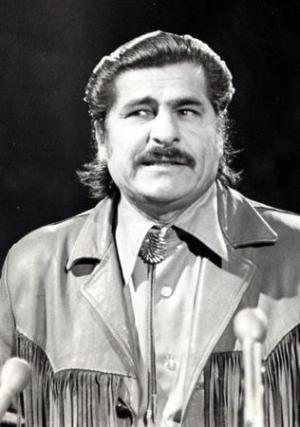
Reies Lopez Tijerina
I have a curious mind and active imagination, which is a curse and a blessing. Definitely over the years I have had many ideas and I try to do everything I just mentioned plus develop my own material. About a year ago I got interested in the story of a legendary Chicano activist – somebody who should be as well known as Martin Luther King, Malcolm X or Cesar Chavez but who is not. His name is Reies López Tijerina. He led an armed movement in New Mexico to reclaim part of the land for the original Mexican families that had settled there before it was the United States – the land that was stolen after the war with Mexico. Tijerina is a fascinating character and there are parts of his story that are like a Quentin Tarantino film. Like he would wear a suit in the desert while armed, trying to arrest police officers….it has that kind of great genre and humor in it, but it also taps into extraordinary realities and histories about The Southwest which have, for the most part, been forgotten.
How much does the general public know about this man?
I think the general public knows close to nothing. People who study Chicano history would run into his story but not everybody even in that category…We live in a strange age where there are 53 million Latinos in this country and yet if you ask, ‘Who are some great Latino figures in U.S. history?’ most folks can’t name five. Whether it’s the result of a concerted effort or not, the history is missing. I mean, you look at Arizona and they are banning books about Chicano history, you start to think maybe it is concerted. Either way, you don’t get 50 million people here overnight. There’s a long history that has been erased and its part of the duty of artists who define themselves as Latino to rescue parts of that history because we deserve to know it. Tijerina is one of those incendiary, wild and fantastic stories and there should be many films about it and yet it is exactly the opposite. He’s nearly completely forgotten and he’s not the only one, there is a whole series of these kind of figures that have been swept under the rug. It’s a problem and also an opportunity because it is definitely time now to think of ways that are visually exciting to tell these stories. When I talk about history, it’s not to put someone to sleep, its not a Ken Burns treatment. This is life and death, sex, people fighting over billions of dollars that are at stake, the future of the country – these are high stakes, thrilling stories going back to days of the Conquest up until today.
How would you go about rescuing these histories and making it modern, relevant and accessible in order to capture people’s interest in unknown historical figures?
All the way through, if you look at any chapter in Latino history, and as I would define it, it starts with the conquest when the Spanish meet Native Americans and start to kill each other and enslave each other and make babies together and create a whole new race -is there anything more Shakespearean? More dramatic? No. Obviously Mel Gibson took a stab at that time period with Apocalpyto, which was wildly successful commercially. Why? Because he used a kind of genre approach. It’s not a historical film, it’s an action film. Now I didn’t love the film but I can respect that it’s a piece of pop culture that is also telling a part of history. Do I love its point of view? No. But I respect the craft. And so starting with that going up to, anywhere you drop the needle on Latino history there is something equally dramatic going on..…In the US Mexico war countless moments and characters and stories could be told through the genre of a heightened western that would be incredible. Quentin Tarantino has just shown that films that are set in historical contexts but that us the energy and aesthetics of genre filmmaking can be wildly successful. So the approach needs to be creative, elevated, the approach needs to push the envelope. You can mine these histories for all kinds of fantastic narratives. And, of course, the future can be mined as well.
Damn, I just found out about this Alice Bag event and it reminded me I never uploaded this video interview I took of her last year. Tonight 8pm at the Echo Park Film Center, Alice Bag is going to take us back to her notorious punk riot days. Nothing like a first person account with a trove of personal footage of those exciting times. This woman lived and was at the epicenter of this insanely wild and revolutionary expression and lifestyle so she’s got a ton of unbelievable stories to share. I highly recommend her book, Violence Girl, from East LA Rage to Hollywood Stage. According to the event description she’s going to talk about the time her band played at the Troubador and her boyfriend and sometime drummer for her band, Nickey Beat called Tom Waits an asshole inciting a full out brawl that got them kicked out. She’s also going to share about one of the many times the LAPD busted a punk show for no good reason but to quell the menacing expression of punk.
It was so cool to meet and talk with Alice at last year’s NALIP. Here is a 6 minute clip of our convo in which we talk about what the term Chicana means now, how strange it is to live in Arizona, and how she views today’s punk scene.
Since 2003, the Morelia Film Festival has been nurturing filmmakers and audiences, and has rooted its niche as a discovery festival of up and coming Mexican filmmakers. At the same time it’s earned a prestigious reputation for its expertly curated sidebars that would make the most hard core cinephile drool, and for the Festival’s unparalleled attention and hospitality to their guests, Invitados. Each year the Festival invites renowned international cineastes to participate in showing their films for the first time in Mexico, in turn enticing them to experience the vibrant scene of Mexican Cinema in the most charming historic city of Morelia, Michoacán.
To celebrate its 10th year anniversary the powerhouse boutique festival has put together an epic program consisting of over 2oo hand picked films as part of special screenings, tributes and homages to compliment its more solid than ever Mexican Competition made up of 25 documentaries, 45 shorts, 9 narrative features, along with 12 films from the hosting state of Michoacán. Among the special guests this year, English filmmaker Sally Potter, Iranian filmmaker Abbas Kiarostami, and Chicano filmmaker Gregory Nava.
I thank the tirelessly dynamic Director of the Festival, Daniela Michel for talking with me about the Festival’s programming then and now. {redacted and translated}
Daniela Michel, Festival Director, Festival Internacional de Cine de Morelia (FICM)
C: From the return of Regyadas with his highly anticipated Post-Tenebras Lux, who was one of three Mexican directors awarded a prize at Cannes (along with Fogo by documentary and fiction director, Yulene Olaizola, and Después de Lucía by Michel Franco which is Mexico’s foreign language Oscar entry), to Locarno Film Festival’s Carte Blanche spotlight of Mexican works in progress, 2012 has been a stellar year for Mexican films. The Festival is showing nine narrative features in competition, seven of them world premieres by first time filmmakers, reflecting this building breakthrough momentum…
D: Yes, we’re thrilled that Cannes was a big year for Mexican film. We were honored to have Artistic director, Thierry Frémaux as a guest at the Festival last year. He’s truly been supportive of Mexican films and we are profoundly thankful. When we first started the festival there just weren’t enough features films to warrant a solid competition program. Our mission was to build a program made up of the next generation of filmmakers and support them. We weren’t interested in showing already established Mexican filmmakers. In 2007 we had our first narrative feature length competition and we were grateful for having such a prominent jury comprised of Trevor Groth, Director of Programming at Sundance Film Festival, Peter Scarlet, at that time Artistic Director of Tribeca Film Festival and Cecilia Suarez, a talented Mexican actress. They bestowed the Best Film award to Nicolás Pereda’s first film, Where are their Stories. Pereda has gone on to be a prolific and singular talent. We are screening his 7th film out of competition, The Greatest Hits.
C: Documentaries are an integral part of the festival, this year the festival is showing a record breaking 25 documentaries in competition. Typically the Mexican documentary genre has generally fit into the ethnographic study type. How has this changed over the years?
D: We are seeing more intimate and personal journey type of stories that are breaking with that notion that there is only that kind of Mexican documentary. There are looks of forgotten history like Flor en Otomi by Luisa Riley about a young female guerilla fighter who disappeared following a violent raid, or Convict Patient by Alejandro Solar Luna about a man who attempted to assassinate the president in 1970 and is now homeless and mentally unstable. There are more experimental films, more personal portraits like Carriere, 250 Meters by Juan Carlos Rulfo and Natalia Gil about the inspiring writer and Bunuel collaborator Jean-Claude Carriere, Diario a Tres Voces by Otilia Portillo Padua, a compelling multigenerational look of three women in relationship to their age, Miradas Multiples (La Maquina Loca) by Emilio Maille which is about the great cinematographer Gabriel Figueroa. Definitely, Mexican documentary is expanding its horizons.
C: Last year you had Luis Valdez as an honored guest and screened his seminal Chicano film, Zoot Suit. This year you are honoring Gregory Nava with a screening of El Norte and Mi Familia. What prompted this recognition of Chicano filmmakers at the festival?
Luis Valdez at FICM 2011
D: We’ve always had a section called Cine Sin Fronteras (Cinema without Borders) curated by Jesse Lerner an academic expert on border films. While we had not, up until last year, recognized such well known chicano figures like Luis Valdez we’ve shown the work of lesser known, independent filmmakers. We felt it was overdue and important to introduce chicano films to mexico. Not necessarily a border crossing story but the perspective of Mexicans living in the United States. Certainly Luis Valdez deserved a homage here in Mexico. Unfortunately chicano cinema is not well known in Mexico. We are very happy that Gregory Nava who we highly respect, will be joining us this year.
C: The Michoacán section. The festival recognizes the talent of filmmakers from the hosting state with its separate competition section. How do you make sure this section does not fly under the radar or get lost in the shuffle since it competes with high profile national and international films.
D: Well, first of all the caliber has to be there and I think that since the festival’s inception, the filmmaking scene in Michoacán has been greatly stimulated as there’s been more production, filmmaking has become more accessible and over the past ten years we’ve seen the production value and quality getting better and better. Not only indigenous filmmakers which was very important to us like Dante Cerano and Pavel Rodriguez but filmmakers who were born and raised there and may live elsewhere. We make an effort to give these films the highest visibility by giving them the best time slots so that the public can easily find and discover.
C: Given the Festival’s success, there must be a desire and pressure to continue to expand and grow. How do you navigate the appeal of complimenting the festival with an increasing number of programs yet work to keep the mission’s integrity?
D: Interest in participating in the festival has certainly grown but we can’t lose focus that our main goal is to support the young mexican filmmakers so we select only the best work out there, always. Its important not to have any kind of institutional or political ties that might compromise that mission. One of the sections I most love which we created in 2008, based on the invaluable recommendation of Bertrand Tavernier who has an impressive knowledge of film, is called Imaginary Mexico. This section showcases work connected to Mexico imagined by foreign filmmakers abroad, revealing their perception of Mexico. It’s a rich, eye opening trove. For instance Mexico as seen by Hollywood. This year we are showing a number of Sam Peckinpah’s films (The Wild Bunch, among others). Two years ago we had the extraordinary gift of having Quentin Tarantino present Sergio Corbucci’s spaghetti westerns about the Mexican Revolution. These films had been previously banned in Mexico for its scathing portrayal of the revolution….
It’s a rich diaspora. The Festival supports the future of Mexican Cinema with the best work by the next generation of filmmakers just starting out. It celebrates Mexico of the past, through classics and retrospectives like this year’s homage to cinematographer Jose Ortiz Ramos born in the state of Michoacan, and the other, films about Mexico from outside of Mexico. We attack it on all fronts. This intersection of borders, indigenous films made by indigenous filmmakers who have a permanent space in our festival, film students and history.
C: About the Morelia audience
Carlos Reygadas and Bela Tarr, BFFs
There is a big population of university students which combined with the city’s strong tradition of historical culture, we felt there was potential there. It wasn’t easy at first. I remember programming a Woody Allen film against a block of unknown shorts. We realized that once the tickets for the Woody Allen movie sold out, people who weren’t able to get in, naturally found their way into the shorts program. We are indeed grateful for that audience. Obviously showing Bela Tarr’s epic eight hour Satantango last year would not have worked had we programmed it the first year. We owe a lot of this audience development to our extraordinary colleague and dear friend Joaquin Rodriguez (founding programmer who passed away earlier this year). He worked year round developing that audience. His film appreciation classes there would have space for twenty, and five times the amount of people would show up. This edition is dedicated to him for his consummate professionalism, passion and brilliance.
C: We are a few days away from the 10th edition. How are you feeling now and do you remember how you felt ten years ago at this point?
D: It was one of the most stressful moments in my life because I had no idea how it was going to work. It was terrifying. Today I feel very blessed to have this incredible team because the work is put in by all of us and it would be impossible without the dedicated group assembled who I admire and respect very much. …Every year there is stress. But like they say “If you stop feeling the nerves then quit”. I’m a huge cinephile so I love sharing this gift of film with new audiences. Its endless, there is an endless vault of films to be re-discovered and that’s what I love best that these films return to life. You learn a lot about life seeing film.
Follow the Festival @FICM. To see the competition lineup click here, and to download this year’s catalogue click here.
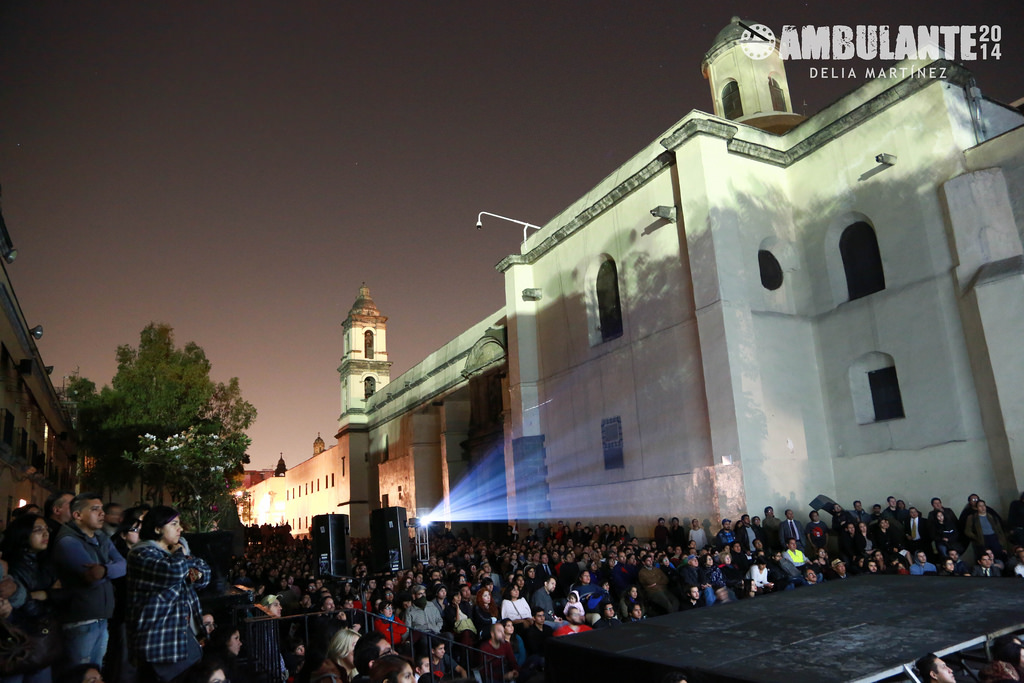 Last weekend I was in Mexico City for the official launch of the 2014 Ambulante documentary tour. The roving film festival has an insanely impressive 35 venues through out most of the burroughs in El Districto Federal. It wanders around in Mexico City one more week until the 13th when the tour hits the road to its next stop in Guerrero. The tour will conclude May 4 in the magical land of Oaxaca and by then it will have traveled to 12 different states throughout Mexico presenting its diverse, international lineup of the latest documentary cinema.
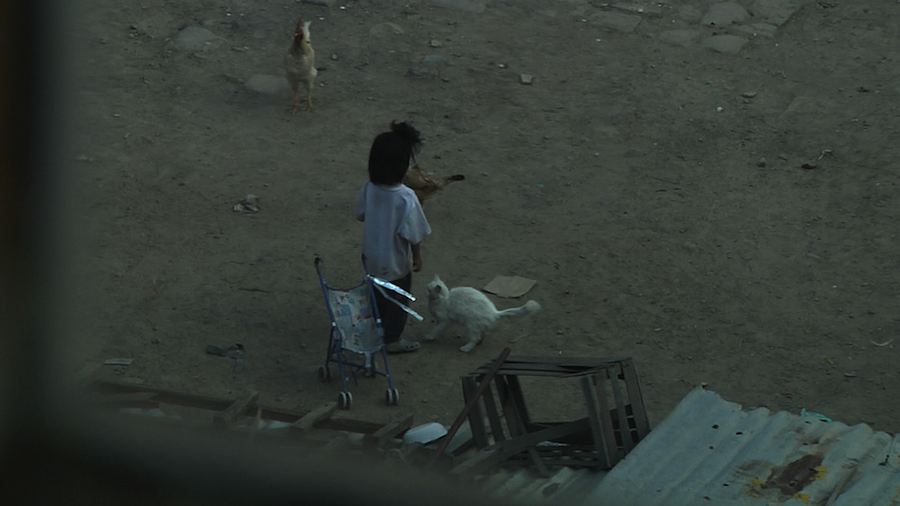 I first met Tin at the Los Angeles Latino International Film Festival with his opera prima, DeNadie which won the Audience Award at the 2006 Sundance Film Festival. He is by far one of the most curious, unpretentious, inspired minds I’ve ever met. We took a jaunt up to Coyoacan plaza, an ancient mecca of artisan vendors and merchants, for coffee at my favorite El Jarocho, tamales, and found a relatively quiet garden to have a conversation.
 The story is quite personal, about a love lost and a self found, to say it broadly. Without giving away too much, the love in the film is also the producer and co-director Christina Haglund. I asked Tin about his creative process, his favorite Jodorowsky film, his experience at Sundance, and his philosophy on filmmaking and well, life. Check out our conversation and then the trailer to his film. He is truly a one-of-a-kind, thought-provoking, and perhaps the most brilliantly unassuming human being I’m happy to know. Now you meet him.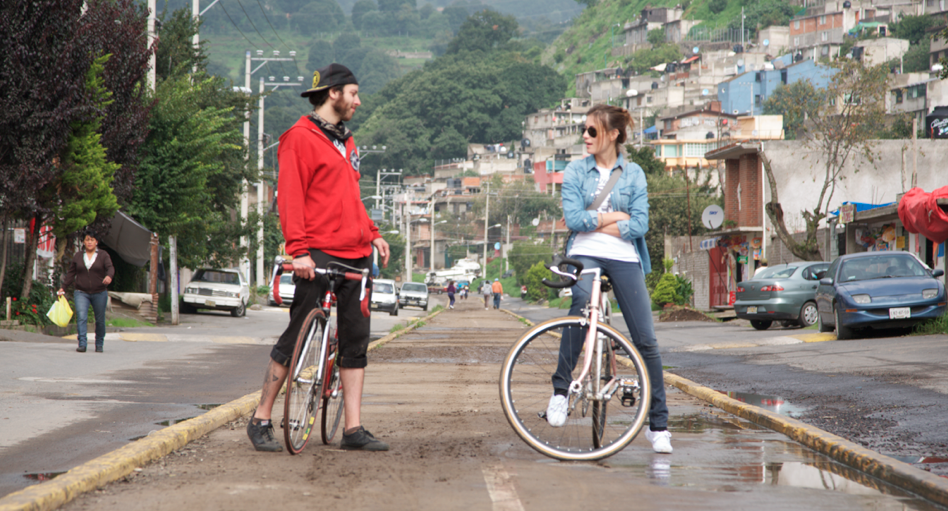

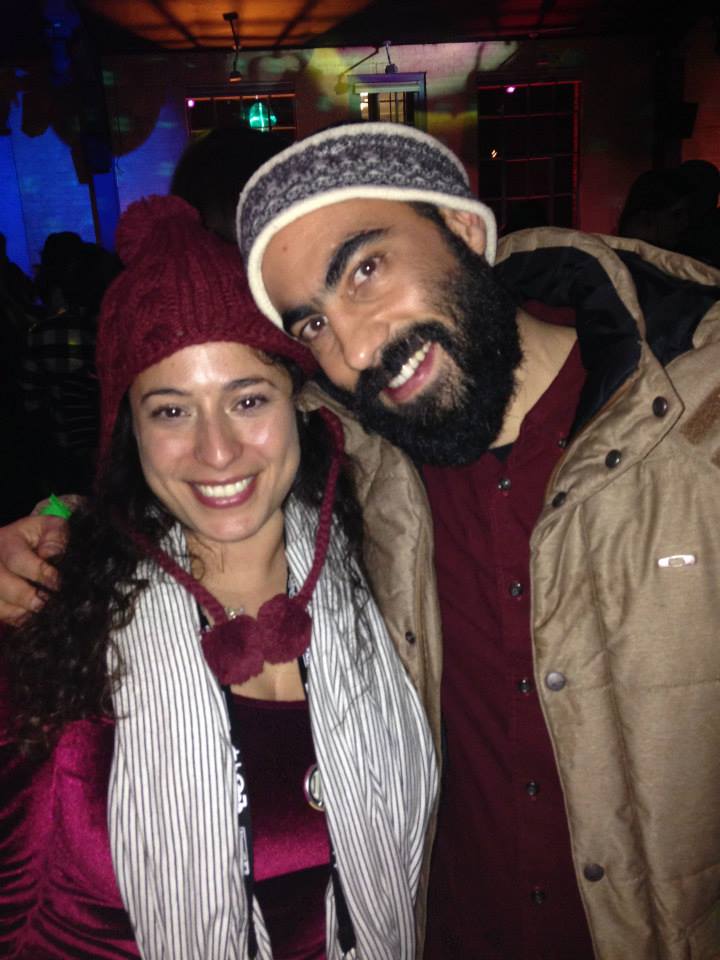
















 Chicana from Chicago