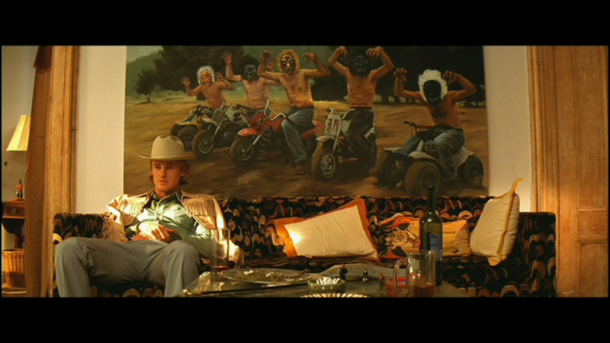
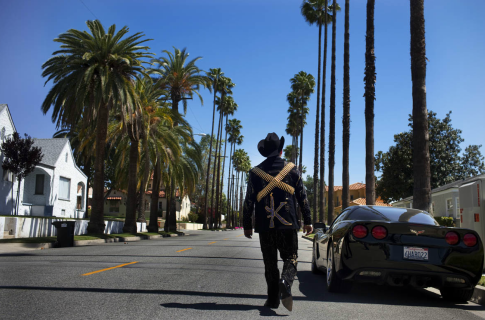
From Calderon’s Aggressively Mediocre/Mentally Challenged/Fantasy Island work
Sundance Institute has just announced the 12 projects selected to participate in the five day winter cycle of the screenwriters lab, an immersive workshop where esteemed creative advisors challenge the filmmakers’ veracity in achieving their vision, and in many cases make them go through the proverbial ringer. Although this batch of filmmakers do not get a chance to enjoy the warm hiking weather of the Sundance resort in June, these folks have an extra perk as they are invited to swing by the film festival a few days afterwards, the perfect reinvigorating finish to the intense story workshop.
From the Royal Tenenbaums
One of the projects selected is ZEUS from Mexican multi-media artist and ‘provacateur’ Miguel Calderon. Perhaps his most ubiquitous work outside the insular art circuit is the 1998 exhibit titled, “Aggressively Mediocre/Mentally Challenged/Fantasy Island”. Pieces from this collection were made cult classic by Wes Anderson’s inclusion in his Royal Tenenbaums film. Read more about Calderon in this article. He also created a fictitious grueling futbol match out of 100 hours of real footage between Brazil and Mexico – in which Mexico kicks Brazil’s ass. Calderon then broadcast in some bars in Brazil. This imaginary win is all the more prankster given the two country’s fierce rivalry (Brazil usually kicks Mexico’s ass). This was shown in 2004’s Sao Paolo’s Bienale. Sounds like my kind of artist. I’m looking forward to tracking this up and coming audiovisual talent. Zeus marks his first foray into feature films. The logline copied from the press release: “Sporadically employed and still living with his mother, Joel finds his only joy in falconry in the flatlands outside Mexico City, until an encounter with a down-to-earth secretary forces him to face reality.” Calderon was recommended by Fernando Eimbcke who developed his script for Lake Tahoe at the 2006 Screenwriters Lab. Although there is no submission fee required for international projects wanting to submit their screenplays for consideration, unless you fall into the region of focus (Central America, North Africa, Southeast Asia and Eastern Europe) it is required to send a letter of inquiry or be referred by Sundance family. Among other Mexican projects that have gone through the labs in the past few years and I am eager to see come to fruition soon is HELI by Amat Escalante whose SANGRE and LOS BASTARDOS played Cannes Film Festival and I DREAM IN ANOTHER LANGUAGE by Ernesto Contreras who made BLUE EYELIDS which garnered a Special Jury Award at the 2008 Sundance Film Festival in the World Cinema Dramatic Competition category.
Filmmaker Sebastian Silva – Chilean based in NYC
In other Spanish-language programming recently announced as part of the four additional feature films screening at Sundance, Chilean filmmaker Sebastian Silva will now have not one but two films screen at the festival. In addition to Crystal Fairy screening in World Cinema Competition, Magic Magic will screen in Midnight section. Michael Cera stars in both of Silva’s films but he speaks Spanish in only Magic Magic. Perhaps it was the second one they shot together this past year judging by the confident Cera deftly picking up the distinct Chilean vernacular melody. But its Juno Temple who plays the insomniac Alicia at the center of Magic Magic, an tensely unhinging film. This is her third film in the 2013 Festival. Temple is also in the films, Afternoon Delight and Lovelace. Also making an appearance in the film who we haven’t seen in a while is Catalina Sandino Moreno who was last at Sundance with Maria Full of Grace in 2004. Sebastian Silva’s hottie brother, Agustin Silva and gorgeous Emily Browning round out this good looking young cast. Sebastian joins the uber-exclusive Sundance 2fer club- a director with two films selected at the same edition of the Festival. British documentarian Lucy Walker had two films play in the festival, both in competition back in 2010 , COUNTDOWN TO ZERO and WASTELAND, and before that I’m not sure but I think that Alex Gibney has also had two documentaries at the same Festival. TBD
Juno Temple – 2013 Sundance Film Festival ‘It Girl”
Robert Rodriguez’s now-infamous $7,000 guinea pig budget and 16mm shot first feature, El Mariachi is screening as part of The Sundance Collection at UCLA, twenty years after it screened at the 1993 Sundance Film Festival. The Sundance Collection at UCLA is an important preservation program of Sundance Institute managed by Senior Programmer John Nein that actively offers and encourages all festival alumni the opportunity to store their films properly. Rodriguez’s down and dirty video action flick put the San Antonio native on the map and became the precursor to Desperado, the glossier, sexier Banderas/Hayek version which came about after Rodriguez was offered a considerably higher budget to flex and show off his intuitive action flair. If you have not seen El Mariachi, I highly recommend it. Watch it right now on Crackle for free.
Before I peace out on this post, I want to take a moment to address a couple comments on my Indiewire repost, “WTF is Latino at the 2013 Sundance Film Festival”. In it I break down the Latino elements of the Festival program – I lump together American Latino oriented films with films from Chile. Someone commented on my including Chile in a Latino post. “South American films are not Latino films…” first-name only Michael wrote. First of all I want to thank him for saying as much. I would have loved to hear his source and explanation. This is the point of my blog; trying to re-appropriate our representation and design new and accurate terminology of and for ourselves. The blanket category Latino is a very diluted term and one I’ve heard with Hispanic interchangeably. What IS the difference between Latin and South America? I want to focus my blog on primarily films from a bi-cultural, bi-literate American Latino community, which for me means US inhabitants who come from, or have ancestry from Mexico, Central, South America, Cuba and Puerto Rico. Does Latino accurately represent this group? Do you as the audience understand the reference I mean when I use Latino? Admittedly, these are two different things.
Glad you asked. Now that the entire programming slate has been announced for the 2013 edition of the Sundance Film Festival, let’s take a look at the representation of Latinos in the broadest, most diverse sense, because that is what that ill-defined lump category encompasses. {Full disclosure: I work as a Programming Associate for the Festival. These are not reviews but an insider breaking-it-down preview}
Gael Garcia Bernal in Who is Dayani Cristal?
At first glance the Latino representation may not seem obvious. Nor may it seem as strong as the films and filmmakers from the African-American and LGBT community representing, or the record breaking number of female directors’ – each group highly visible by their nature. We may not have a Mosquita y Mari or Filly Brown, two fiction films, which broke out of the festival this past year, but we do have two hugely relevant and urgent documentaries exploring the effects of a bi-cultural U.S. & Mexico social fabric, NARCO CULTURA which explores the phenomenal music and social culture being shaped and perpetuated by the influence of Mexico’s violent drug cartels, and WHO IS DAYANI CRISTAL? an innovative doc-fiction hybrid produced by Gael Garcia Bernal that will hopefully re-divert much needed attention back to the US/Mexico border. By the way, Who is Dayani Cristal? screens in the high profile DAY ONE slot.
What’s Latino anyway?
I personally embrace the responsibility of changing the conversation as to what constitutes representing American Latinos. First, by focusing on both the above-the- line-talent (filmmaker or actor) AND storyline/subject. The second part is highlighting the second, third, fourth and so-on generations of filmmakers. What about the filmmakers in the festival like Kyle Patrick Alvarez (C.O.G), Liz W. Garcia (The Lifeguard) and Eduardo Sanchez (S-VHS horror anthology and co-director of the infamous Blair Witch Project)? I don’t know these filmmakers personally so I can’t speak to how they might view their cultural identities and how it informs their work, if at all. But I do believe it is worth pointing out and feeling good about these last names being out there as part of the mainstream fabric. It is similar to how Robert Rodriguez does not identify himself as a Mexican-American yet his last name has been key to driving the younger Latino generation in feeling a proud connection as an American and not just “dash” American.
Chile is still hot
There are three films from Chilean filmmakers. In unprecedented fashion – because that’s how Sundance likes to roll- there is a repeat of last year with two in competition, EL FUTURO by Alicia Scherson (mostly taking place in Italy) and CRYSTAL FAIRY by Sebastian Silva, an alumnus who broke out in 2009 with LA NANA. In the section Spotlight aka “Movies we love and don’t care if they’ve traveled the festival circuit”, is Pablo Larrain’s NO starring Gael Garcia Bernal. Chilean cinema is hot and king of engrossing character-driven fare. What we are seeing is a boom on two fronts; an invigorating new generation of provocateurs (Marialy Rivas’s Young & Wild comes to mind) and a slightly older generation of equally exciting filmmakers who continue to sustain their careers with their distinct voice (like Pablo Larrain along with Andres Wood).
So now lets dive in and look at the list. Loglines copied from official press release – BOLD ITALICS are my comments.
US DRAMATIC COMPETITION
The lovely and talented Boricua actress Melonie Diaz
Fruitvale / U.S.A. (Director and screenwriter: Ryan Coogler) — The true story of Oscar, a 22-year-old Bay Area resident who crosses paths with friends, enemies, family and strangers on the last day of 2008. Cast: Michael B. Jordan, Octavia Spencer, Melonie Diaz, Ahna O’Reilly, Kevin Durand, Chad Michael Murray.
Puerto-Rican Diaz delivers a fiercely moving performance embodying the girlfriend of Oscar Grant who was with him that fateful day. Diaz is no stranger to the festival. She’s previously been at the festival with four films including seminal indie American Latino story, RAISING VICTOR VARGAS 2002 and comedies like HAMLET 2 20008. Why homegirl hasn’t gotten more props for her mad acting skills I don’t know, but this girl is wildly talented and Fruitvale showcases her dramatic chops.
Narco Cultura / U.S.A. (Director: Shaul Schwarz) — An examination of Mexican drug cartels’ influence in pop culture on both sides of the border as experienced by an LA narcocorrido singer dreaming of stardom and a Juarez crime scene investigator on the front line of Mexico’s Drug War.
Absolutely arresting photography that works in giving weight to the violent images the public has become numb from seeing. I predict some of my hard core brown and proud friends might focus and hence diminish this film based on the fact that this bi-cultural, Mexican-American subject is made by non-Latino filmmakers. It could be argued as a valid point. When it comes to documentaries a legit question to make when evaluating is “What makes THIS person the right one to tackle THIS subject? What is their connection?” Let’s watch it to find out, then give consideration to what other docs are currently out there on this same timely topic made by Latinos, and without bias regard their depth and artistic merit.
WORLD CINEMA DRAMATIC COMPETITION
Michael Cera on the right in Sebastian’s latest, Crystal Fairy
Crystal Fairy / Chile (Director and screenwriter: Sebastián Silva) — Jamie invites a stranger to join a road trip to Chile. The woman’s free and esoteric nature clashes with Jamie’s acidic, self-absorbed personality as they head into the desert for a Mescaline-fueled psychedelic trip. Cast: Michael Cera, Gabby Hoffmann, Juan Andrés Silva, José Miguel Silva, Agustín Silva. World Premiere. DAY ONE FILM
This marks Sebastian’s third appearance at the festival following LA NANA and GATOS VIEJOS. Remember what I said about character driven? Silva excels at getting at spilling out the insides of his protagonists.
Manuela Martelli in El Futuro
The Future / Chile, Germany, Italy, Spain (Director and screenwriter: Alicia Scherson) — When their parents die, Bianca starts to smoke and Tomas is still a virgin. The orphans explore the dangerous streets of adulthood until Bianca finds Maciste, a retired Mr. Universe, and enters his dark mansion in search of a future. Cast: Manuela Martelli, Rutger Hauer, Luigi Ciardo, Nicolas Vaporidis, Alessandro Giallocosta. World Premiere
Scherson’s last film, TURISTAS screened at various film festivals including the Los Angeles Film Festival in 2009. Shot in another country and in a different language, The Future continues the filmmaker’s incisive capturing of the strong female led journey.
WORLD CINEMA DOCUMENTARY COMPETITION
Who is Dayani Cristal? / United Kingdom (Director: Marc Silver) — An anonymous body in the Arizona desert sparks the beginning of a real-life human drama. The search for its identity leads us across a continent to seek out the people left behind and the meaning of a mysterious tattoo. World Premiere. DAY ONE FILM
An extraordinary cinematic and symbolic approach to the border crossing genre, this meta reflexive journey retraced by none other than Gael Garcia Bernal imagines the grueling experience of a migrant and who he might have been. Bernal has been lending his star power to the social justice causes that move him and you can tell its genuine.
NEW FRONTIER
From the eerie and haunting Mexican film, Halley
Halley / Mexico (Director: Sebastian Hofmann, Screenwriters: Sebastian Hofmann, Julio Chavezmontes) — Alberto is dead and can no longer hide it. Before surrendering to his living death, he forms an unusual friendship with Luly, the manager of the 24-hour gym where he works as a night guard. Cast: Alberto Trujillo, Lourdes Trueba, Hugo Albores
As unsettling it is watch, it is as deep to ponder, this incredibly-shot first feature had its world premiere at the Morelia Film Festival and its inclusion in the most daring section of the festival speaks to the highly diverse and radical new cinema coming from Mexico.
SPOTLIGHT
No / Chile, U.S.A. (Director: Pablo Larraín, Screenwriter: Pedro Peirano) — When Chilean military dictator Augusto Pinochet calls for a referendum to decide his permanence in power, the opposition persuades a young advertising executive to head its campaign. With limited resources and under scrutiny, he conceives a plan to win the election. Cast: Gael García Bernal, Alfredo Castro, Antonia Zegers, Luis Gnecco, Marcial Tagle, Néstor Cantillana.
There have been many films about the Pinochet regime and its wide-reaching after effects. But none have had as unique an entry point as NO. Trust.
MIDNIGHT
We Are What We Are / U.S.A. (Director: Jim Mickle, Screenwriters: Nick Damici, Jim Mickle) — A devastating storm washes up clues that lead authorities closer and closer to the cannibalistic Parker family. Cast: Bill Sage, Ambyr Childers, Julia Garner, Michael Parks, Wyatt Russell, Kelly McGillis.
Okay, I only include this because this is based on the Mexican cult hit, Somos Lo que Hay by Jorge Michel Grau. Jim Mickle of Stakeland has promised to “Not Fuck it Up” per Twitch interview
To cap off the features; Stalwart Spanish actor Alfred Molina is in Emanuel and the Truth About Fishes by Francesca Gregorini in US Dramatic Competition, and we have a strong acting splash by Marcus DeAnda, a co-lead in PIT STOP directed by Yen Tan and co-written by David Lowery. The film about two gay working class lovers in small town Texas is in the Next section.
And lets not forget about shorts!
SHORT FILM COMPETITION
Broken Night / U.S.A. (Director and screenwriter: Guillermo Arriaga) — A young woman and her four-year-old daughter drive across desolated hills. Everything looks fine and they seem to enjoy the ride, until an accident sends them into the nightmare of darkness.
Ever since writing and directing team Arriga and Innaritu broke up (Amores Perros, Babel) Arriaga has been trying to make his stamp directing his own material.
The Companion / Peru (Director and screenwriter: Alvaro Delgado-Aparicio) — On the outskirts of Lima, a young prostitute tends to his father, a fallen-from-grace artisan. However, the young man feels that his efforts are never enough. He tries to break free, but his father’s dependence is stronger than his son’s will.
Intriguing and highly atmospheric gem from Peru!
Paraíso / U.S.A. (Director: Nadav Kurtz) — Three immigrant window cleaners risk their lives every day rappelling down some of Chicago’s tallest skyscrapers. Paraíso reveals the danger of their job and what they see on the way down
Chicago? Check. Mexicans check! No, but really this intimate glimpse is poetic and moving.
A Story for the Modlins / Spain (Director: Sergio Oksman, Screenwriter: Sergio Oksman) —The tale of Elmer Modlin, who, after appearing in Rosemary’s Baby, fled with his family to a far-off country and shut himself away in a dark apartment for 30 years.
Must see. Fascinating and inventive ‘Found family photos’ yarn.
#PostModem / U.S.A. (Directors and screenwriters: Jillian Mayer, Lucas Leyva) — A comedic, satirical, sci-fi pop musical based on the theories of Ray Kurzweil and other futurists, #PostModem is the story of two Miami girls and how they deal with technological singularity, as told through a series of cinematic tweets.
My favorite locos from Miami. After making the rounds with Life & Freaky Times of Uncle Luke, which played last year, these rump-shakers have been busy with their work in and out of their funky audiovisual collective Borscht Corp.
In the next few days Sundance will be unveiling the 2013 lineup starting with today’s Competition titles. I’ll be sharing and breaking down each section, and only once the entire program is announced on Monday, I’ll dive into and talk about the Latino and American Latino element in the festival. But for now lets start with some US DRAMA:
16 titles
Half, thats right half (8/16) are FEMALE DIRECTORS – YAY!
10 alumni (11 if you count Jerush Hess who had screenwriting/producing credit on hubby’s Napoleon Dynamite – its a posse thing and one that makes complete sense to CONTINUE to support the CAREERS of the artists who break through at the fest.
Of all the alumni, the longest time since their previous visit and hence might be the mostly anticipated follow up will be Shane Carruth whose genre-defying craziness, PRIMER was at the 2004 festival and is unveiling his sophomore feature, UPSTREAM COLOR
4 projects have been supported by Sundance Institute’s Screenwriters/Directors lab (MA GEORGE, AINT THEM BODIES SAINTS, FRUITVALE, MAY IN THE SUMMER)
2 African American filmmakers – NICE!
American Latino filmmakers = 0= 😦
4 filmmakers who have had shorts in the festival are premiering their feature debuts:
Jill Soloway returns with AFTERNOON DELIGHT after last year’s hilarious short Una Hora Porfavora. Check out the short here:
Lake Bell returns with IN A WORLD….. after her short, Your Own Worst Enemy played in the 2011 edition
Jordan Vogt Roberts is back with TOY HOUSE after his popular (and my all-time favorite) short film, Successful Alcoholics. If you haven’t watched, do so now:
John Krokidas is back with his long anticipated, Kill Your Darlings. John had a really cool experimental short back in 2002 called Slo-Mo. There’s a crappy version on Youtube here.
And David Lowery whose short film PIONEER was at the 2011 Festival (also DP on Lovers of Hate) is showing his second feature AINT THEM BODIES SAINTS
Since 2003, the Morelia Film Festival has been nurturing filmmakers and audiences, and has rooted its niche as a discovery festival of up and coming Mexican filmmakers. At the same time it’s earned a prestigious reputation for its expertly curated sidebars that would make the most hard core cinephile drool, and for the Festival’s unparalleled attention and hospitality to their guests, Invitados. Each year the Festival invites renowned international cineastes to participate in showing their films for the first time in Mexico, in turn enticing them to experience the vibrant scene of Mexican Cinema in the most charming historic city of Morelia, Michoacán.
To celebrate its 10th year anniversary the powerhouse boutique festival has put together an epic program consisting of over 2oo hand picked films as part of special screenings, tributes and homages to compliment its more solid than ever Mexican Competition made up of 25 documentaries, 45 shorts, 9 narrative features, along with 12 films from the hosting state of Michoacán. Among the special guests this year, English filmmaker Sally Potter, Iranian filmmaker Abbas Kiarostami, and Chicano filmmaker Gregory Nava.
I thank the tirelessly dynamic Director of the Festival, Daniela Michel for talking with me about the Festival’s programming then and now. {redacted and translated}
Daniela Michel, Festival Director, Festival Internacional de Cine de Morelia (FICM)
C: From the return of Regyadas with his highly anticipated Post-Tenebras Lux, who was one of three Mexican directors awarded a prize at Cannes (along with Fogo by documentary and fiction director, Yulene Olaizola, and Después de Lucía by Michel Franco which is Mexico’s foreign language Oscar entry), to Locarno Film Festival’s Carte Blanche spotlight of Mexican works in progress, 2012 has been a stellar year for Mexican films. The Festival is showing nine narrative features in competition, seven of them world premieres by first time filmmakers, reflecting this building breakthrough momentum…
D: Yes, we’re thrilled that Cannes was a big year for Mexican film. We were honored to have Artistic director, Thierry Frémaux as a guest at the Festival last year. He’s truly been supportive of Mexican films and we are profoundly thankful. When we first started the festival there just weren’t enough features films to warrant a solid competition program. Our mission was to build a program made up of the next generation of filmmakers and support them. We weren’t interested in showing already established Mexican filmmakers. In 2007 we had our first narrative feature length competition and we were grateful for having such a prominent jury comprised of Trevor Groth, Director of Programming at Sundance Film Festival, Peter Scarlet, at that time Artistic Director of Tribeca Film Festival and Cecilia Suarez, a talented Mexican actress. They bestowed the Best Film award to Nicolás Pereda’s first film, Where are their Stories. Pereda has gone on to be a prolific and singular talent. We are screening his 7th film out of competition, The Greatest Hits.
C: Documentaries are an integral part of the festival, this year the festival is showing a record breaking 25 documentaries in competition. Typically the Mexican documentary genre has generally fit into the ethnographic study type. How has this changed over the years?
D: We are seeing more intimate and personal journey type of stories that are breaking with that notion that there is only that kind of Mexican documentary. There are looks of forgotten history like Flor en Otomi by Luisa Riley about a young female guerilla fighter who disappeared following a violent raid, or Convict Patient by Alejandro Solar Luna about a man who attempted to assassinate the president in 1970 and is now homeless and mentally unstable. There are more experimental films, more personal portraits like Carriere, 250 Meters by Juan Carlos Rulfo and Natalia Gil about the inspiring writer and Bunuel collaborator Jean-Claude Carriere, Diario a Tres Voces by Otilia Portillo Padua, a compelling multigenerational look of three women in relationship to their age, Miradas Multiples (La Maquina Loca) by Emilio Maille which is about the great cinematographer Gabriel Figueroa. Definitely, Mexican documentary is expanding its horizons.
C: Last year you had Luis Valdez as an honored guest and screened his seminal Chicano film, Zoot Suit. This year you are honoring Gregory Nava with a screening of El Norte and Mi Familia. What prompted this recognition of Chicano filmmakers at the festival?
Luis Valdez at FICM 2011
D: We’ve always had a section called Cine Sin Fronteras (Cinema without Borders) curated by Jesse Lerner an academic expert on border films. While we had not, up until last year, recognized such well known chicano figures like Luis Valdez we’ve shown the work of lesser known, independent filmmakers. We felt it was overdue and important to introduce chicano films to mexico. Not necessarily a border crossing story but the perspective of Mexicans living in the United States. Certainly Luis Valdez deserved a homage here in Mexico. Unfortunately chicano cinema is not well known in Mexico. We are very happy that Gregory Nava who we highly respect, will be joining us this year.
C: The Michoacán section. The festival recognizes the talent of filmmakers from the hosting state with its separate competition section. How do you make sure this section does not fly under the radar or get lost in the shuffle since it competes with high profile national and international films.
D: Well, first of all the caliber has to be there and I think that since the festival’s inception, the filmmaking scene in Michoacán has been greatly stimulated as there’s been more production, filmmaking has become more accessible and over the past ten years we’ve seen the production value and quality getting better and better. Not only indigenous filmmakers which was very important to us like Dante Cerano and Pavel Rodriguez but filmmakers who were born and raised there and may live elsewhere. We make an effort to give these films the highest visibility by giving them the best time slots so that the public can easily find and discover.
C: Given the Festival’s success, there must be a desire and pressure to continue to expand and grow. How do you navigate the appeal of complimenting the festival with an increasing number of programs yet work to keep the mission’s integrity?
D: Interest in participating in the festival has certainly grown but we can’t lose focus that our main goal is to support the young mexican filmmakers so we select only the best work out there, always. Its important not to have any kind of institutional or political ties that might compromise that mission. One of the sections I most love which we created in 2008, based on the invaluable recommendation of Bertrand Tavernier who has an impressive knowledge of film, is called Imaginary Mexico. This section showcases work connected to Mexico imagined by foreign filmmakers abroad, revealing their perception of Mexico. It’s a rich, eye opening trove. For instance Mexico as seen by Hollywood. This year we are showing a number of Sam Peckinpah’s films (The Wild Bunch, among others). Two years ago we had the extraordinary gift of having Quentin Tarantino present Sergio Corbucci’s spaghetti westerns about the Mexican Revolution. These films had been previously banned in Mexico for its scathing portrayal of the revolution….
It’s a rich diaspora. The Festival supports the future of Mexican Cinema with the best work by the next generation of filmmakers just starting out. It celebrates Mexico of the past, through classics and retrospectives like this year’s homage to cinematographer Jose Ortiz Ramos born in the state of Michoacan, and the other, films about Mexico from outside of Mexico. We attack it on all fronts. This intersection of borders, indigenous films made by indigenous filmmakers who have a permanent space in our festival, film students and history.
C: About the Morelia audience
Carlos Reygadas and Bela Tarr, BFFs
There is a big population of university students which combined with the city’s strong tradition of historical culture, we felt there was potential there. It wasn’t easy at first. I remember programming a Woody Allen film against a block of unknown shorts. We realized that once the tickets for the Woody Allen movie sold out, people who weren’t able to get in, naturally found their way into the shorts program. We are indeed grateful for that audience. Obviously showing Bela Tarr’s epic eight hour Satantango last year would not have worked had we programmed it the first year. We owe a lot of this audience development to our extraordinary colleague and dear friend Joaquin Rodriguez (founding programmer who passed away earlier this year). He worked year round developing that audience. His film appreciation classes there would have space for twenty, and five times the amount of people would show up. This edition is dedicated to him for his consummate professionalism, passion and brilliance.
C: We are a few days away from the 10th edition. How are you feeling now and do you remember how you felt ten years ago at this point?
D: It was one of the most stressful moments in my life because I had no idea how it was going to work. It was terrifying. Today I feel very blessed to have this incredible team because the work is put in by all of us and it would be impossible without the dedicated group assembled who I admire and respect very much. …Every year there is stress. But like they say “If you stop feeling the nerves then quit”. I’m a huge cinephile so I love sharing this gift of film with new audiences. Its endless, there is an endless vault of films to be re-discovered and that’s what I love best that these films return to life. You learn a lot about life seeing film.
Follow the Festival @FICM. To see the competition lineup click here, and to download this year’s catalogue click here.
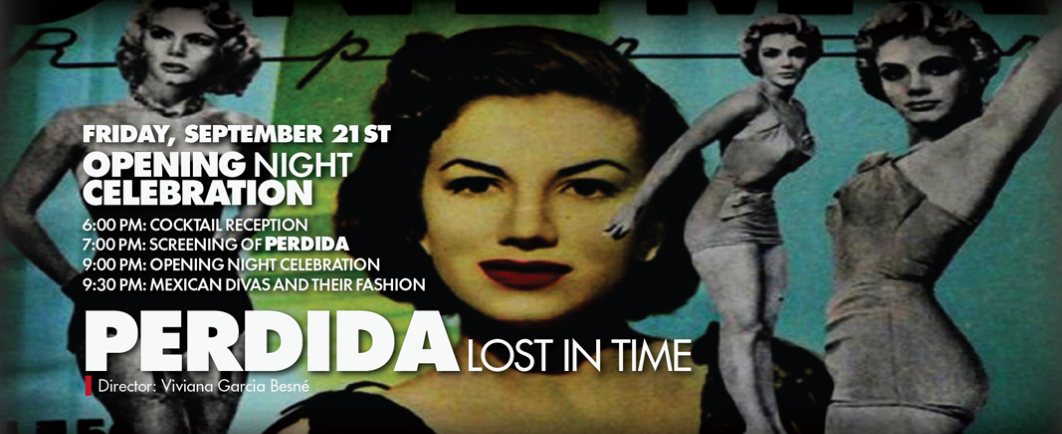
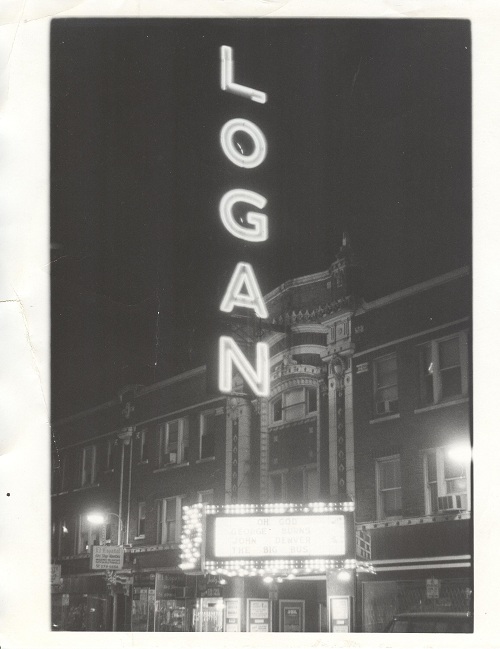
Presented by Mexico City’s Secretary of Tourism and Casa de Chicago, the inaugural edition of The Mexican Film Festival of The Americas in Chicago opens Thursday, September 20th and goes until Friday, September 28. Screenings will take place at the historic and handsomely re-fitted Art Deco Logan Theater inside a 180 seater. The novel and ambitious festival’s mission is “dedicated to supporting and cultivating every aspect of Mexican Cinema, including emerging and cutting edge Mexican films with the emphasis on discovering new filmmakers from Mexico and abroad.”
I couldn’t think of a better film to open this kind of festival than the nostalgic documentary La Perdida by Viviana Garcia Besne, a personal and revealing odyssey through Mexican Cinema’s cherished Golden Age of Cinema. A programming slate of highly distinct genre and caliber, the 30 something film lineup includes Mexican Ariel Film winner, Dias de Gracia by Everardo Gout and Chicana coming of age Mosquita y Mari by Aurora Guerrero. Positioning themselves as a festival of discovery the Festival will unveil the world premiere of Mission Park by Bryan Ramirez and produced by Douglas Spain, an accomplished debut and cautionary tale about four childhood friends whose different paths cause them to cross and confront their loyalty. The Festival will close with a very special headliner event honoring Academy Award actor nominee Demián Bichir, who is taking a time out from his crazy busy schedule to christen the baby festival.
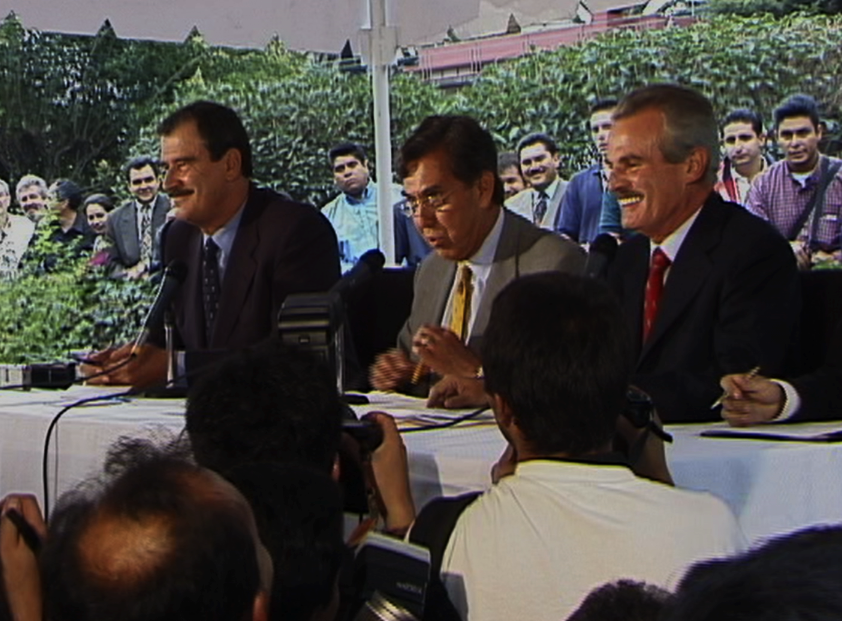
A debate about when to have a debate – scene from El Ingeniero
Sure to be THE social event of the week, go rub elbows with big-wigs and talk politics with one of Mexico’s brightest political family dynasty members, the erudite and three time presidential candidate, Cuauhtémoc Cárdenas Solórzano at the International premiere of El Ingeniero by Alejandro Lubezki. An incredible behind the scenes of the 2000 Mexican presidential campaign leading up to the last (and short-lived) time the PRI got booted out of office, the intimate access exposes the grueling campaign circus and mechanics, and ultimately shows Cárdenas as an authentic, flawed and salt-of the-earth character. Read my review from Guadalajara here.
So how did a festival score such high profile talent, gems and world premieres??? Festival Director’s Jesse Charbonier’s reputation, experience and contacts. Charbonier served as Operations Manager and then Programming Director of the renowned Chicago International Film Festival for years, where he strengthed the Latino programming and bestowed a special award upon Bichir who broke out with three films in 1999 including Sexo Pudor y Lagrimas which the festival will screen (love). Jesse has also served as distribution consultant and producer to several films, in addition to establishing his singing career. It was his desire to reach the large Mexican population of Chicago and present a more progressive, edgy cinema that triggered the start of this collaboration between sister cities, Chicago and Mexico City. He curated the strong lineup from traveling and covering the Guadalajara Film Festival FICG27 and HBO’s NY Latino Film festival, as well as through recommendations from several colleagues. His approach; “Every night is Opening Night.” Each film has their own slot that will run without any competition. Along with his distinctive taste in programming, this type of concscientious care, operation know-how, and connection to the Chicago audience, ensures the Festival has its best foot forward.
Chi-town style – comfy, plush theater
Thanks to not one but two airline sponsors (no small feat for a festival to arrange), All filmmakers who were available will be present for their screenings and Q&As and in some cases for the preceding reception. Regular films are a reasonable $8 and the special event films are $15 which include a pre-screening reception with complimentary cocktails (tequila sponsor, EC Charro) and food! Well worth a film, filmmaker convo and light dinner.
Theater dates back to 1915
Que envidia chicos, as a Chicana From Chicago living in LA I wish I were in my hometown to celebrate this momentous occassion. You have been given a gift my Chi-town peeps. Go hang out with these talented filmmakers, see their films and report back. Help spread the word. Check out the schedule, you can buy tickets on Brown Paper Tickets and like the festival on Face.
La Selección Oficial del tercer Festival Internacional de Cine (FIC) en Puebla, se dio a conocer esta semana. Lo primero que destaca es que se recibieron mil 64 trabajos entre largometrajes y cortometrajes, tanto documentales como películas de ficción, procedentes de diversos estados de la República Mexicana como Baja California, Guadalajara, Jalisco, Aguascalientes, Estado de México, Veracruz, Nuevo León, Chihuahua, Zacatecas, Quintana Roo, San Luis Potosí y Querétaro, además de 63 países, entre ellos Estados Unidos, Canadá, Chile, España, Brasil, Guatemala, Nicaragua, Venezuela, Portugal, Japón, China, Alemania, Bangladesh, Irán, Rumania, Etiopía, Camerún, Uruguay, Irlanda, Finlandia, Bosnia y Herzegovina, Serbia, Kazajstán, India, Costa Rica, Kosovo y Bolivia.
La Selección Oficial se conforma de 106 películas. La película inaugural será Nos vemos Papá, de Lucía Carreras, protagonizada por Cecilia Suarez y Gabriela de la Garza; en tanto que la de clausura será La brújula la lleva el muerto, de Arturo Pons, protagonizada por Gael…
I’m sad to miss out on all the sexy, steamy fun that will be popping at the 13th New York International Latino Film Festival this week, starting with tonight’s official Opening Night screening of Filly Brown starring Miss Thang Gina Rodriguez. However I’ve been invited to be on the shorts jury for the Monterrey Film Festival so I leave for Mexico mañana (look forward to my dispatch from el otro lado). To all my NY Dominicanos, Cubanos, Boriquas and Chicanitas les mando mushos besos. But not to worry, I wouldn’t leave you hanging without a quickie. Let me give you the scoop on how to proceed amid NYILFF’s multi-culti flavorful spread of this year’s freshest new films. I don’t include typical loglines as much as words that pop into my head to describe the visceral experience. Click on the titles for synopsis and ticket info.
And now, here is my top five CAN-NOT-MISS list at this year’s New York International Latino Film Festival. Your welcome.
1. The Girl is in Trouble, w/d – Julius Onah (World Premiere) A pulsating at times frenetic, breathless city adventure a la french new wave thriller with a thugged out Valderrama who actually displays chops with an angelic and barbaric side to his swaggering performance. This film is an explosive burst of energy, even when the pace takes a breather its story speed keeps trucking and keeps it cinematic by utilizing all the canons of visual play into a story that you get swept up in. I couldn’t find a trailer online so just trust. It’s fresh.
2. Love, Concord, w/d – Gustavo Guardado (World Premiere). I profiled this charming high school rom com earlier this Spring so I’m especially excited that this baby is being delivered to the NYILFF audiences. It succeeds where so many other films of this genre fail and that is portraying the MOMENT back in high school, and unbelievably its so goddamn charming and cute without the heavy and sweet empty calories.
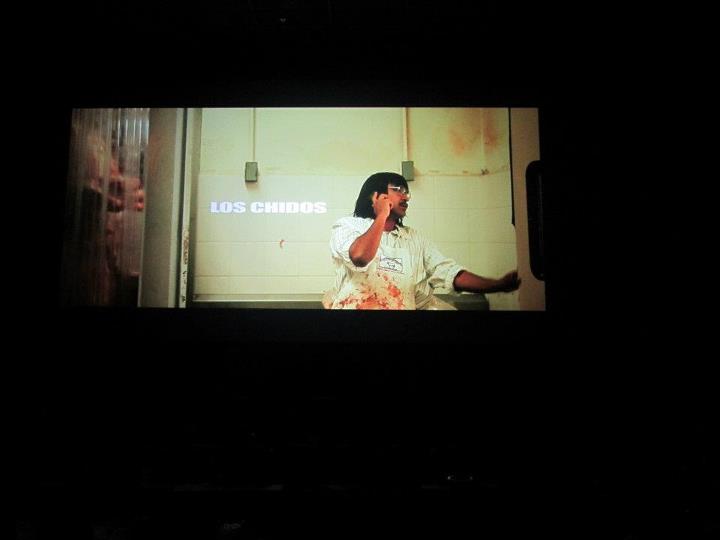
3. Los Chidos, w/d Omar Rodriguez Lopez. The most wildest, fierce and singular voice out there right now. I love talking about this highly provocative and polarizing movie and all its unbridled uncouthness that underlines such themes like the male psyche/ego, exploitation, religion, stereotypes all under the guise of a TJ trip gone wrong. This savage satire from my boy Omar has terrified some people since its premiere at SXSW. I can’t wait to screen it in LA at the Downtown Independent.
4. Waiting for the Beatles -Diego Graue, Raymundo Marmolejo. I’m sorry to say bu the trailer below does not do the documentary justice. Its even a much more jubilant and uncanny tribute to hundreds of Beatle cover bands and Beatlemania in Mexico. This one’s for bringing the whole fan. Ever since it premiered at my favorite fest, The Morelia Film Festival last October I’ve had a special place in my heart for it. I love the intro, “In 1969 Mexico waited for the Beatles to come. Nearly 30 years later they are still waiting”.
5. Elliot Loves, w/d – Gary Terracino Yes, I know this bad boy has been getting around. But its been getting down in the festival circuit for a reason y’all. This simultaneous childhood and adult coming of ager of the eponymous incorrigible, hopeless in love but tough as nails Dominican in NY is utterly romantic and down and dirty real. Never in my life have I seen gay cholos portrayed so candidly, raw and honest. Never. Breaking archetypes and flipping the script.
Other tips. Something says Sold Out? Try Stand-by line, I bet you get in. None of these features grab you? You can never go wrong with a shorts program. Lastly, if you got a steady job, invest in a festival badge and support the Festival. $200 gets you access to any movie and the lounge and its the cheapest inclusive pass I’ve seen on the Festival block.
My old 2005 LALIFF Volunteer shirt. The image (corazon) and word, Drive, epitomizes the festival’s beating spirit and describes the Fundraising and Support Drive needed now to keep it beating stronger than ever!
People always ask me how I got my start in film festival programming and the answer is volunteering at the Los Angeles Latino International Film Festival. Back in 2006, I was a miserable, zombie-eyed assistant to a Hollywood studio producer the likes of the tyrannical boss in Devil Wears Prada. When LALIFF took place I always looked forward to volunteering whenever I could because that is where I woke up to the multi-cultural flavor, intensity and originality of International Latin American Cinema and became part of the spectrum of saucy Spanish language-accented conversation. I discovered a whole community of young, brown and beautiful Latinos hustling their craft. So I decided to take a leap of faith by pursuing and accepting a short term position as Programming Assistant at the Festival. I willingly accepted the lowly wages, and for the first time entered into the highly stressful and unstable world of the non-profit festival seasonal world, where I still reside. Unlike the white-bread, diluted projects I had written script coverage on over at the studio. I was thrilled to work in a film realm that offered true cultural exchange and offered unique points of view. Back then LALIFF was at its peak as a 14 day filled fiesta of films and events and over 100 features (cut to last year’s 42 features). It was such a memorable sight to see audiences line up past the Egyptian Theatre’s deep courtyard all the way down to the Hollywood Walk of Fame for films like the Colombian blockbuster movie, Soñar No Cuesta Nada, Mexican documentaries like En El Hoyo from established documentary master, Juan Carlos Rulfo, or the emo goth punks who came out for the high octane documentary on Alex Lora frontman for legendary Mexican rock band, El Tri. Screenings were packed and the celebration was epic. I continued to attend the festival in the years following, up until last year’s Quinceañera edition when I was surprised to see someone other than the Festival’s Executive Director, Marlene Dermer introduce films. It was none other than Edward James Olmos himself, aggressively pleading the audience to become a member of the Latino International Film Institute for the sake of sustaining LALIFF. It was a cry for help that seems to have gone unanswered.
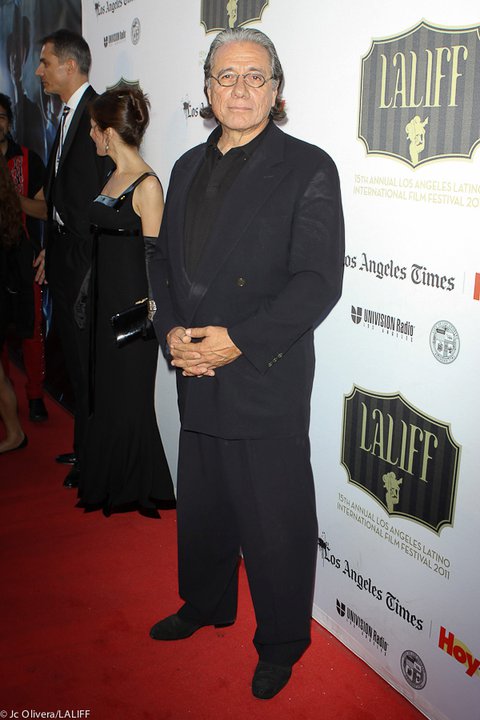
Earlier this month, Edward James Olmos announced that LALIFF which had previously announced its dates for a five day fest from August 16-21, would not be returning for its 2012 edition. The announcement which had an almost pre-emptive positive sounding spin and deliberately left out any reason behind canceling simply stated “…the next edition of the Los Angeles Latino International Film Festival (LALIFF) will be in the summer 2013, marking a new era for the organization and the Los Angeles Film Institute (LIFI), the non-profit organization that produces the annual festival. LALIFF will present landmark anniversary screenings and will host membership/networking events.”
In the previous weeks, filmmakers had submitted their precious films and with them the hopes of screening at a festival which may have been their only outlet. A number of films had already been invited and even confirmed. Mere days before their start date, longtime seasonal staff had been notified their job fell through. No doubt such a sudden decision was an extremely painful and difficult to make, of the last resort variety. The abrupt news that the preeminent Latino film festival in the mecca of Hollywood was not happening sent many of us in the latino community reeling. First I was saddened, then alarmed. Other than the LA Times piece titled Fundraising Shortfall causes LA Latino Film Festival Cancellation, I was dissatisfied with minimal coverage in the following days given such a landmark festival was in trouble. I began to reach out to filmmakers, industry, staff and other film festival directors to get reactions and figure out how to rally support. As the story organically shaped into a tribute piece, for me it also naturally stemmed questions like, ‘Why has such an important festival contracted instead of expanded over the years?’, ‘Besides making a donation, how can we come together and become the life support it needs right now?’ “Are the challenges it faces insurmountable or can we rebuild our reputation? “How do we make a Latino Film Festival commercially viable?” I know, clearly too much to cover in one post but all ideas worth touching on that I hope I can engage you to comment and kickstart dialogue.
Erase una Vez
So the story goes as I’ve been told by old school vets, in 1996 the city of Los Angeles’ cultural commission approached a few high profile and influential Latino Hollywood players like Moctezuma Esparza, (Maya Releasing producer/ exhibitor) and Jerry Velasco (President of Nosotros, the oldest Latino Media advocacy group, and owner of the Ricardo Montalban theatre in Hollywood ), to meet the demand of the Latino population and create a Latino Film Festival. It was Edward James Olmos, who was becoming more and more popular due to his starring roles in such bi-cultural cross over pioneer hits like American Me, Mi Familia, and Selena, who stepped up to lead the charge. Together with Marlene Dermer, who at the time was at Paramount, the two founded LALIFF which in its 15 years of existence has become THE most invaluable and critical platform for Latin American and American Latino talent. As Marlene Dermer puts it, ” LALIFF has nurtured and supported the work of Latino actors, writers, producers, and directors who have gone to become internationally recognized, to work with Hollywood studio films, and have become award-winning filmmakers. Since 1998, the Festival has had over 25,000 LAUSD students participate in their powerful Youth program in which kids are bussed to the Festival to walk the red carpet, be dazzled and inspired by established artists who they can identify with and share their same language. It became an institute, LIFI, in 2005 and one of its goals through the Youth Program is to support younger generations to find a voice in film, to see film as a possibility after graduating from school, and most important promote literacy in our community.”
Alumni Cineastas
A festival serves a number of different constituents who are all equally integrated and important, from nurturing audiences, providing acquisition opportunities and talent for industry, and of course the filmmakers who provide the content. Many thanks to the filmmakers who shared with me their experiences and thoughts.
Josefina Lopez (Real Women Have Curves) who has served as a juror at the Festival took the time to send me an email in the middle of shooting her new movie on location to say “I was very sad to hear about the festival not happening this year… It was always a dream of mine to submit a film and have it be the opening night film. I really hope this is only temporary but I have been aware of the tremendous struggle it has been to keep the festival going each year. I really hope it continues soon so when my feature is ready I can make one of my dreams come true and have it screen at LALIFF.” When not making her own films Lopez has established herself as a mentor to many young artists and revitalized a space in East LA, Casa 101 that puts on live theater and she is also the founder of The Boyle Heights Latina Film Festival.
Best festival parties EVER. We all went to them, so lets support them so we can have MAS to come!
Multi-hypenate (actor/director/producer), Douglass Spain (Star Maps, Resurrection Blvd) actor/producer/director has had several films premiere at LALIFF including a short he directed, ONLINE. “That year”, he says, “I spent everyday at LALIFF and got to know so many talented people which led to fruitful collaborations. I’m Latino and I’ll own up to that. LALIFF owned up to it as well. They created a platform that gave Hollywood an opportunity to see how diverse we Latinos are; How rich our stories are and how financially successful they can be. I guess it wasn’t enough. Funding and support… that’s the real reason this festival isn’t coming back in 2012. When Edward James Olmos asked me become a member and pay the fee, I did it without hesitation. LALIFF 2012 is where we had hoped to premiere our new film Mission Park. To end on a high note, LALIFF had the best freaking parties in town, period. It’s true about us Latinos, we love to have fun especially on set. Whenever we get a chance to celebrate, we are there. LALIFF was a place that brought all of us LA Latino Filmmakers and from the world over together to celebrate great cinema, music, dance and life. I don’t think it’s the end for LALIFF. I’m hoping it won’t be. In September 2012 a new film festival will emerge in Chicago… Mexican Film Festival of the Americas. Mission Park has been invited to premiere there. This goes to show that when one door closes another one opens.
Meanwhile, Alfredo de Villa (Washington Heights) who has had five features and premiered his very first short film at LALIFF reminded me of the vital role of film festivals in general – “Festivals can provide a cultural antidote without alienating its own base….they expose audiences to something different and contribute to a different strain of thinking.” In talking about the overall fragmentation of the Latino population fragmentation he points to the 29% of Latinos living at or below poverty level who are in effect, ‘stranded by the experience as we know it’.” The Mexican American experience of which roots in the US goes backs centuries is vastly different than the Central American wave of the 80s. And so on and so forth. ” We are still defining who we are so how can we become a political force? That is what is missing, the community is all over the place and as filmmakers we’ve been catching up rather then responding or identifying it before it happens.”
Gabriela Tagliavini whose second film, romantic comedy, Ladies Night opened the 2004 Festival, premiered her opera prima, “The Woman Every Man Wants” at LALIFF in 2001. Last year she showed her film, Without Men, which turned out the stars like Eva Longoria and La reina, Kate del Castillo on the red carpet. Gabriela says, “I would have never gotten so much press and exposure if it wasn’t for them (LALIFF), and I live in LA! People that come from all over Latin America with their indie movies in Spanish would never see the day of light. Plus, there’s the networking. Everybody mingles at the courtyard of the Egyptian, meet, compares notes and laugh.They had these lunches at the top studios to introduce the Latino filmmakers. I got to meet the CEO of Warner Brothers, Nina Jacobson when she was at Disney and Mark Gil when he was at Miramax. This is an opportunity that no other film festival does for their community. It’s too bad that my new film “The Mule” staring Sharon Stone which is about Immigration in the Mexican-US border won’t be able to be shown at LALIFF this year. I wonder what’s going to happen to all those other fantastic films that we might never get to see.”
There are many other filmmakers I did not have a chance to connect with who I’m sure would echo the sentiments of the networking and industry opportunities LALIFF has given them on top of the audience reach it provides.
Industria and Networking
Over the years, the industry component and exposure to studios that LALIFF use to facilitate seems to have diminished. It used to serve as a mini-market of sorts with its industry office library of Latin American films which offered studio execs the opportunity to come in and pore over hundreds of titles to consider for acquisition. On the other hand the invaluable hub of networking with one’s peers remains the Festival’s biggest strength and community builder . The collaboration that grows out of those dancing parties has brought countless artists together. Eddie Ruiz, who produced the short film, Mad Doggin was at the Festival last year remarked that while it wasn’t incredibly industry-centric in the way a filmmaker might seek a job for hire, the incredible social aspect of meeting like minded talent re-invigorated him, the audiences gave him a sense of affirmation, and in general he appreciated the environment that encourages the mantra of persistence of vision. and no matter how hard it is, to keep making your films.
Ben Odell, who most recently produced Girl in Progress, and is shooting Aztec Warrior with Luis Guzman, said, ” It’s tragic the thought of losing LALIFF”. Odell tells me that over the years he has met a number of talented directors that he would have never met if not for LALIFF, and many of whom he’s collaborated with like Sebastian Borensztein with whom he wrote and produced the 2010 Mexican thriller, Sin Memoria. He adds, “It’s particularly important to have the Latino festival in LA because it blends mainstream Hollywood, the US Distribution part with talent.” In talking about the big drum that is “Latino” he hinted at the programming challenge of lumping the everything in one category that defies sub-culture, in this case genre and audiences. “How do you fit in Latino art house movies from Peru and Chicano shoot ’em up movies all under Latino. It’s not the same audience”. I asked him what kind of festival would be most viable as far as getting our Latino talent industry exposure, to which he quickly asserted and used many examples of recent commercial genre films. It’s true, there is an influential big wave of filmmakers from Colombia, Cuba, Central America who grew up with Hollywood blockbusters and now want to make those in their own flavor. It reminds me of Alejandro Brugues the director of Juan of the Dead. One last observation worth mentioning is filmmakers not wanting to pigeonhole themselves as a “Latino filmmaker’. Might this play into the shaky support of some LALIFF filmmaker alumni?
Jerry Velasco, recently awarded NALIP’s Lifetime Achievement Award in Media Advocacy, says that upon hearing the news he immediately reached out to the organizers to say, ‘How can I help? Whatever you need I’m here.” If we let them go we’ll have to wait another four to five years to start another”, the implication that it takes a long time to establish a brand. “Lets help and continue and compliment. We gotta make it work in LA.” “It’s alarming,” he goes on to say, ” I’m worried about it losing momentum. Corporate America should be more conscious. We should support by contributing our contacts, dollars, get together and not let it die out. Let’s create a chain reaction….Think of all of those who LALIFF has touched. It’s alright to say, hey listen the film festal is in trouble. It has brought a lot of joy over the years”. What about some of Hollywood’s leading Latino talent? To them, Jerry challenges them to lend their money and vocal support. We are talking about la J-Lo, Salma Hayek, Eva Longoria etc.
Santa (Saint) Sacrifices made by staff and volunteers
Former staff were kind enough to share their years in the trenches, sometimes off the record, and more than one implied, “I’ve been taught that if you don’t have nothing nice to say, don’t say anything at all (I do not subscribe to that – if it is to motivate change, bring it). I asked the passionate, tireless and multi-tasker producer extraordinaire, Monica Sandoval who’s worked for LALIFF the past six years to share. “LALIFF stands for so many things. It has brought together so many people, so much creativity and so many opportunities. In a city such as L.A., LALIFF has been our flag. I discovered LALIFF as I hit the pavement hard, at full speed, although as a volunteer my first year, I had responsibilities’ like a staff member. I quickly realized this was greatly due to the fact that LALIFF was understaffed. As staff member the following year, I had become part of a hardcore family that spent hours without sleep, inventing innovative ways of using the few resources we had to make the festival as inviting and as extraordinary as possible. There is a lot of hard work and miracles, that go into carrying out this Festival. Then of course, there is LALIFF’s grim reality in regards to it’s core structure. There isn’t a year round team following up and maintaining LALIFF despite the many years its been around. I don’t fully understand why there isn’t a sponsorship coordinator working year-round. There are so many things that can be done throughout the year to maintain LALIFF alive. (on Marlene Dermer) …”I cannot imagine anyone else more passionate, more deserving, more appropriate for carrying out LALIFF than Marlene. BUT because of this, she hasn’t or maybe can’t let anyone else restructure, assist, give input, because this is too personal for her. LALIFF has been her lifelong mission and I truly believe LALIFF would not exist without her. LALIFF is in dire need of restructuring… I believe full heartedly that it was the best thing to do considering the circumstances and that this will ignite a shift in LALIFF’s history. There can only be new and exciting changes in its future. Hopefully people will realize how important LALIFF is and by missing it this year, will be prompted to actively support LALIFF and not just show up to ask to get into free screenings or parties…
Gabriel Sotomayor, a filmmaker and now Director of Programming at the University of Guadalajara use to work closely with Marlene was the only one on staff year round for a couple years. He argued vehemently that we, the community must put in to as much of what we’ve gotten out of LALIFF.
We are all in it together
On top of the love and passion fueled by alumni and staff there is also much goodwill and support from the community of non-profit art organizations at large:
John Cooper, Director of the Sundance Film Festival, which this year premiered two US Latino features, Mosquita y Mari and Filly Brown said, “There is a real value in showing films that represent a broad range of stories and cultures, as well as developing audiences for these films. Coming together as a community with like-minded passion is important and inspiring. We recognize that we are currently in a challenging fundraising climate, and with limited or no support from government agencies, it can be difficult for nonprofit arts organizations to thrive. We send our best wishes to the Latino International Film Institute and hope to see continued programming from the Los Angeles Latino International Film Festival very soon.”
The Egyptian Theatre, home of the American Cinematheque which has served as the dazzling venue for LALIFF nearly every year, also expressed their support. Nancy Winters, director of Special Events said, “LALIFF has been an extraordinary organization to work with and we’ve been very proud to serve as a partner. We are saddened to see the organization struggle however its not unusual to see organizations.” In addition to its cinephile driven film programming, the American Cinematheque works with about 12 film festivals a year and in her 22 years there, Nancy has seen a number of festivals pop up and fade out. Other Latino oriented programming there includes their home grown Spanish Cinema series and The Hollywood Brazillian Film Festival (which Talize Sayegh former LALIFFer who founded four years ago – big mad props querida!)
Eddie at last year’s Festival tried to drum up support at screenings
While calls and emails to Eddie Olmos went unanswered, Marlene Dermer took the time to email me back. “We want people to know that we are regrouping and we are just taking a break from producing the festival this year, and we will return in 2013. We will continue to support Latino filmmakers with special screenings and other events. We will be announcing them on the website, to our members, and to the press when they are scheduled.Our mission is to support Latino films and filmmakers and serve our community, and that will never change even if we don’t celebrate a festival this year. We are positive about our organization, and believe that after 15 years, our community knows that LALIFF has offered audiences the best venue in the city to celebrate Latino films and artistry and in the process we created a cultural event for our community. Many don’t realize that LALIFF, which started in 1997, has expanded to work year-round with Youth Programs, screenings, and Preservation Film programs, among other things. All of these programs need funding, is not about the festival alone. Fundraising has become a challenge for all non-profit organizations regardless of serving Latino or non-Latino communities. We are a non-profit organization, and every contribution, regardless of the amount, helps us continue our mission. People can support us, by becoming a member.
Membership and Sponsorship support
Speaking of Membership. Okay, full disclosure, Up until a few clicks ago I was not a member of the Latino International Film Institute. (You can make a donation here, the festival’s actual membership donation page is wonky). You heard right, here I am, talking the talk, wanting to support the festival and I wasn’t even a member. See the pattern? I don’t doubt that there’s more than a few of you out there like me out there so let’s get it together people. This thing is bigger than us. Membership is from $50 – $500. Cultivating membership and making it worthwhile for folks is critical especially given the demographic the festival appeals to the most, LA’s hip, young starving artists. In talking with Calixto Chinchilla, founder of the West Coast’s big Latino fest, NY Latino Film Festival (which announces programming this week!!) I ask him, ‘Shouldn’t it be easier in this climate to get the support of corporate sponsorship since everyone is itching to tap the Latino market?, to which he immediately says, “It’s hard as hell. The cost of a festival isn’t getting any cheaper. Managing how to spend a decreased budget and sponsorships is more critical than ever and takes lots of savvy. Everyone is downsizing and competition for sponsorship is getting fierce. “It’s like Survivor of the Fittest!”. Activation, deliverables and reports must be stringently met. The NY Latino Film festival which from its inception has benefited from a strong sponsor relationship with HBO is no exception and has also had to scale down some. Calixto added, “I was sad to find out a big city like LA is in trouble”. He pointed out to San Diego Latino Film Festival, a festival he frequents regularly, which has managed to thrive and applauds Founder and Executive Director, Ethan Van Thillo and Artistic Director, Lisa Franek. “It takes a while to build a brand”. Calixto offered up the idea of putting together a summit for all Latino Film Festivals. “We should be open to having a dialogue, put aside our egos so we can find a way to have each other’s back. We hall have our best interests in mind and want to see us succeed.” I think its a good time to reflect and think about the future.” I agree wholeheartedly with Calixto. Just like he suggested at NALIP that a junior advisory board would rejuvenate and tap into the pulse of the fresh and younger and younger skewing energy pulse, it’s something to consider for LALIFF too. There’s a whole lot we can learn from the Old Guard and just as much they can learn from us. Why not form a mutually beneficial mix of old and new and spice it up some?
Back to Sponsorship – the other person who flipped the script on my naive thinking (isn’t it easier to get money for Latinos?) was the erudite Moctezuma Esparza. I realized I was asking wrong questions given my lack of historical plays out. Esparza says, ” Sponsorship has changed. Corporate demand is for measurable results. There was a time when sponsors and advertisers were all about impressions; how many people see xyz. The landscape is now changing, sponsorship is tied to Marketing which is tied to Programing. They are looking for direct results, increased sales. That presents a tremendous challenge for a cultural venue. Competition is intense. As a consequence there is a retrenchment in dollars to all kind of organizations. The criteria for allocation is changing.” At yet another point where I, the young kid, was quick to interject because I thought he was going to give one of those crossover success stories from 20 years that’s no longer relevant, he said, ” Twenty five years ago movies like, Born in East LA , Stand and Deliver, Milagro Beanfieled War, La Bamba, every two years these movies were being made, reaching a growing audience. For their cost they turned profits. But only about three filmmakers were making these films and there was not enough support from studios to create a habit for audience, a HABITAT. Structural changes are the challenges. It’s important to have an nuanaced understanding of the forces of nature instead to beating each other up. It’s not useful to say that latinos are not supporting each other.
Esparza who as executive producer has had many films screen at the festival says, “LALIFF has been an invaluable cultural platform that grew every year and seemed to grow in reach and reputation. LALIFF offers two powerful benefits; to filmmakers – access to a market and recognition, and second to audiences – the opportunity and access to extraordinary films not distributed online or in the US home video. “I look forward to LALIFF’s renewed commitment.”
Let’s be real
Let’s be real though. As important and empowering it is to recognize the milestone achievements of LALIFF, I believe there is value, now more than ever, for the community and especially those familiar with festivals who want to help (moi) to offer constructive feedback where there is room for improvement and to also offer our efforts, mobilize, and shake things up a bit. Not everything can be chalked up to lack of resources, right? What about consistency and leadership? I remember what Calixto said. A smaller budget requires skillful management and a constant shifting of priorities that continue to serve the mission. Then there are other details like, year after year I notice LALIFF does not announce its program until right before the festival. The publicity machinery needs time to massage interest in films most of the the public has never heard about. Also, in Hollywood where there is a vibrant community of arts and multi-media festivals competing for audiences wide scale awareness is key. Right now if you look on the Festival’s website, it still gives you the submission deadline. No indication of the announcement so one might not be able to tell that the Festival has been cancelled. Sure these may sound like details and tiny oversights and I’m not saying that this never happens at other festivals. But the difference here is the unchecked perpetual culmination of these oversights reflect a poor infrastructure. And these are relatively easy fixes that should be priorities because they go a long way. We could and should demand better from our Latino organizations. After all we have to work twice as hard to get ahead.
An active year round presence is required to make a festival grow. Only a couple staff members are year round, if that. That’s an enormously debilitating factor given the scale of the international festival. Who or what do the Board of Directors do? Are they doing all they can to power the festival?
Will the organization embrace and engage with the community on how to revamp the festival? I hope so and will stay optimistic until I see otherwise. Given the injection of new board member, the passionate Luisa Crespo, Executive Director of Academic Senate at UC Irvine, who has lent the festival renewed credibility and has committed to working with Marlene Dermer, I noticed a small but notable impact last year. International Industry maven, Sydney Levine has been an advisory board member for many years. Sought after by many festivals to lend her expertise on distribution and acquisitions, they are lucky to have Sydney’s participation as its immensely beneficial to emerging filmmakers at the festival.
Despite all of its trouble, one thing is clear to me; the audience continues to show up to LALIFF screenings- BECAUSE THERE ARE STILL FEW AND FAR IN BETWEEN VENUES THAT SHOW SPANISH LANGUAGE AND BI-LITERATE PROGRAMMING. And that is why I am renewing my support and commitment to the cause. If I am harsh at pointing out its flaws while applauding its achievements, its only because I want it to be as perfect as possible. I believe LALIFF will only grow strong with a rehaul set by the community.
I implore everyone who has been enriched by the festival to give tribute to the festival’s legacy. Whether they openly admit it or not, LALIFF is in trouble and the call to action is bigger than all of us. I encourage us to speak out and speak LOUD. Let’s tell the organizers what we expect and want from our festival and then help make it happen. While we won’t be seeing new work at the Festival, the organizers are planning a Retrospective program which they will be announcing soon on their website. Follow LALIFF on twitter and like them on Facebook. Share your network of talented peers, make a donation no matter how small, volunteer. Come to the Membership event today, Wednesday, July 25 at L’Scorpion (my favorite Hollywood tequila joint). If you can’t go, make a donation for whatever amount you want. If I can do it and I’m broke as a joke, so can you.
Sixto Rodriguez with Ben Gibbard (Deathcab for Cutie)
In a historical performance last night at the LA Film Festival’s Grammy night, Voices for Change (see my video clip at the end of post), a jet-black haired, black hat clad older man in a bright green suit was helped onstage and delivered a breathtaking, albeit short set. I stared in awe at his huge fingers powerfully and dexterously strumming the guitar and deeply connected to his significant lyrics, mesmerized by his voice (think a raw version of James Taylor). His weary and slight 69 year old body is no doubt the result of his back breaking working-class roots, construction labor his trade for decades save for a short moment in the late 60s and early 70s when he worked on his music only to have his commercial debut flop and step back into obscurity. This is Mexican-American singer/songwriter Sixto Diaz Rodriguez who is being rediscovered, or rather finally being discovered in the United States, thanks in part to the upcoming documentary Searching for Sugarman. Here’s the trailer:
The film by Stockholm based Malik Bendjelloul opened the World Cinema Documentary Competition at Sundance and was picked up by Sony Pictures Classics. The film shows us the lore that followed his so called disappearance which reached mythological legend (that he committed suicide among other theories). This whole time he was living a hardscrabble life in Detroit. (So if you dont want anyone to find you, go to Detroit). Watching the film I was so inspired by Rodriguez’s quiet zen and humble aura. The accepting manner with which he played the unfair cards life dealt him is as unbelievable as the fact that while he was toiling away he became a star on another continent. English his second language, the Detroit singer’s 1970 record, Cold Fact became a huge hit in South Africa where he is bigger than Jimi Hendrix. His lyrics are classic, anthemic and socially and politically prescient than ever, from “Establishment Blues” (The mayor hides the crime rate, council woman hesitates, public gets irate but forget the vote date) to “Sugarman” which when he performed, he prefaced by saying the lyrics (“colors to my dreams, silver ships”, and the literal “coke and sweet Mary Jane”reference is not based on drug experiences (yeah right). Instead he told the audience to “Stay smart, don’t start” and “Hugs, not drugs”. I highly encourage you to read his poems that form his body of work on the Sugarman website here. New original songs are included in the film which will be released in LA and NY July 27. A very touching and incredible story about a first generation Mexican-American whose voice was suppressed for many years at a time when the last name Rodriguez was perhaps too ethnic for the mainstream I thank Malik for making the film and hope it reaches audiences beyond the east and west coast. Hopefully his upcoming appearance on the Letterman show will help. Here’s a short highlight clip of the evening.














 Chicana from Chicago